
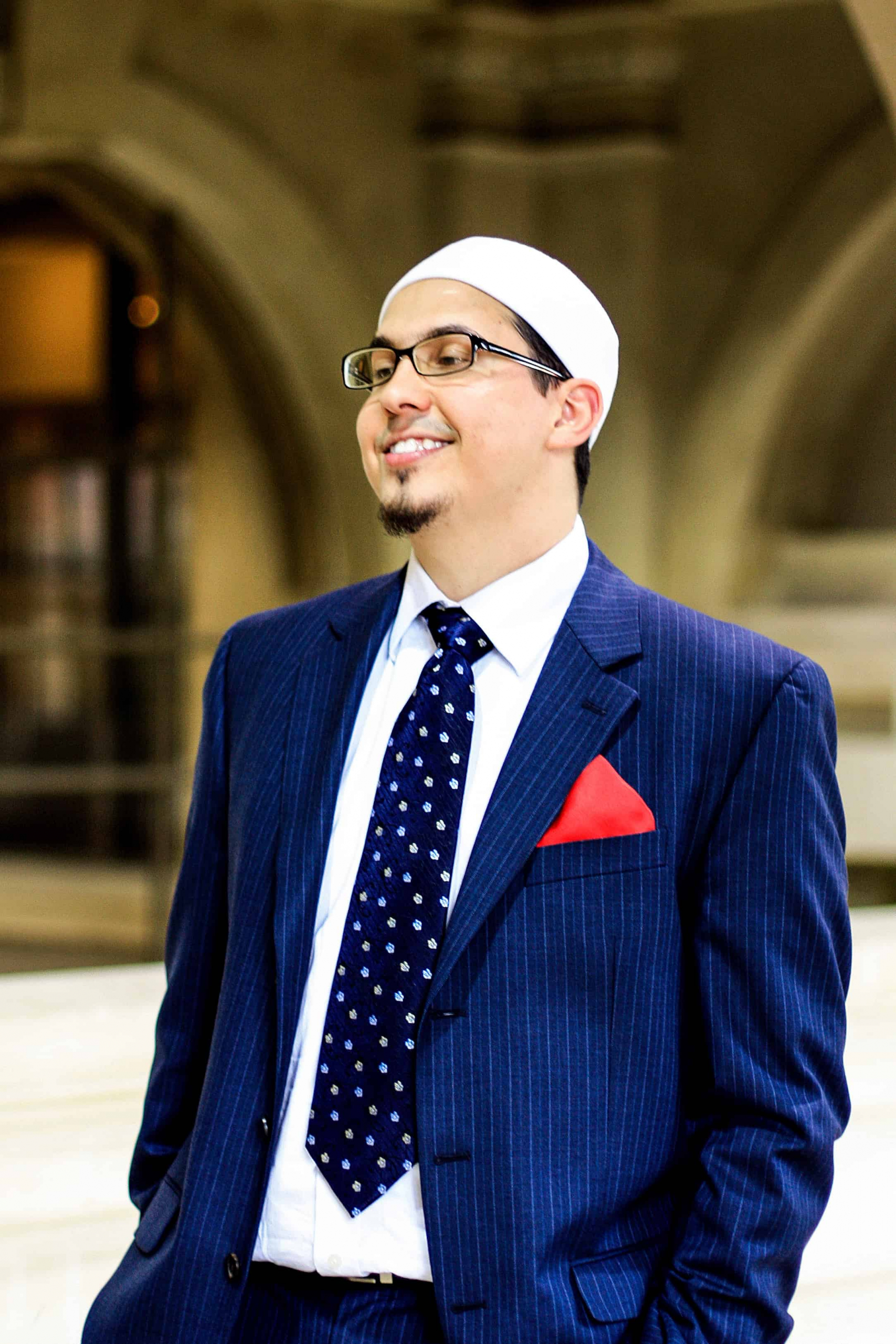
Amjad Tarsin has been appointed as the University of Toronto’s full-time Muslim chaplain, the first position of its kind in Canada. Tarsin is scheduled to officially begin work on October 1.
“Volunteers and alumni paved the way for this project,” says Rameez Mahmood, former president of the Muslim Students’ Association. “They showed the community the need for a permanent, full-time position.”
SAEED ALI
Muslim chaplaincies are becoming more common in universities across the United States and Canada, according to Mahmood. He expects Tarsin’s appointment to be the “next step in Islamic leadership in Canada,” given the student-led drive to create and fill the position.
“I hope that through this project, students can recognize the potential that they have at this time in their life,” says Mahmood. “A 21-year-old can build a full institution that has a global impact.”
Prior to Tarsin’s appointment, the position was filled by volunteer imams, many of whom dedicated substantial amounts of time to student interaction. But the sizable Muslim community on campus sought a more permanent commitment.
In its early stages, the project to hire a chaplain was run by volunteer students and alumni. The team now consists of a part-time managing director, Ruqayyah Ahdab, and the chaplain himself.
Tarsin’s decision to study chaplaincy stems from his own time at university and the challenges it presented.
At the University of Michigan, Tarsin studied Islamic Studies and English Literature. He had learned from prominent Islamic scholars in Canada and the United States, and spent a year abroad in southern Yemen to further explore his faith.
“Coming back to university after living abroad made me reconnect with my childhood friends, who were getting involved with alcohol, drugs and the like,” he says. “I remember sitting down at my kitchen table and having an internal dialogue; it was at that moment that I decided to take my faith more seriously and go down that route instead.”
After spending some time at law school, he switched tracks entirely and entered the Hartford Seminary chaplaincy program, from which he recently graduated.
After a year as chaplain at Fairfield University in Connecticut, he heard about U of T’s chaplaincy program. Tarsin said the application process for the program was intense, but it affirmed his faith in the institution and its vision.
He has already attended a few Muslim Students’ Association (MSA) events and meetings, and was inspired by the “incredibly diverse, talented U of T population.”
Tarsin says he aims to get to know students for the people they are and understand fully the challenges that they may be facing, in conjunction with making himself visible, present, and available. An explanatory launch video outlined some problems Muslim students have faced in the past, including professors berating Islam as degrading to women. The growing need for a full-time chaplain to address issues, both spiritual and psychological, for Muslim students on campus prompted the MSA to initiate the program.
Tarsin’s other duties include leading Friday prayers and arranging social and educational programming. He will hold office hours to allow students to approach him with dilemmas. His position serves all members of the university and is not restricted to Muslim students.
As he prepares to begin his new job, Tarsin is focused on creating a strong foundation for the chaplaincy program, fleshing out his role. Focus group discussions led by the MSA found that students do not regard the chaplain as an imam, but rather a source of help and comfort, according to Mahmood. The intention is to eventually make it “Toronto’s chaplaincy.”
Tarsin’s plans to further this goal are only aided by his impressions of U of T as “a place of self-discovery, exchange of ideas and academic discourse.” He appreciates the unique position university life holds as a formative experience, and wishes to provide “spiritual, ethical, and moral direction” to all students. His ultimate goal is to foster improved understanding; he deems “intelligent civil discourse about religion and bringing it into the public sphere one of the best ways to create understanding.”
“Having a chaplain, a public face of religion on campus, is a proactive and effective way of addressing the challenges Muslim students face,” says Tarsin. “It is the best way to solve misconceptions about Islam on campus.”
