
With the gradual development of cosmopolitan cities and modern spaces, societies continue patriarchal trends that they thought were left in the past. The economy, architecture, streets, occupations, public spaces, houses, and more interestingly even toilets reflect the gendered ideology of our societies. Such socially constructed ideologies have somehow, paradoxically, become an implicit yet accepted part of almost every society.
The 1900s, characterized as a period of intellectual revolution, set the perfect stage for many voices to question and try to explain what everyone else had habitually accepted as a way of life. Professor Dolores Hayden makes a wonderful effort to visualize and unsex American urban design in an attempt to redefine the architectural and symbolic grounds of the American home.
To understand how space can be gendered, imagine the following: a woman walking into a traditionally designed home. She is actually entering an architecturally-demanding space. From kitchen work to living room chores to child rearing responsibilities, women were, and regretably sometimes remain, chained to a domestic routine that is almost never-ending. As we look around the social spaces that surround us, we find design that often demands that women be the responsible element of the domestic space. According to stereotypical roles, she is also responsible for the “emotional maintenance” of her husband as he returns from his swarming, neurotic workplace. The American domestic space, as Hayden describes it, has not been designed to accommodate a women in the paid labor force. Instead, urban household planning has almost always been structured to fit the traditional and outdated gender roles within the home and the family.
In Towards Cosmopolis, Leonie Sandercock describes how the American planning enterprise has been an almost exclusively white and male domain. American urban design molded what Betty Friedan famously called “the feminine mystique” to dominate the domestic space.
The home, as Hayden notes, has become “a box to be filled with commodities.” The explosion in mass consumption grew as the advertising industry targeted urban dwellers, particularly women. Slogans like, “Selling Mrs. Consumer” or “I’ll Buy That Dream” appeared in ads in the early 1900s. As consumption rates went up, women were pressured to find jobs to keep up with the demanding conformity of a psychologically invaded mass society. This is when the American city entered a societal paradox as women joined the paid labor force in huge numbers.
A drug company once used, “You can’t change her environment but you can change her mood,” as a slogan to advertise their product; the employed woman was supposedly not achieving the proper balance between the home and the workplace. Interestingly, this balance somehow constitutes the very motto of our present day.
A type of “utopian” project is crucial to reconstruct the sexually divided neighborhoods of America. Hayden invented a very convenient acronym, “H.O.M.E.S.” (Home-makers Organization for a More Egalitarian Society). H.O.M.E.S. includes men and women without regard to economic status, age, sex, class, ethnicity, or any other potential form of prejudice.
The mass consumerist, isolated, energy-consuming box of house that is the current norm is replaced with a collective space that would merge households; a collective space that would keep the elderly safe and attended; a space that would make use of tens of meters of misused garage space; a space that would ensure that children get to know each other as they met in collective play areas. H.O.M.E.S is a constructive re-imagining of what the American neighborhood has lost from a more communal past, due to the rise of a more impersonal, modern society.
H.O.M.E.S. would offer a landscaped day-care center, a shared Laundromat service, “Dial-A-Ride” garages that would serve a specific number of houses in a neighborhood, instead of parking hundreds of automobiles in a space with a huge potential for other uses. Last but not least, what Hayden called “Meals-On-Wheels” could also serve the community by delivering goods and food. As we can see, H.O.M.E.S. aims to reduce, or at least redefine, the disengagement inherent in the over-privatization that has vigorously spread in American urban design.
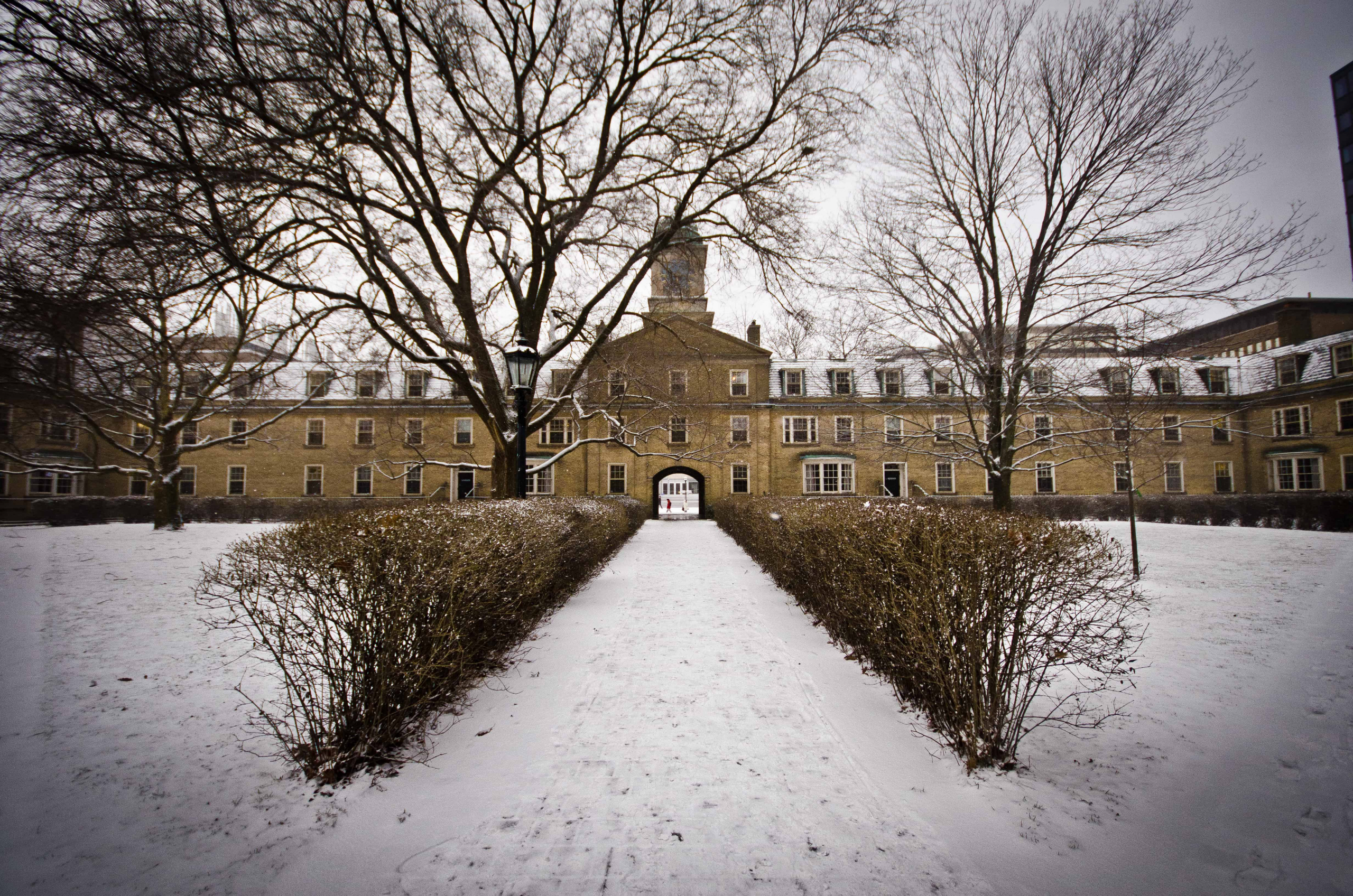
The essential elements of H.O.M.E.S. are very relevant to the new building projects here at the University of Toronto. Earlier this year The Varsity covered the rejection of a condo-style, student residence project on 245 College St. This rejection, coming from Toronto City Council and concerned resident’s associations, was motivated partly by the proposed residence’s 42 story height. Applying the H.O.M.E.S. project to a student residence could be especially valuable if implemented as a resource-saving, environmentally friendly project.
Advocating a mantra of collective space architecture and co-ordination, the H.O.M.E.S. lifestyle could be of great benefit to student life. The members of H.O.M.E.S., in this case, could very much involve the students living together, creating friendships, furthering cross-cultural exchange, inhabiting a space of equity, and reviving the spirit of cooperation, rather than isolating students in a traditional, box-like, residence.
Omar Bitar is studying Neuroscience and Sociology.
