
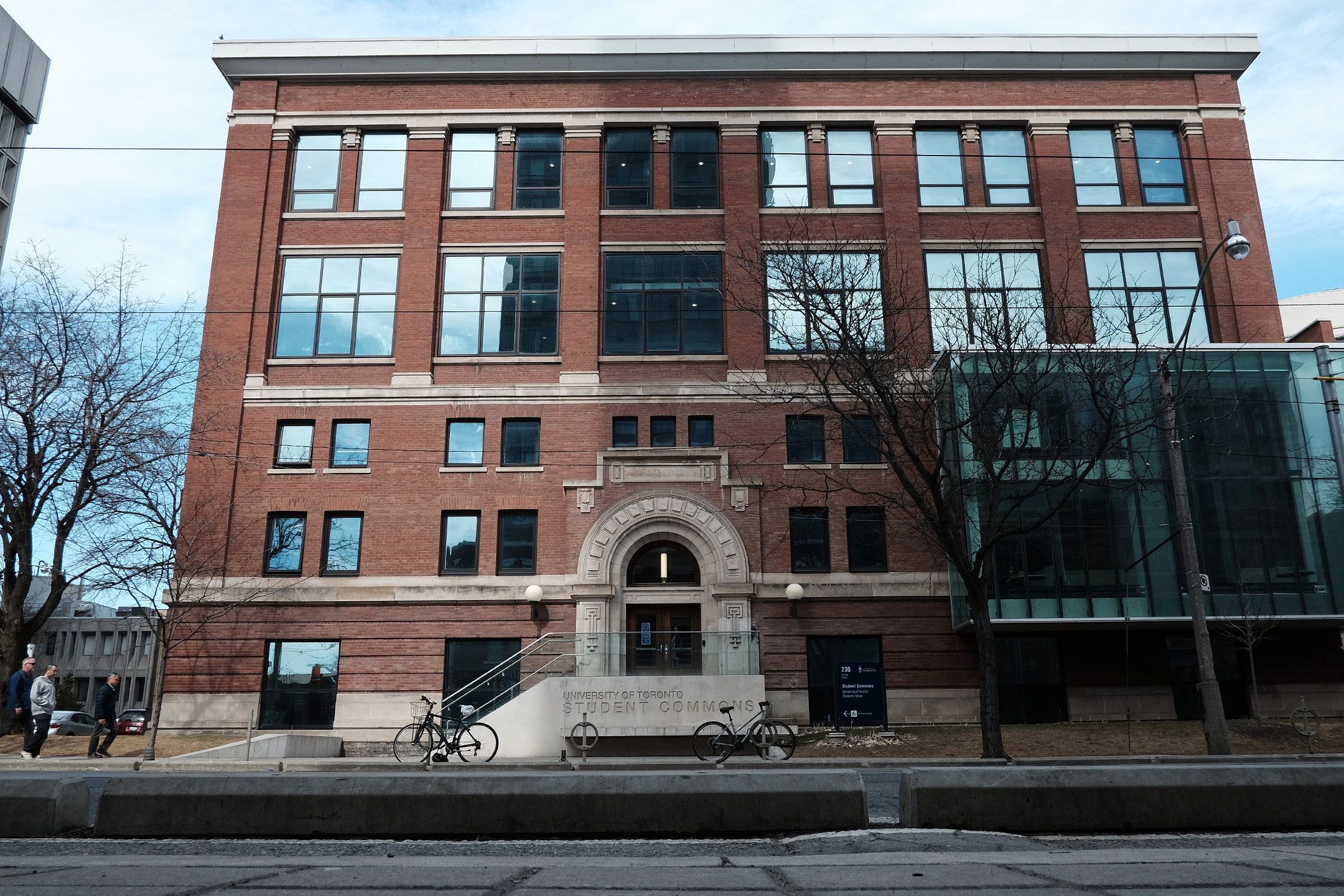
During their 2024–2025 term, the University of Toronto Students’ Union (UTSU) stood beside student protesters during the pro-Palestinian encampment at King’s College Circle, reinstated their rideshare program, continued their transit advocacy through the TTC Pass Program, and briefly changed the mental health insurance coverage plan before reverting to the original.
As the newly elected President Melani Vevecka prepared to take office for the UTSU’s 2025–2026 term, The Varsity broke down the union’s accomplishments over the past year under President Shehab Mansour. Mansour declined a request for a sit-down interview.
Statements of solidarity
In an interview with The Varsity during the 2024–2025 UTSU elections, Mansour said he had four campaign focuses: student representation, affordability, revitalizing the UTSU student club membership, and improving U of T’s food services and student safety.
Last summer, during the two-month pro-Palestinian encampment at King’s College Circle, the UTSU released a statement stating that it “stands firmly in support of the student encampment on our campus.”
Following the Ontario Superior Court of Justice’s decision to grant U of T’s injunction request to end the encampment, the UTSU released another statement calling the university’s actions “a dangerous precedent that hinders student expression and protest.”
Program promises and returns
In August last year, Mansour proposed implementing the Respect, Educate, Empower, Survivors program — an online platform for reporting sexual harassment, misconduct, and assault. He later announced in March that the pilot would launch in August or September 2025.
In December, the union announced the return of its rideshare program, offering discounted Uber rides to and from campus between 12:00–5:00 am.
Mansour also mentioned the possibility of creating a universal transit pass — known as U-Pass — that would allow students unlimited fare-free rides on the TTC, prepaid as part of their tuition. However, Vice-President Public & University Affairs Avreet Jagdev noted in January that the U-Pass remains out of reach.
Mental health woes
In September, the union changed its mental health insurance coverage from a flat $100 per visit for up to 15 visits annually to covering 80 per cent of the cost per visit, up to a maximum of $400 per year. Once this coverage is exhausted under the new plan, students can apply for up to an additional $1,100 annually through the UTSU’s Mental Health Support Fund.
According to the union, the coverage changed because premiums for the old health and dental insurance plan were increasing by around 10 per cent — roughly an extra $37 per student.
Students noticed the insurance plan changes before the union’s announcement and criticized the union for a lack of transparency. At its September Board of Directors (BOD) meeting, the union announced it would allocate $250,000 from its Health and Dental reserve to the Mental Health Support Fund to support the new plan.
The union then held an emergency BOD meeting in October to revert to the original plan after students, administrators, and some board members sent messages raising concerns. However, the UTSU noted that reverting to the original plan is only a temporary fix for the 2024–2025 year.
At its March BOD meeting, the union approved a 10 per cent increase to its Health and Dental Plan fees for the upcoming academic year — the maximum fee increase allowed.
Governance decisions
At the union’s May 2024 BOD meeting, executives approved a 3.4 per cent fee increase for the Canadian Federation of Students — a national union representing university and college students’ unions across Canada — raising the fee to $9.16 per semester.
In August, the UTSU announced plans for Student Senate elections and introduced a new platform for clubs’ funding. In October, members approved an increase to the board members’ “professional developmental needs” allowance.

No comments to display.