
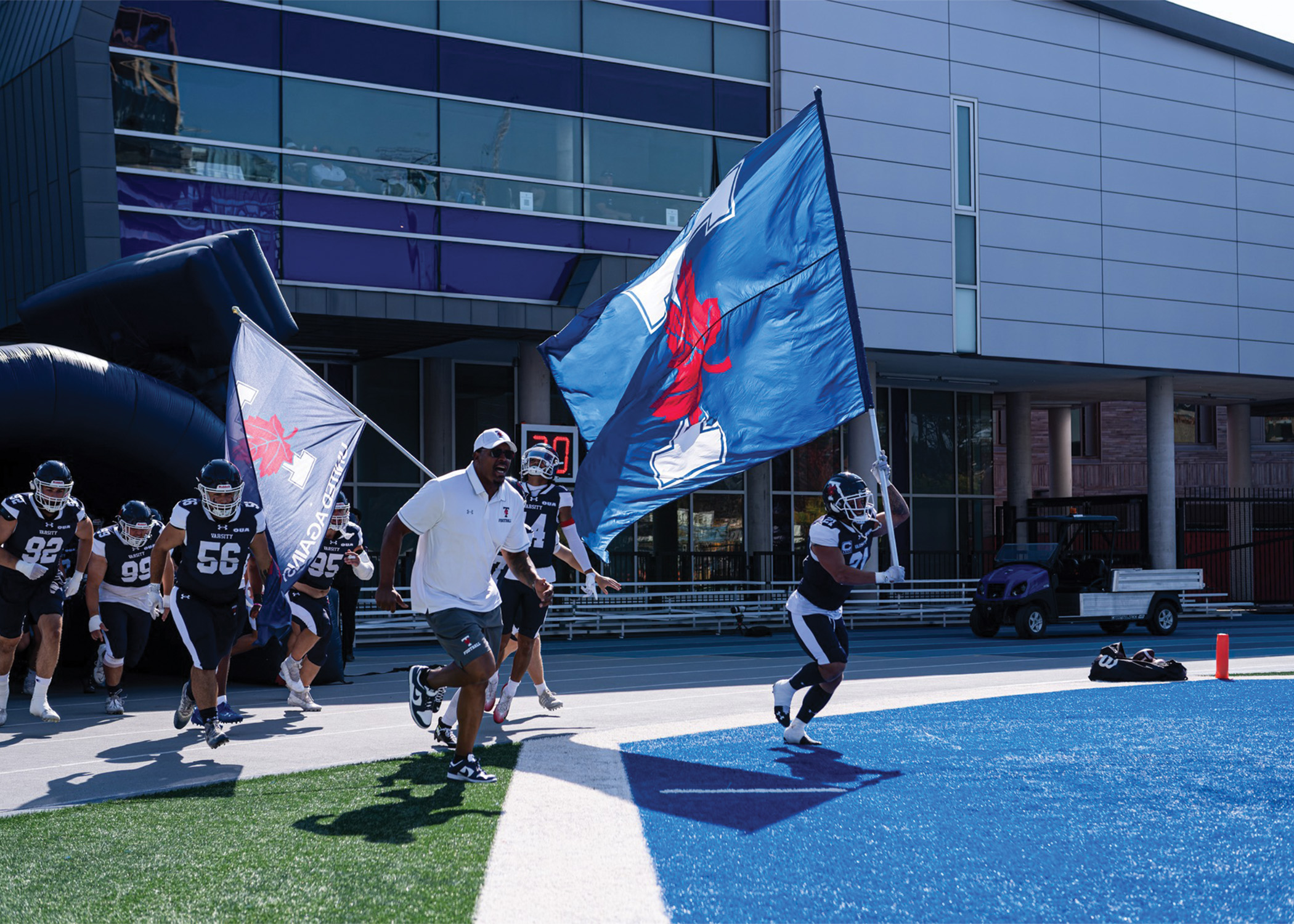
For many athletes entering university, playing a sport at the postsecondary level is the goal. Athletes at most universities achieve this by either walking on to teams by trying out once they arrive, or are recruited by coaches prior to their acceptance. Student-athletes who are recruited to play football at U of T must ensure that they can manage their academics and athletic training, all while navigating aspects of personal growth and team culture.
Recruitment in different leagues and universities
The process of recruitment can vary at different Canadian universities, especially from the American system. Athletes in the United States are categorized based on division. For example, the US NCAA Division 1 schools are the highest level that student-athletes can compete at.
While football already runs in the blood of Americans, Canadian college football is becoming more popular. At the University of Toronto, football has and continues to draw a large audience.
The Vanier Cup is the highest accolade Canadian student athletes can achieve in football, and is awarded annually to the best national collegiate program in U SPORTS. The Blues won the first-ever Vanier Cup in 1965 at Varsity Stadium, and last brought home the title in 1993 against the University of Calgary.
In Canada, the national collegiate sports governing body is U SPORTS. There are four associations within the league: Canada West, Ontario University Athletics (OUA), Réseau du sport étudiant du Québec (RSEQ), and Atlantic University Sport (AUS). U SPORTS is highly competitive, and for many football athletes, the effort to join Canadian university teams at the OUA level begins as early as grade 10.
Individuals attempting to join write to the coaches and staff of the school of interest and can provide highlight clips and game recaps. Once a player of interest is determined, the coaching staff of the particular university will attend a game to scout the next player to join their roster.
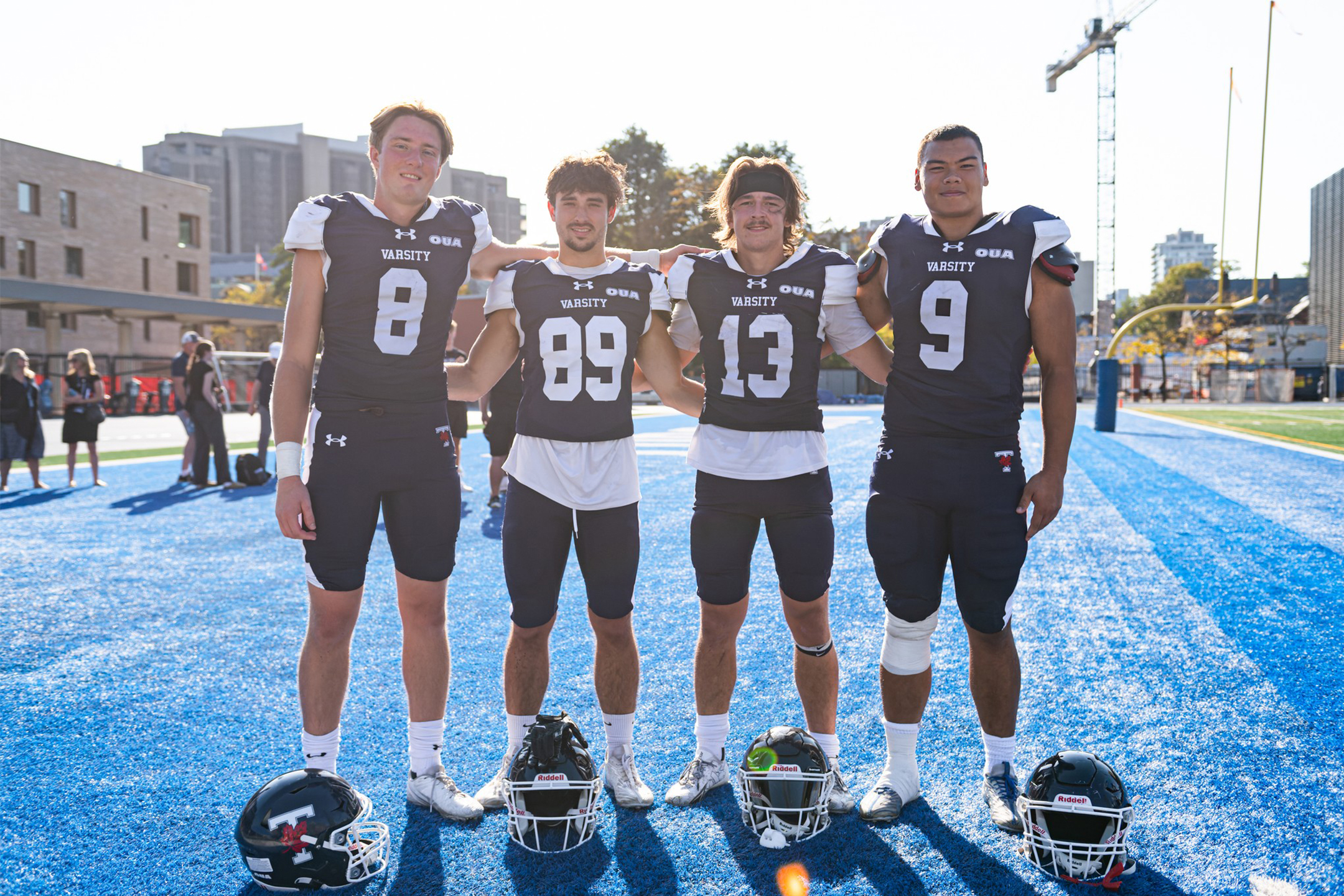
How are students at U of T recruited?
Will Cockfield, a receiver on the Varsity Blues football team, shared his experience with being recruited in message exchanges with The Varsity. “I made sure I had the proper grades for the program I was trying to enter at UofT, and then I contacted the recruiting coordinator who I had received a recruitment email [from weeks prior],” wrote Cockfield.
The recruitment process begins well before a player intends to graduate. Grade 11 becomes a pivotal year for many future OUA athletes, as this is when relationship-building with coaches takes place.
At U of T, coaches and staff will reach out to their player of interest and their coaches for further contact. This is followed by the request made by coaches for transcripts to ensure the potential student-athletes are taking the proper prerequisites for specific programs.
There is no chance of admission to the Blues if academic requirements are not met. Talent matters, but grades determine if a student has a future at the University of Toronto.
Varsity Blues football head coach Darrell Adams shared his insight on college football scouting and how future athletes can prepare for the process of becoming a Varsity Blue in an interview with The Varsity. He is a former professional football player with the Hamilton Tiger-Cats in the Canadian Football League (CFL).
“The main goal is to just try to utilize football as a vehicle to help these student athletes create better lives for themselves; you know hard work, lessons talking about growth and teamwork, chemistry, sacrifice and discipline and all those things that come with being a football player. Those are the things that we try to improve on rather than to get 40,000 people in the seats,” said Adams.
To future student athletes who are pursuing a career at U of T, particularly Varsity Blues football, personal and academic growth is crucial. Ensuring both your academics and talent can secure a spot should take priority. The major question Coach Adams asks when seeking his next player is how serious they are about school. Having a strong academic background allows student athletes to thrive at U of T to ensure they are serious about their sport and education.
“You got to get your grades right. We are the number one academic school in Canada. Top 25 in the world. We are talking about an Ivy League education,” said Adams.
Adams shared that, as coaches, it is their job to enable students to reach their maximum potential. “I want those guys to think bigger. I want them to dream big and chase their dreams. I want to be able to find ways to motivate them.”
Being a part of the Varsity Blues football team comes with hard work and determination. For those seeking a spot for next season’s Varsity Blues football team, preparedness in academics and athletics is a must.

No comments to display.