
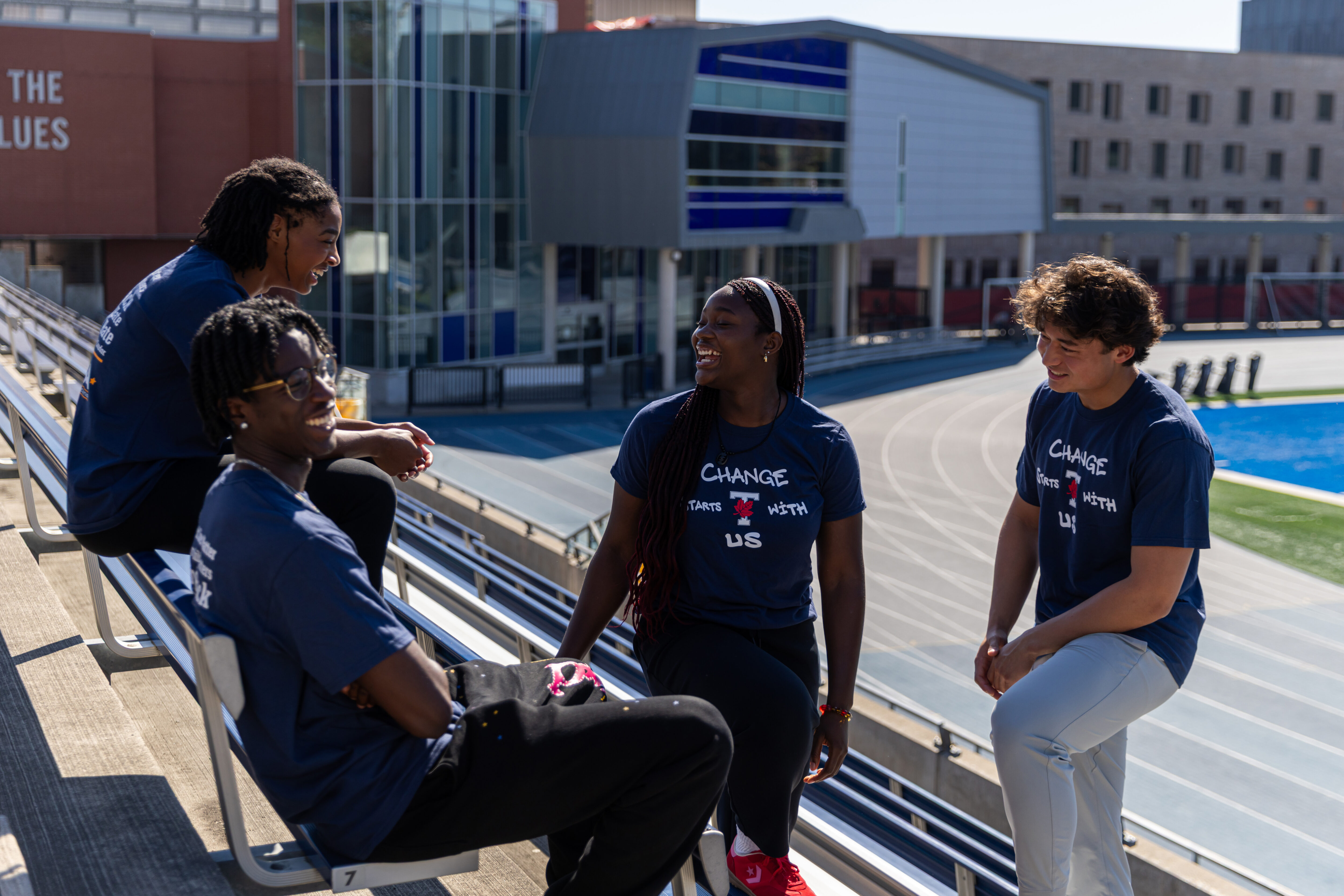
The University of Toronto’s BIPOC Varsity Association (BVA) was created in 2020 by past and present Varsity athletes at U of T, including Devon Bowyer, Sarah Kwajafa, and Alexander Bimm. According to their website, the organization aims to “hold the Varsity Blues program (players, coaches, staff, and faculty) accountable for the experiences its BIPOC members face” through “creating mentorship and reiterating consequences for racism.”
In 2022, The Varsity published a piece on the association’s projects, including their then-new “change starts with us” t-shirt campaign. However, with the founding members cycling out of the organization, making way for a new executive team and members, The Varsity has checked in with BVA to learn about its current initiatives, developments, and changes to the organization.
This year, BVA’s executive team consists of Alex Lin, a member of the Blues’ men’s soccer team; Tobi Oyedele, PK Moyo, and Maakor Okai, members of the Blues’ track and field team; and Faith Joseph, a member of the women’s basketball team.
What is the BVA?
The association is centred around the core pillars of accountability, community, education, representation, and opportunity. Yet, Lin, the current Chair of BVA and fourth-year student, highlights how the organization goes beyond these pillars to support members of the Varsity Blues BIPOC community. In an interview with The Varsity, he discussed how the BVA has developed over time, in addition to the organization’s current goals and initiatives.
Lin describes the BVA as a community for all BIPOC identifying student athletes. “[Our main priority] is making sure that all racialized student-athletes at U of T have a community with which they can identify with, a place to go where others have similar experiences as student-athletes who are often underrepresented in their sport, or underrepresented as students within the university as a whole.” The group fosters this through holding community-building events, including pub nights and socials, potlucks, game nights, and information sessions to get more people involved in the association.
Moreover, BVA aims to create opportunities for peer mentorship so that younger BIPOC-identifying student-athletes have opportunities to hear and learn from those with more experience. “As a racialized person in my sport, as there aren’t many people who look like me playing soccer… [what was most important in my decision to join BVA was] having a community with which I could identify with and share my experiences of being underrepresented for other athletes in their sports.”
The group also aims to cultivate a sense of belonging and advocate for the needs of BIPOC-identifying student-athletes. “Feeling like your voice is heard, whether it be through [community initiatives] or increased representation within the ‘higher ups’ of Varsity Blues programs [is valuable], as [some athletes have] felt in the past that there was not enough representation of racialized people within the [administration]… some [issues can] get overlooked if they are not addressed. If there is nobody speaking up, [problems can] get swept under the rug, which doesn’t allow us to grow as a community.”
While all of the organization’s founding members have cycled out of the association, having completed their tenure as Varsity athletes at U of T, current members continue to work closely with past chairs and founding members to ensure that its original purpose and goals are maintained. “[It is important that the] original vision for the BVA is still being conserved, and the things [we are doing] still [consider] and [reflect] the initial intentions of the [founding] group,” Lin explained.
In addition, the BVA works closely with the faculty of Kinesiology and Physical Education (KPE) to fund and organize their events. In particular, they work with KPE’s director of Equity, Diversity, and Inclusion (EDI), Terry Gardiner, and Natalie Elisha, KPE’s Assistant Manager of EDI.
Past and current initiatives
In the past, BVA has held various events, campaigns, and programs to work towards its goal of building community among BIPOC-identifying student-athletes. One of their most notable initiatives was their t-shirt campaign during the 2021–2022 academic year, which was instrumental in increasing the association’s visibility among the Varsity Blues and U of T communities. “We still hand out t-shirts as a way to advertise our group… people wear them in the gym, for warmups, for games, or even around campus, and that generates interest in what we do… [they also function as a way to] show off our pride in our community.”
Furthermore, Lin also highlights BVA’s other initiatives. “Activities like Black History Month, Indigenous education week, and Asian heritage month, all remain staples in our calendar and are things we look to organize events for throughout the year.” Another notable event is peer mentorship night, which provides “a chance for younger [BIPOC-identifying] student-athletes to meet older ones and share their experiences.”
Some changes have also occurred within the BVA, reflecting adjustments to how community members consume media and garner information. The BVA newsletter, which once provided information about events and opportunities in addition to updates on the BVA’s work, has now transitioned into a larger social media presence, with most communication occurring through the association’s Instagram account.
This new social media presence “allows [BVA] to [more easily] partner with the Varsity Blues and Varsity Board [pages] in terms of reaching more people and gaining more exposure,” Lin explained. This provides more opportunities to grow student involvement. “Every week we have more people following the BVA Instagram… more and more people are interested in what we are doing and want to get involved.”
BVA’s goals for its future
While the association has garnered success with high event turnout and participation, Lin highlights various goals that the executive team has for the group. One of their main goals has been to increase Indigenous representation within the BVA. “We’re looking to add one more member to the executive team that can represent Indigenous culture and values, especially when it comes to organizing events like Indigenous Education Week in the Winter semester.”
Additionally, Lin hopes to ensure that the voices of the entire population of BIPOC-identifying student-athletes at U of T are also heard within the BVA. “The [association] has done a good job of representing BIPOC student-athletes [as a whole], but the opinions of every racialized athlete at U of T [should] be considered, not just those of a small group who want to be involved [with BVA’s day-to-day activities].”
Despite its changes and new leadership, it is evident that the BVA has remained true to its original purpose. “Our main core values and mission have remained the same: to provide racialized student athletes with an environment where they can feel welcomed, connect with others [who have similar experiences].”
Students who are interested in learning more about BVA’s initiatives or joining the BVA community can follow them on Instagram (@bvautoronto).

No comments to display.