
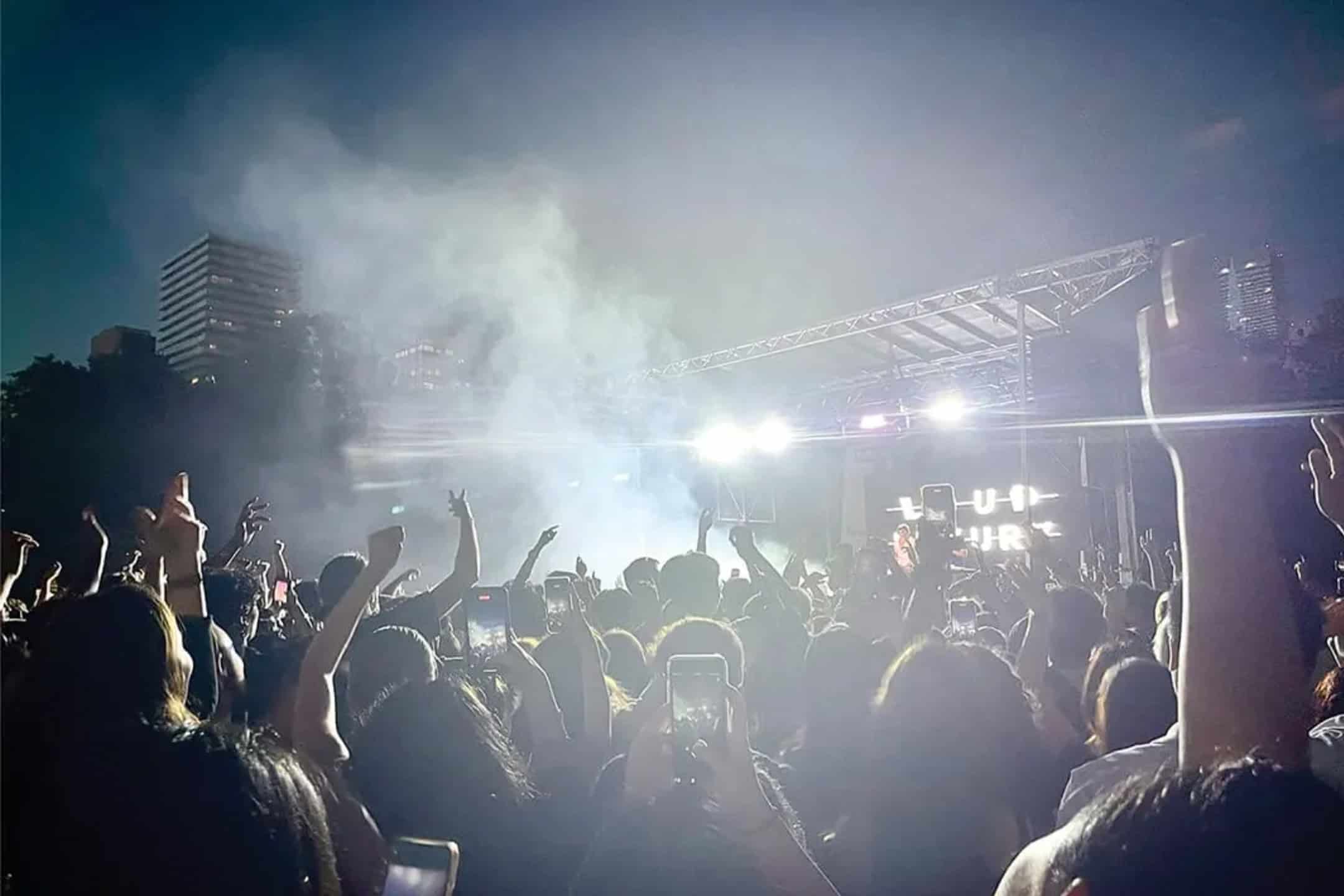
On June 14, the University of Toronto Students’ Union (UTSU) executive committee, the Board of Directors (BOD), and staff held their second BOD meeting of the year. Among other agenda items, the board discussed the possibility of hosting a concert in the 2026–2027 academic year, prompting a debate on its feasibility.
The committee decided to oppose the organization of a concert in 2026, but has “decided to explore the feasibility of the UTSU holding concerts generally,” UTSU President Marie Kinderman wrote to The Varsity in an email.
There has not been an orientation concert held at U of T since 2022.
Financial concerns
A major concern some directors and executives had about organizing a fall 2026 concert was the financial feasibility. Kinderman immediately noted that hosting a concert “would require additional funding in addition to what is currently allocated for orientation.”
The majority of the responsibility for planning a concert would fall to UTSU Vice-President Student Life Verona Awino, who spoke in favour of the event and noted that the concert would be planned in a way that does not require additional funding. Awino added that, with help, she has been drafting requests and reaching out to potential corporate sponsors and has received responses indicating interest.
Awino did not provide the board with a budget for a concert but confirmed that if money was needed from the UTSU, it would be a maximum of $20,000, “but otherwise, the plan is to utilize our [concert] ticket sales… and the rest will be coming from corporate sponsors.”
Chief Executive Assistant and former Director-at-Large Eli Miller-Buza also noted that he’s “very glad that we’re having this discussion earlier this year… but I’m still concerned about the time sequencing of this.”
The UTSU had also discussed hosting a concert in early September 2025, which would have happened later that September. It would have required $100,000 of operational reserve funding in order to secure bookings, according to Miller-Buza.
In an email to The Varsity, Kinderman wrote that the executive committee was concerned that the UTSU “would have to sign contracts with venues and artists (likely totalling over 100k) before sponsorships had been obtained or tickets sold.”
She also added, “Given that the UTSU’s budget for this year does not include provisions for a concert, this would have left us with a major strain on operational reserve funding should sponsorships fall through or [concert] ticket sales fail to meet expectations.”
Miller-Buza also brought up a concern regarding the feasibility of relying on ticket sales for the concert, asking how the UTSU would predict ticket sales, attendance, or even decide how to price the tickets, noting that the UTSU has not hosted a ticketed concert to draw experience from.
Director Areeb Naeem also argued that charging students a fee to attend the concert, on top of the “exorbitant” orientation fees charged by some colleges, would be “unfair to students.”
Organizing a concert on short notice may prove difficult
Another concern echoed by multiple speakers was whether a concert would even be possible on a short timeline.
In the meeting, Kinderman noted that hosting a concert at Varsity Stadium, as Awino suggested, would be “challenging,” as they are “very booked up” throughout the early part of the year, especially if they have not been contacted to host the concert yet.
Awino confirmed that Varsity Stadium had not yet been contacted about serving as a concert venue, adding that she’d like to confirm whether or not the UTSU would be able to meet the stadium’s requirements for a concert before reaching out.
Kinderman also reiterated an earlier concern that organizing a concert may require the UTSU to seek extra time from employees, adding that “this may not be part of their job description, so I’m very cognizant of that.”
In an email to The Varsity, Kinderman provided further comment on this issue, writing that “Planning a concert on these timelines would have made it a whole of organization effort, which would have required to [sic] the UTSU to reassign staff from other duties to concert organization.”
Concerns raised over hosting a concert amidst Bill 33
Throughout the debate, Kinderman raised concerns about the impact of Bill 33 on student unions, arguing that hosting a concert at this time would be “not responsible.”
“I think that we have to be confident about the decision that we make with this,” she said, noting the possibility of the UTSU’s fees being “investigated” by the government under Bill-33 and the potential funding cuts that may result.
Kinderman later added that “at this current time, we should focus on our current programming,” which includes promoting their levy groups and advocating for the services the UTSU already provides.
In an email to The Varsity, the president wrote that as an expense, “A concert would almost certainly be deemed unnecessary” if the UTSU’s fee lines were to be scrutinized by the government. She added that orientation-related fees are at the same risk, “eliminating [them] as a potential funding stream for a concert (even if it was sufficient, which it is not).”
Kinderman also clarified that the decision of the executive committee to oppose a concert in 2026 “was primarily driven by factors other than Bill 33. The general consensus was that there was not enough time for the UTSU to organize and plan a concert for fall 2026.”
However, according to Kinderman, “the executive team has decided to explore the feasibility of the UTSU holding concerts generally, and hope to report the findings of this investigation to the BOD when it is complete,” meaning that future concerts are not out of the question.

No comments to display.