
“The first step to solving a problem is recognizing that one exists” is a helpful framework to keep in mind in many domains of life, including in medicine. On the whole, humans are pretty great at identifying problems.
However, there is a notable exception: cancer treatment. Screening for many cancer types continues to be riddled with limitations, barring clinicians and patients alike from quickly understanding the nature and scope of the illnesses’ effects.
As with other health challenges facing society, an aging population will exacerbate the current burden of cancer treatment on the health system. There will soon be a larger number of patients diagnosed with cancer and those who may succumb to the illness. Will there come a time when that’s no longer true?
AI to the rescue
Improving cancer screening and detection has been scientists’ goal for decades. But now, they are equipped with numerous new technologies, including artificial intelligence (AI). An example is ClarityDX Prostate, a machine-learning model for prostate cancer screening developed by scientists at U of T, the University of Calgary, the University of Alberta, Johns Hopkins University, and others.
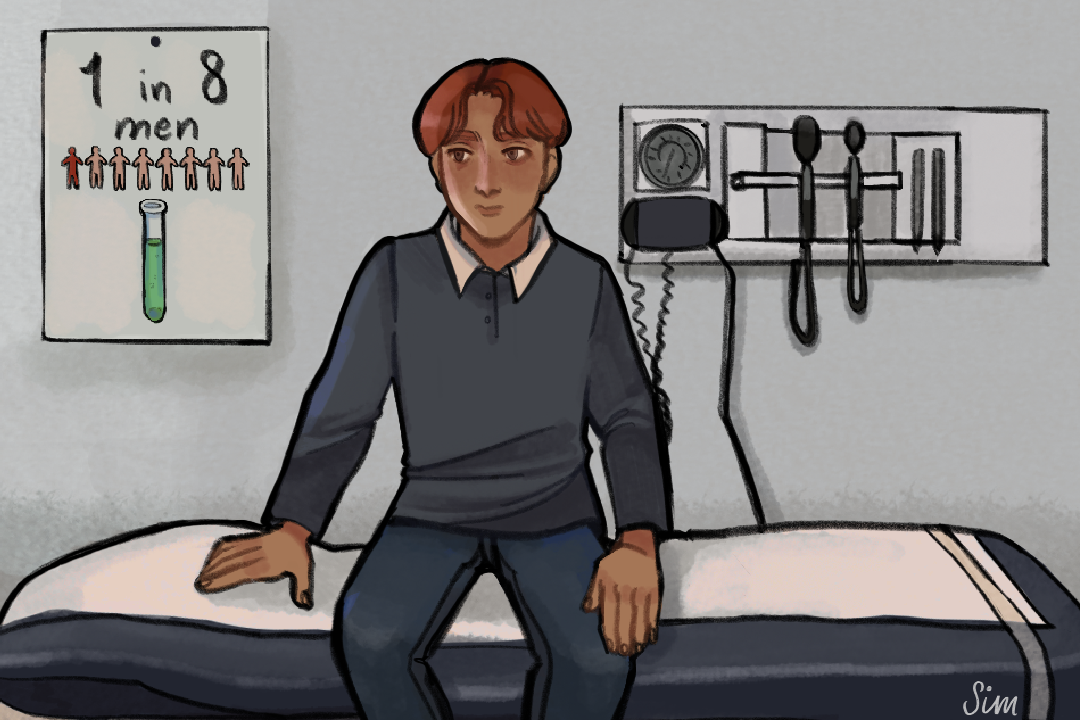
Currently, the prostate-specific antigen (PSA) test is used as the first-line screening method or a first test for prostate cancer screening. After drawing blood, the patient’s PSA level is checked. A high amount of PSA could indicate the presence of cancer. But there are many false positives — as many as 75 per cent through this method. Drinking and having other prostate-related conditions, like inflammation and urinary tract infections are associated with false positives. Many factors apart from the presence of prostate cancer can result in elevated PSA levels.
Not only is a false positive anxiety-provoking, but it also leads to unnecessary biopsies — removing bodily tissue for examination by microscope — that can have complications including bleeding, infection, and numbness. The ClarityDX Prostate model aims to act as a second line of screening following a suspected case of prostate cancer prior to the patient moving forward with invasive and expensive detection methods like biopsies.
ClarityDX Prostate captured cases at a similar rate as other tests — such as PSA — but flagged significantly fewer false positives. This is likely because the model takes in several inputs apart from PSA such as age and previous biopsy results, providing a more complete picture of the patient’s cancer risk. Ultimately, despite prostate cancer screening being widespread, the screening tests continue to recognize many false positives. Even with ClarityDX’s significant improvement, the specificity sits at 35 per cent, compared to the specificity of mammograms at over 90 per cent. ClarityDX Prostate is a step in the right direction, but there remains room for growth.
Genetic predisposition and new advances
While the environment plays a large role in the development of some forms of cancer, some people also have strong genetic predispositions to developing certain cancers. This includes patients with hereditary breast and ovarian cancer and Li-Fraumeni syndrome, an incurable disorder where a gene that usually suppresses tumour growth is mutated, predisposing carriers to developing cancer. Most of these patients develop one or more cancers during their lifetime.
In 2011, scientists and clinicians led by David Malkin — U of T alumnus and senior staff oncologist at SickKids Hospital — developed the Toronto Protocol for Li-Fraumeni syndrome patients. The Toronto Protocol involved following patients with extensive and frequent blood tests, ultrasounds, MRIs, and more. They found that patients undergoing surveillance as per the protocol were much more likely to fare well over time.
Now, Malkin, Trevor Pugh — senior scientist at Princess Margaret Cancer Centre — and their team are endeavouring to further improve care for these patients by using a novel three-platform approach to monitor patients with Li-Fraumeni syndrome. The three platforms all look at an aspect of circulating tumour DNA (ctDNA). As cells naturally die in the body, they shed DNA. When tumour cells die, they shed DNA too, and this ctDNA is then analyzed via three approaches: changes to genetic sequence, the methylation signature — determined by the parts of DNA that have a marker on them which impacts which proteins are produced by a cell — and how large the fragments of DNA are.
However, “Why [are we] doing all three of them?… What we found… is that in any one patient, they won’t necessarily […] have all three things going on. They either [had] a methylation signature, a new mutation… or they had smaller fragments,” explained Malkin in an interview with The Varsity.
When analyzing the ctDNA of patients who had active cancer, they detected the presence of the cancer using one or more of the platforms with high specificity. But the most exciting part? Several patients “Who did not have any clinical manifestation of cancer whatsoever that we could detect in any other way… had one… of these abnormalities in their circulating tumour DNA, suggesting that there may be at least a very tiny cancer somewhere that… would presumably grow out [with time].”
The idea is to complement the classical surveillance laid out in the Toronto Protocol with this three-platform approach. If the ctDNA analysis flags a suspicious signal suggesting something may be awry, classical detection techniques like MRIs or CTs would come in to dig deeper.
More recently, Pugh, Malkin, and their team have used a machine learning model to look specifically at the fragmentation of ctDNA, finding that certain patterns in the DNA could be used to accurately distinguish between healthy patients and those with Li-Fraumeni syndrome who were cancer-free at that time.
There is a lot of exciting research on the horizon for cancer screening and detection. But at the end of the day, none of this would be possible without patients volunteering to participate in studies and clinical trials. “It’s a new feature in the funding landscape and [they’re] a new member of team science,” Pugh explained in an interview with The Varsity.
