
In Canada, nearly two out of every five individuals will be diagnosed with cancer in their lifetime.
But patient experiences with cancer care are shaped by more than just biology. Identity, race, socioeconomic status, and geographical location can make all the difference when accessing cancer treatment and, therefore, patient outcomes. Those facing healthcare inequities, like long wait times for appointments, are more likely to be diagnosed with and die from curable cancers.
In Canada, cancer surgery and diagnostic procedures have faced significant backlogs since the COVID-19 pandemic. Beyond long wait times for procedures, many appointments are often postponed, delayed, or even cancelled. These delays are linked to a chronically underfunded healthcare system.
The needs of cancer patients are going unmet, but why? Where are the gaps in our current cancer care system, and how can they be mitigated? Healthcare professionals and cancer care practitioners like those at Women’s College Hospital hope to build new solutions for the Canadian healthcare system that address these equity concerns.
Among them is Dr. Ambreen Sayani — an assistant professor at the Institute of Health Policy, Management, and Evaluation (IHPME) at U of T, as well as the principal investigator at the Advancing Cancer Care Equity (ACCE) Lab.
Team science
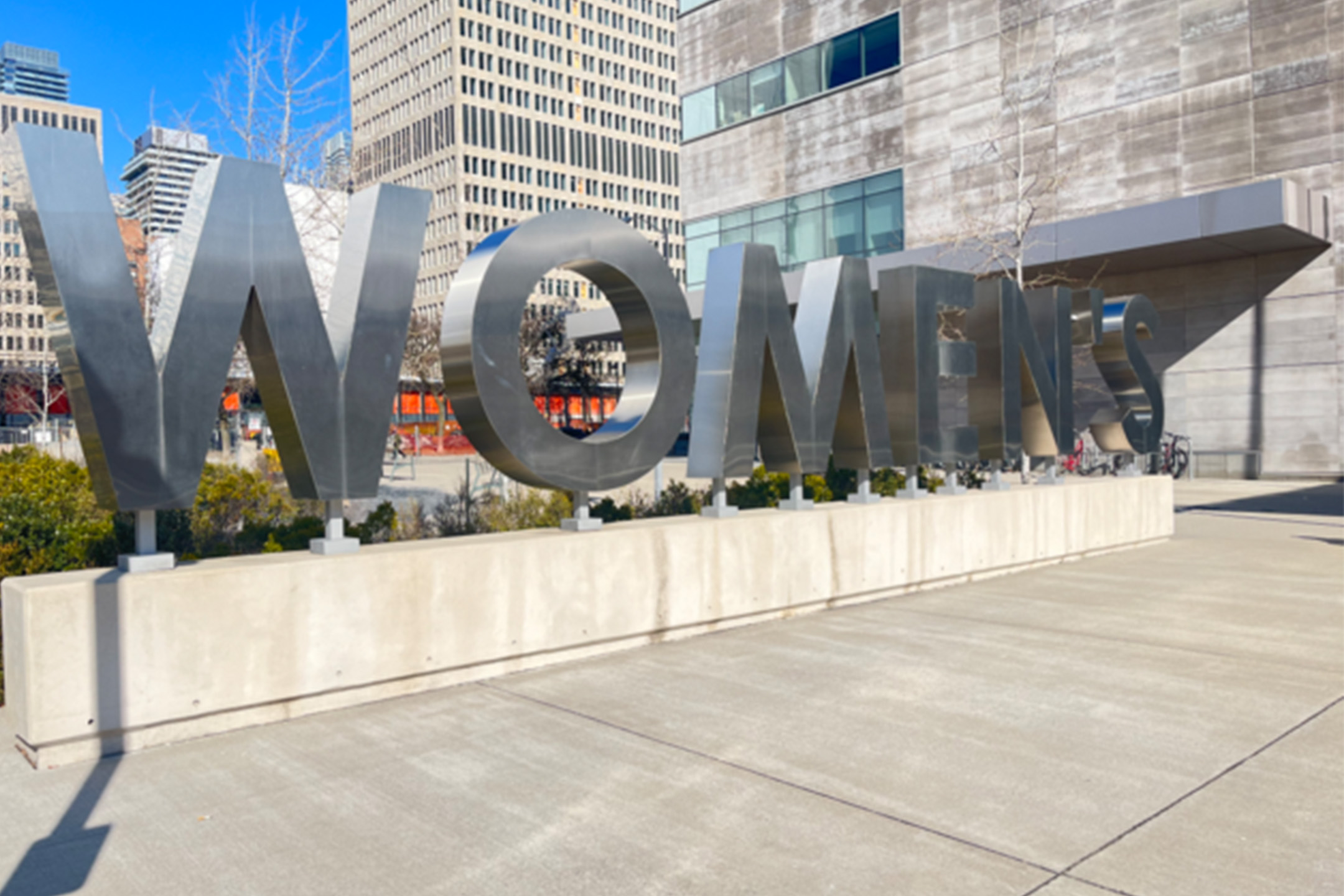
Based in the Women’s College Hospital in Toronto, the ACCE Lab is building tools, solutions, and resources for cancer patients, on topics like accessing care, screening and treatment.
In an interview with The Varsity, Sayani shares her lab’s research philosophy: “[By accounting] for those that are most excluded, you [can create] the most inclusive system possible.”
In practice, the ACCE’s work includes projects like the Equity-Mobilizing Partnerships in Community (EMPaCT) stream, which is designed to incorporate patient and expert insights into tools and frameworks for cancer care. This approach is known as “team science.”
By assembling teams that are from a variety of backgrounds, researchers can yield greater scientific impact. This collaborative work has translated into real-world impact, for instance, in cancer screening for patients in the UK.
Team Womb, led by researcher Emma J. Crosbie at the University of Manchester, also applies a team science approach to cancer discovery.
In women with Lynch syndrome, the risk of developing colorectal cancer occurs at about the same rate as endometrial cancer, which occurs in the lining of the uterus. Before Team Womb’s research, existing testing for Lynch syndrome was either nonexistent or extremely patchy in women with endometrial cancer. This creates a gender-based health inequality for people with uteruses who are not screened for Lynch syndrome, leaving them unable to reduce their risk of future cancers through measures like colonoscopic monitoring and hysterectomies.
To fix this gap, Team Womb set out to create an affordable and feasible screening method for endometrial cancer for women with Lynch syndrome. In a 2025 Nature Reviews Cancer article, Crosbie writes about how her “research benefitted from expertise spanning gynaecology, genetics, pathology, oncology, psychology and health economics.” This group of researchers used their various expertise, in collaboration with cancer patients in support groups. Including patient and expert perspectives was key to creating a standardized mode of testing that is cost-effective, and can be easily incorporated into routine care, leading to higher rates of diagnosis.
ACCE lab streams of study
By collaborating with community members and caregivers, researchers at ACCE are incorporating perspectives that go beyond clinical and biomedical observations. According to Sayani, the lab does work “basically across three streams.” The first, the “equity-promoting team science” stream, co-designed the EMPact project. Their work focuses on issues of equity, specifically focusing on creating solutions that enable the inclusion of people who have traditionally been excluded from healthcare decision-making into those positions.
A second stream of focus for the lab is the “women and gender-diverse people’s health stream… [where the lab is aligned towards Canada’s] goal of eliminating cervical cancer by 2040.” Efforts towards this goal include increasing access to the HPV vaccine, and increasing regular screening and timely follow-up care. Sayani said that “this stream of the lab is really focused on… actually mak[ing] those decisions that will make all of these pieces more accessible to people.”
The last stream is the “lung health equity stream.” In Ontario, First Nations people experience lung cancer at a rate that is 19 per cent and 48 per cent higher in Indigenous men and women, respectively, compared to their non-Indigenous counterparts. Structural barriers, such as availability and access to health care services, including preventive services such as lung cancer screening, contribute to poorer lung cancer outcomes in this at-risk population.
Through the lung health equity stream, Sayani’s research includes identifying effective interventions for increasing the equity of lung cancer screening (LCS), which is not often utilized by groups at high risk for lung cancer. Prevention is an incredibly important aspect of cancer care, and getting treatment early may be life-changing for lung cancer patients. After analyzing more than 3,000 peer-reviewed articles with an equity-focused framework, her research found that the most effective interventions were socioculturally specific, targeted high-risk populations, and did not depend on patients being previously registered with the healthcare system.
Looking ahead
For future cancer care initiatives, team science is a key method for addressing the barriers between patients and access to equitable cancer care. By working with cancer patients with diverse perspectives, researchers like Sayani can create better resources for individuals trying to access and receive care.
However, team science isn’t problem-free: it requires time, a precious resource for people with cancer. A true collaborative approach requires recruiting individuals with lived experiences across socioeconomic backgrounds, slowing the pace of problem-solving. Gathering these members may take time, delaying access to patient care solutions.
However, Sayani notes that once these solutions are created, they can be implemented right away, providing better care to all cancer patients, regardless of their background. When time is of the essence, using innovative approaches like team science is crucial to delivering patients the care they need, when they need it.
Sayani’s work on patient-centric care is especially influential for students studying medicine at U of T, who will shape the next generation of cancer treatment. For graduate students interested in working at IHPME, she also accepts master’s students for research, with listed focuses including social determinants of health, patient engagement, and models of care.
Editor’s note: The author is affiliated with Advancing Cancer Care Equity (ACCE) Lab.

No comments to display.