
I am reaching the age where it’s looking pretty certain that dreams of professional contracts, bringing the title home to my hometown, and playing in the World Cup finals are factual impossibilities.
I confess that when I see 18-year-old Lamine Yamal not only compete, but dominate at the highest level of soccer, or drafted teenagers whose birth years get larger and more distant from mine, I can’t help but feel an insecure shred of jealousy, and a bitterness for a door that has been closed to me forever. But time is not a friend or foe, and will move indifferently forward, without even a glance back at the moments our bodies occupy.
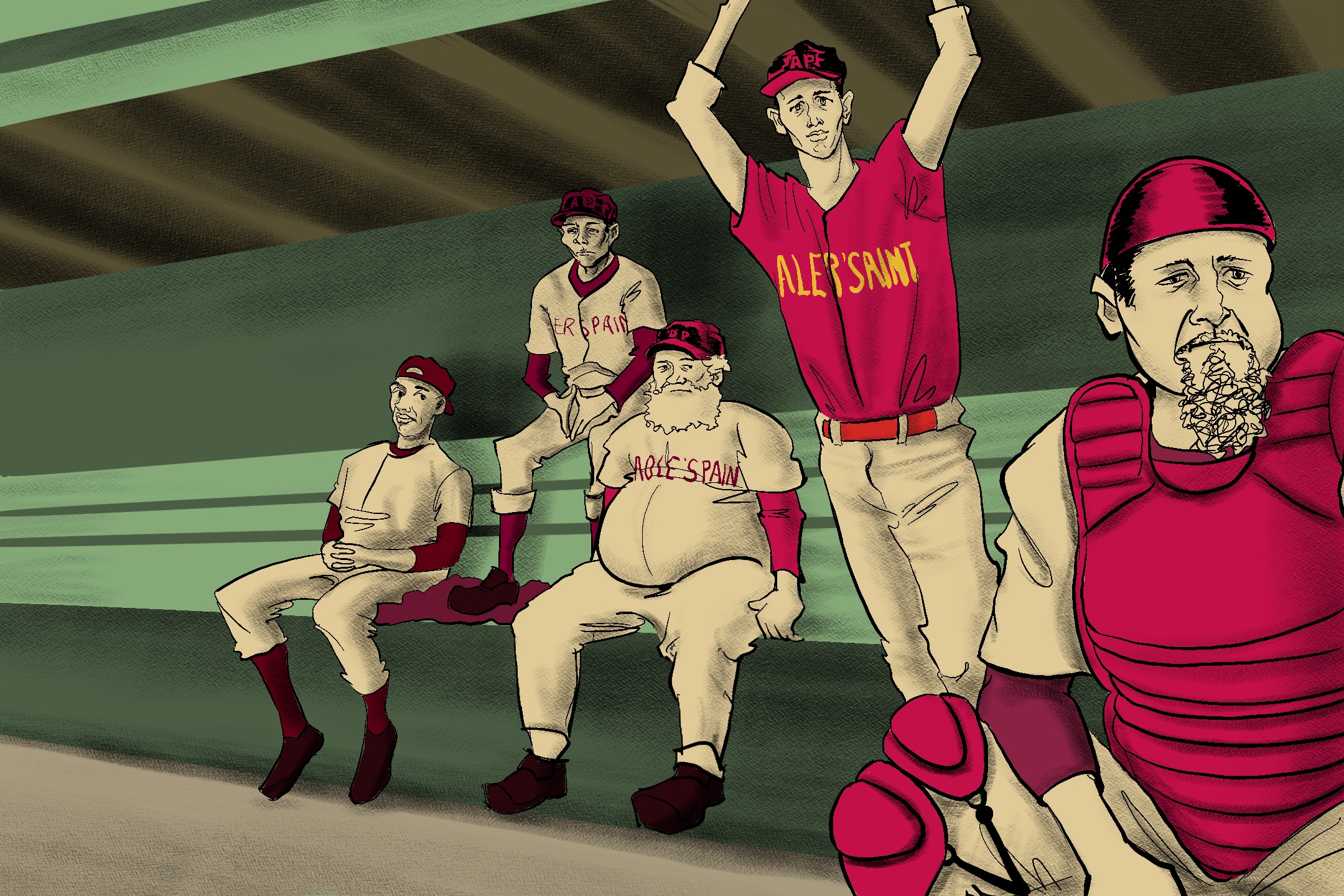
Set in a small Massachusetts town in the 1990s, Carson Lund’s directorial debut, Eephus, follows the last ever game between two local amateur baseball teams. The film is named after an eephus pitch, which is described by a pitcher in the movie, Merritt Nettles (Nate Fisher), as “a type of curveball that is pitched so unnaturally slow that it confuses the batter.” Hardcore baseball fans will enjoy the cameo of MLB pitcher Bill “Spaceman” Lee, who is credited with popularizing the eephus pitch.
Nettles goes on to describe the pitch as something that “stays in the air forever. You get bored watching it. I get bored. And the hitter does, so he tries to swing at it like normal. But it’s already past him, or it waits until he’s done swinging. The eephus makes him lose track of time. It’s pretty mean that way.”
A fellow teammate, Cooper Bassett (Connor Marx), really hits home the central metaphor by replying, “I like that it’s kind of like baseball. I’m looking around for something to happen, then poof, game’s over.”
The film has no protagonist or any plot beyond the actual game being played out on the field. Politics are at the periphery, and only exist in the passing comments of the elderly, the quiet voice on the radio, and the small signs that adorn the field. Interestingly, the field is being replaced by a public school, rather than a condominium complex or a mall.
Much like in real life, you can choose to make what you want from these details, but the film is far more interested in capturing that tender pleasure of amateur sport than holding any kind of ideological position. The performances of the older gentlemen in the crowd and on the field, full of whimsy, crass gruffness, and minor feats of athleticism — potbellies, aching joints, and all — are a highlight.
A valid criticism of the film is that it drags on at times, and this movie certainly won’t appeal to everyone. It’s a little tedious, which is a criticism often levelled at baseball itself. There’s little tension in the baseball game that’s being played out. But the film’s quaintness and lack of concrete direction are also its charm. Lund fills the movie with subtle joy, visually in the form of beautiful lingering shots of the baseball field in golden autumn glory, and in the relatability of the quirky chirps and mundane frustrations of the characters.
None of these moments are dramatic, awe-inspiring feats of humanity. But anyone who has ever played an amateur sport or grown up around this culture of small sporting communities will be able to relate to and understand the smaller pleasures Lund is trying to emulate. The browning leaves on a pitch. Losing balls. Collective obscenities at your opponents and the referee.
More than anything, the film is like watching a local pickup game at the park. You notice the relationships and the camaraderie of the players in their small interactions and plays. You briefly imagine the lives of these players, the spectators, the collective tracking the ball with their eyes. Polite claps, small cheers. The movie truly hits it out of the park when it comes to expressing a communal nostalgia.
Eephus is a strong indie baseball film that reminds you that time isn’t marked by superstar plays or life-changing dramatic endings, but by a thousand quiet goodbyes to the way things were. And those moments — like the film — are quietly beautiful.

No comments to display.