
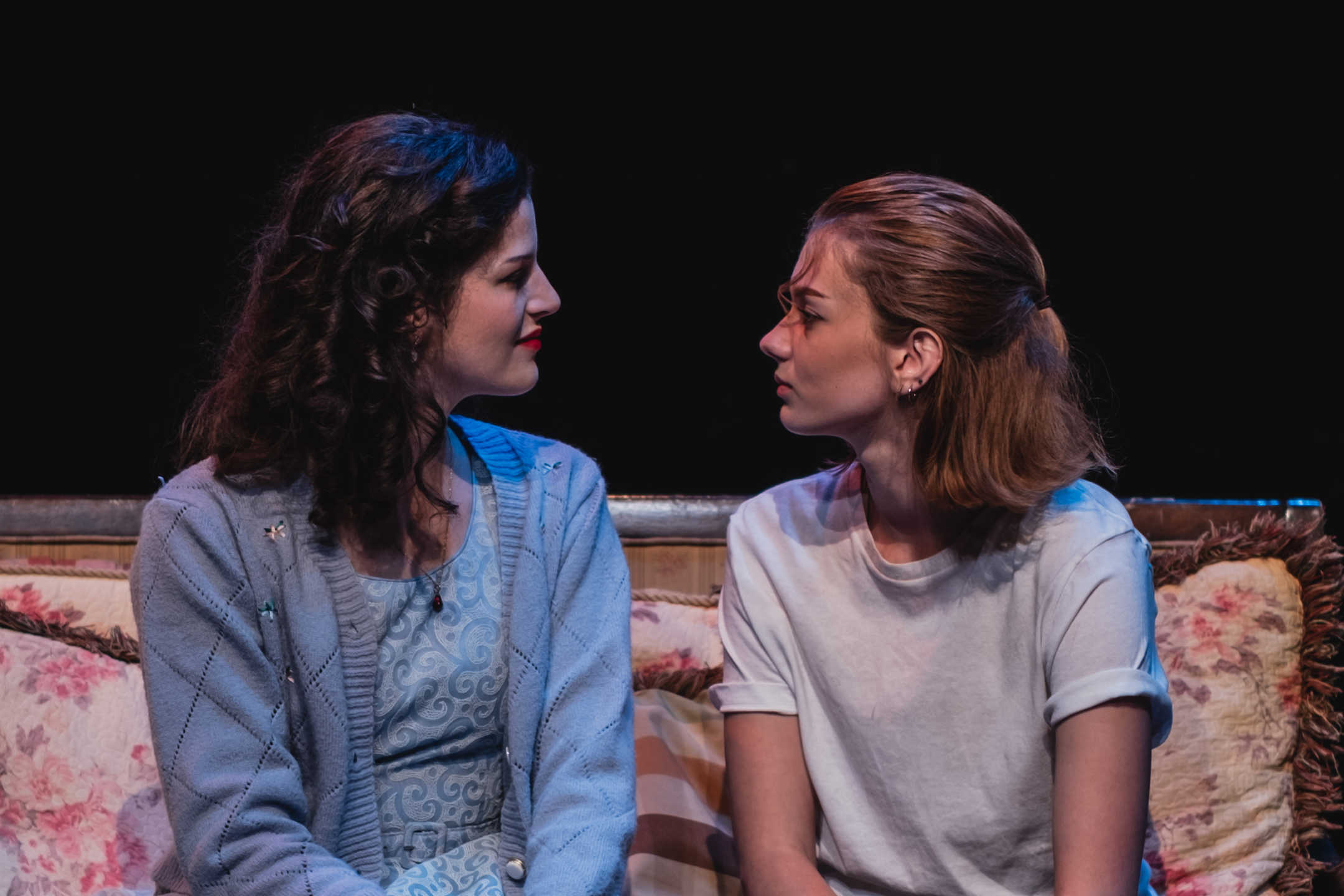
Being an artful soul at the University of Toronto can be frustrating sometimes. Especially in the humanities, having to approach art and culture as an academic can be alienating or even discouraging for students who are more creatively inclined. One will study masterpieces like the Mona Lisa, the statue of David, or the movie 8½ for class, wondering: ‘When and how am I ever going to make it?’
Every now and then, it is encouraging to hear news of fellow students having success in creative areas.
When I met with Emily Paterson — a fourth-year student in English and Drama — at University College’s Café Reznikoff, she had just completed a successful, weeklong run of her play BUTCH/FEMME at downtown’s famous Theatre Passe Muraille. But Paterson originally conceived the play on U of T grounds.
In an interview with The Varsity, Paterson spoke on the process of building the play from scratch. “I started [writing] it in my second year playwriting class, and I kept writing it over the summer,” she said. “It was just an eight-page scene for that class, and then I submitted it to the Hart House Drama Festival, which happens every year.”
BUTCH/FEMME caught the attention of festivalgoers — and one person in particular. This year, when BUTCH/FEMME competed, Hart House Drama Festival was being adjudicated by Marjorie Chan, the artistic director of the Toronto theatre company, Theatre Passe Muraille.
Chan awarded BUTCH/FEMME the President’s Award for Best Production, and gave Paterson valuable feedback about the play. To Paterson’s surprise, when she asked Chan where she could take the show next, Chan offered that she bring it to Theatre Passe Muraille.
Paterson recalls that the process of moving the play into a bigger and more recognizable venue was “a real learning experience.”
“We were in this campus environment, which was deeply DIY. We had one show, we had six weeks to do it. Now, we had months to put it together and actually had money this time. We had proper resources. We had professionals in the industry to give us mentorship.”
BUTCH/FEMME opens in a 1950s-esque room, where a woman named Jenny (Annabelle Gillis) hears a knock on the door. Clad in contemporary leather clothes and marked with a scar on her eyebrow, Jenny’s ex-lover Alice (Tessa Kramer) mysteriously reappears in her life. The story plays out as a 75-minute conversation between the two characters on questions of forgiveness and acceptance.
“I never wanted more, I wanted out!” proclaims Alice, reflecting on the mistreatment she faced as a queer person in her conservative hometown. The period piece setting serves as a solid ground to explore issues of gender and identity within Paterson’s framework. “I’m very interested in the way the past speaks with the present, and the ways the present reflects the past,” Paterson said.
“There’s a bad habit for a lot of people to approach history as something that has happened, and not something that is happening anymore. Particularly with issues of queerness, a lot of people are of the belief that because queerness is generally more well accepted now, it’s not an issue anymore.”
There is a timelessness to the play as Paterson intended the dialogue to draw a parallel between the issues and struggles queer communities faced back then with the present.
Meanwhile, Alice’s return home suggests that she didn’t exactly find the acceptance she sought in the big city either. The play deals with the need for safe spaces for queer women, and sometimes the lack thereof. “So much of homophobia is specifically directed towards lesbians –– its roots are found in misogyny,” Paterson elaborated. “The issues they talk about of needing a space, that is as much a women’s issue as it is a queer issue.”
As reported by the director, the actors follow their instincts about the blocking onstage. Both Kramer and Gillis are remarkable at getting the emotions of their characters across, through the physicality of their movements in correspondence to the twists in the story. But the feelings are also conveyed through the subtle tweaks in the lighting, and touches of diegetic ’50s radio music, and the contemporary acoustic guitar music that communicates that symbolism of how the past speaks to the present.
When BUTCH/FEMME played the show that got them their spot at the Passe Muraille, it was not a finished play. “A festival… is meant to be for works-in-progress, which I think a lot of people forget about… The reason I think BUTCH/FEMME did so well is because it was a more stripped-back performance. It allowed itself to be grounded in this real world, in this relationship, these two characters, and really focused on this dialogue that they’re having.”
Besides being a multi-layered, accomplished, and urgent work, BUTCH/FEMME can also be a source of inspiration to other students who want to have their art exhibited to larger audiences.

No comments to display.