
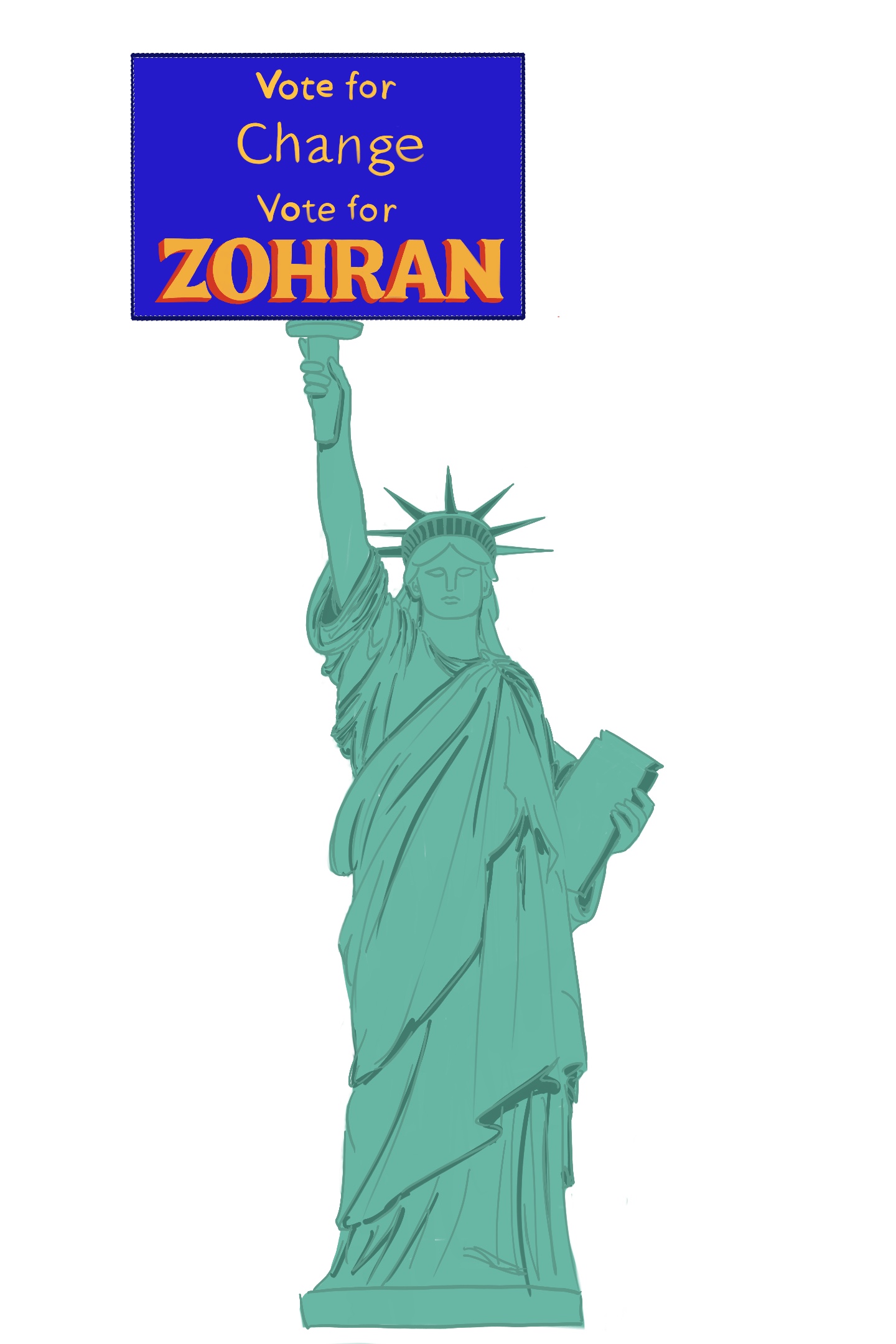
On November 4, Zohran Mamdani made history by becoming New York City’s first South Asian and Muslim mayor, as well as its first mayor born in Africa and of Indian origin.
My social media feed has been filled with celebration from South Asians, Muslims, and immigrants celebrating this political win. I started to wonder: why are so many people, including non-New Yorkers, taking pride in New York’s mayor-elect?
Over the past decade, the US, once hailed as the land of opportunity and freedom, has become a place where exclusion, racism, and xenophobia directed towards immigrants are being normalized. In the midst of Trump’s divisive presidency, which has been defined by a crackdown on free speech, violent ICE raids, and divisive rhetoric, Mamdani’s historic win has brought hope back to politics.
For many, Mamdani represents a new kind of leadership, one rooted in empathy, justice, and inclusion. To see a Muslim, African-born, South Asian man leading one of the world’s most influential cities, is moving. I believe that Mamdani is the embodiment of a politics of hope that aspires for better and that can belong to everyone — including the working class and marginalized people, not just the top one per cent.
His democratic socialist platform called for taxing the rich, including a two per cent tax increase on New Yorkers earning more than $1 million a year. This would help pay for affordable housing, public transit, and healthcare projects. His message resonated with New York’s working-class voters who felt ignored by current politicians.
Despite $22 million in opposition spending and waves of Islamophobic attacks, Mamdani stayed true to his principles. When challenged on his background, he didn’t shrink; he responded with grace and intelligence.
During the campaign, Mamdani faced a shocking amount of Islamophobia. He accused the Super PAC, supporting former New York governor and independent candidate Andrew Cuomo, of manipulating an image of Mamdani to make his beard appear darker and longer, and playing into racist stereotypes of Muslim men. Additionally, Cuomo said that Mamdani would celebrate “another 9/11.”
In an era where Islamophobia and xenophobia have intensified, Mamdani’s unapologetic embrace of his faith and culture felt authentic. In Mamdani’s words, “I am Muslim. I am a democratic socialist. And most damning of all, I refuse to apologize for any of this.” As a Muslim myself, his confidence and pride in his identity resonated deeply.
Mamdani’s charisma and genuineness have set him apart, as he was vocal in his criticism of President Trump’s anti-immigrant policies and his criticism of capitalism, positions that earned him both admiration and backlash. Yet, he refused to waver, giving New Yorkers something they haven’t felt in a long time: a politician who stands firm and for the people.
Mamdani had the biggest turnout among youth voters and first-time voters, compared to his competitors — 78 per cent of voters under 30, according to ABC News polls. Youth support for Mamdani is an example of the onset of a progressive, newer generation. In New York, younger voters shaped the conversation around contemporary policies and inclusivity.
Among first-time New York City mayoral voters, 66 per cent supported Mamdani, many of whom were immigrants and young people, compared to 47 per cent of returning voters. Newcomers to the city backed him, with 81 per cent voting for Mamdani. His message of progressive change clearly resonated in New York among youth, and citizens were moved by his vision and leadership.
Mamdani’s campaign spoke to the current generation, as his social media videos showed him speaking directly to voters in English, Spanish, Hindi, and Arabic. This became a defining feature of his campaign as he embraced the often-overlooked communities that make up New York. The United Bodega Workers of America, the New York State Nurses Association, and the New York City Taxi Workers Alliance endorsed Mamdani, symbolic of Mamdani’s willingness to reach out to the diverse communities that make up New York City.
When Mamdani ended his victory speech with the Bollywood song, “Dhoom Machale,” meaning “create an uproar,” it was both a celebration and a declaration. It said that immigrants, their joy, and culture belong in one of the world’s most influential cities.
Mamdani’s victory was celebrated by immigrants, South Asians, and Muslims, across the world. For our communities, his win was more than a political milestone. For me, it is proof that resilience, empathy, and authenticity can still “create an uproar” powerful enough to shake the world.
Ishmul Malik is a second-year student at the University of Toronto Scarborough studying journalism and political science. She is an International Affairs Columnist for The Varsity’s Opinion section.
