

The unassuming red-brick building sitting on the corner of Bancroft and Spadina gives no hint of the colourful art adorning the interior of First Nations House.
Located in the North Borden building, this hub of Indigenous student life was founded by Diane Longboat in 1992. Today, it has grown to a small but robust community, staffed by Traditional Teachers and coordinators for programming, peer mentorship, wellness, and career education, among others.
The Varsity sat down with Jenny Blackbird, First Nations House Resource Center and Programs Coordinator, to discuss the work of Indigenous House and the joys of building a strong Indigenous community on campus.
The Varsity: Tell me about yourself, your role here — what does a typical day for you look like?
Jenny Blackbird: I’m the Resource Center and Programs Coordinator, First Nations House, Indigenous Student Services. My late father’s side of the family is from Kehewin Cree Nation in Alberta, and my mom’s side of the family is from Finland. I grew up in Toronto, and I’ve been working at First Nations House since November 2021.
I spend a lot of time planning and organizing. We have full moon fires every month, so I have to ask student Fire Keepers if they can help, if they can come learn. Then we have Fire Keepers that already know the ropes, so I just have to arrange who’s going to be where.
And sometimes I go speak to classes and do presentations and talk about different Indigenous topics. I’ll tell them about the Indian Act, or the restrictions, or the things that Indigenous people still face, like the racism, and sometimes people are like, ‘Oh, I didn’t know this.’ They’re shocked.
It’s nice to actually have a chance to meet with people and also remind them that they should continue to listen to various Indigenous voices. So it’s good when people are curious, and they come into the library, they come to First Nations House, they come to the teaching circles we have.
It’s really nice that we can engage with Indigenous students and support them, as well as some non-Indigenous staff or students or faculty.
TV: In what ways do you support students? What does that look like? What services do you provide?
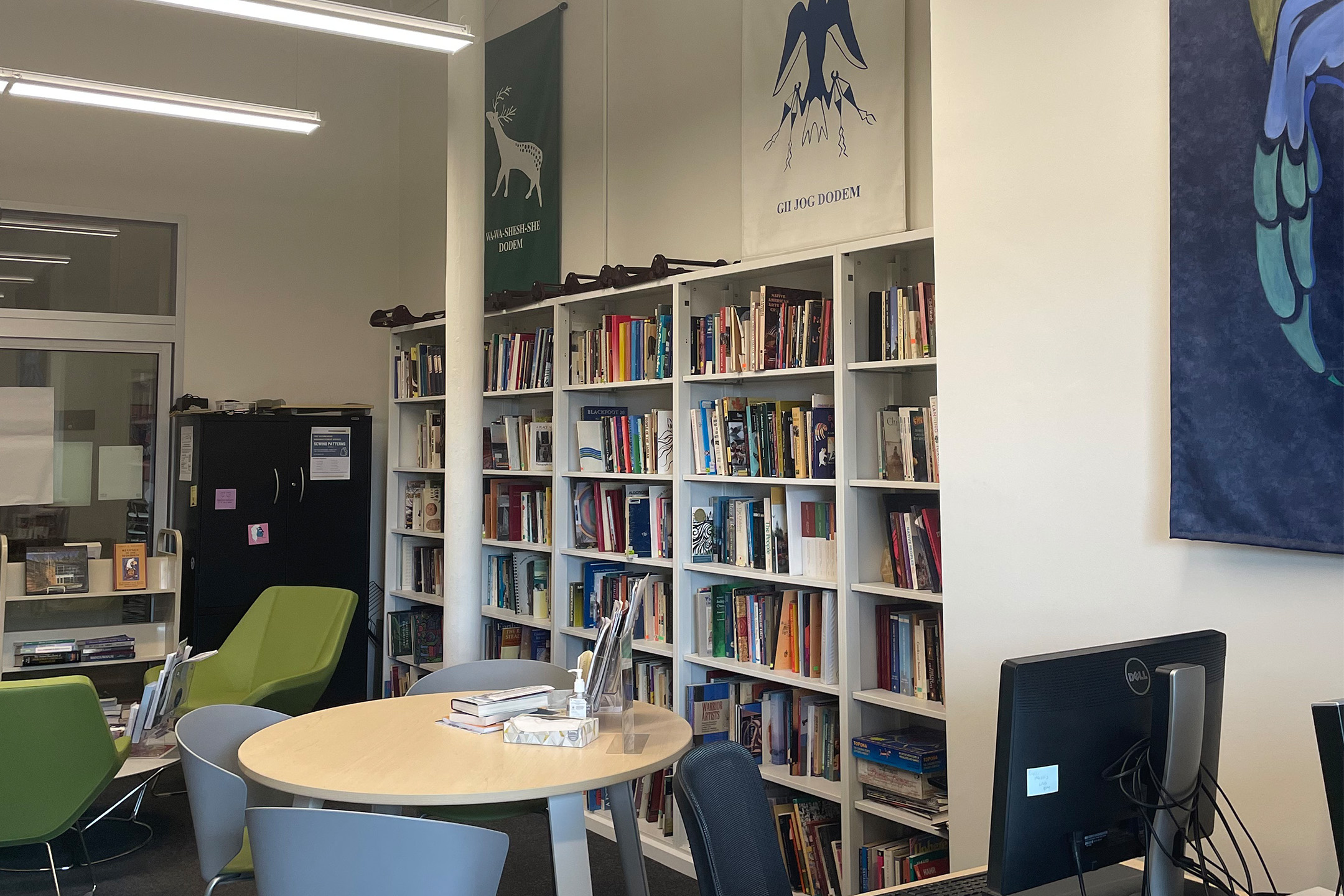
JB: With the library, I can support them by showing them different materials. I want to try and have books mostly written by Indigenous people. There are some older books that are non Indigenous, but I’ve been trying to weed those out, and then bring in contemporary voices as well.
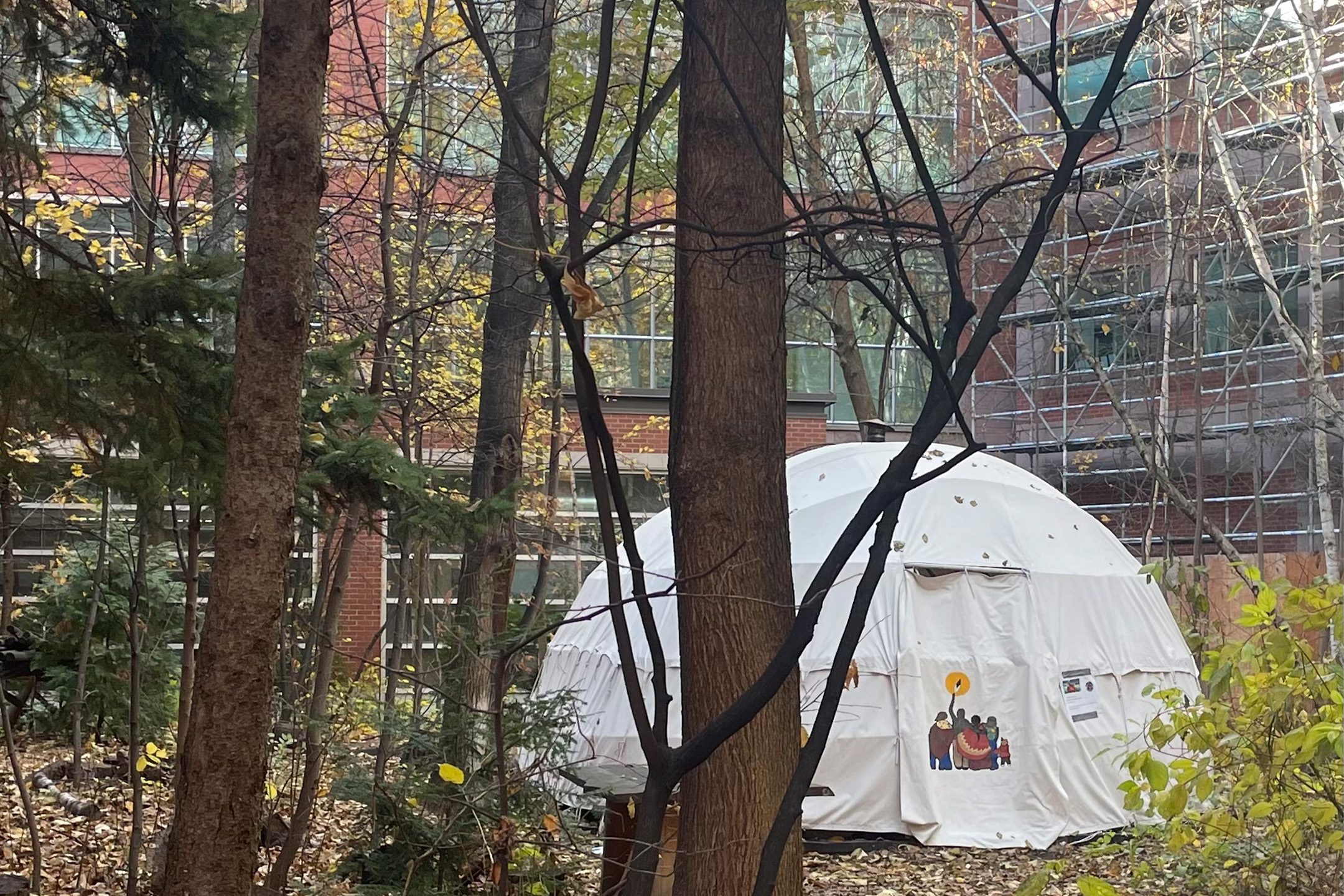
And then I also take care of the Teaching Lodge and the medicine table. So we have the sage, sweet grass, cedar and tobacco, and I make sure that it’s all on the medicine table we have at the lobby so that people can come and take some.
And then, just listening to students, hearing what fun things they’re doing and also, if they come in and they’re having a hard day, they can chat with us.
We also have a Fire Keeper training program, so I organize with them when they come and help us with the full moon fires.
Photocap: The Teaching Lodge, where teaching circles are held by First Nations House Traditional Teachers Andrew Wesley and Bonnie Jane Maracle.
TV: Have you noticed the Indigenous community at U of T change during your time here?
JB: I mean, it’s very different, because many students I’ve met recently didn’t know about First Nations House until maybe, like, their second or third year, and then they walk in and go, ‘I didn’t know it was here.’ And then we have time to catch up.
I see that in the last couple of years, because COVID has really isolated us and kind of separated us, it took a while for things to really come back and be very active. There were a few students who were really, really key to creating community here, and one of them is Devo Moosewaypayo, who won a President’s Award.
She was part of the Indigenous Student Association, and she created events like bi-weekly lunches. She and her fellow students were really active, like Alicia Corbiere, who did Anishinaabemowin lunch.
So they’ve been coming back very slowly; in the last week of August, students were coming in already. So it’s nice because I’m hoping that people are letting each other know the good things that are here, and it feels good when everybody’s hanging out in the lounge.
TV: It seems like First Nations House is very unique in the fact that it seems almost just as much driven by students as by staff. Can you speak to that relationship and the dynamics?
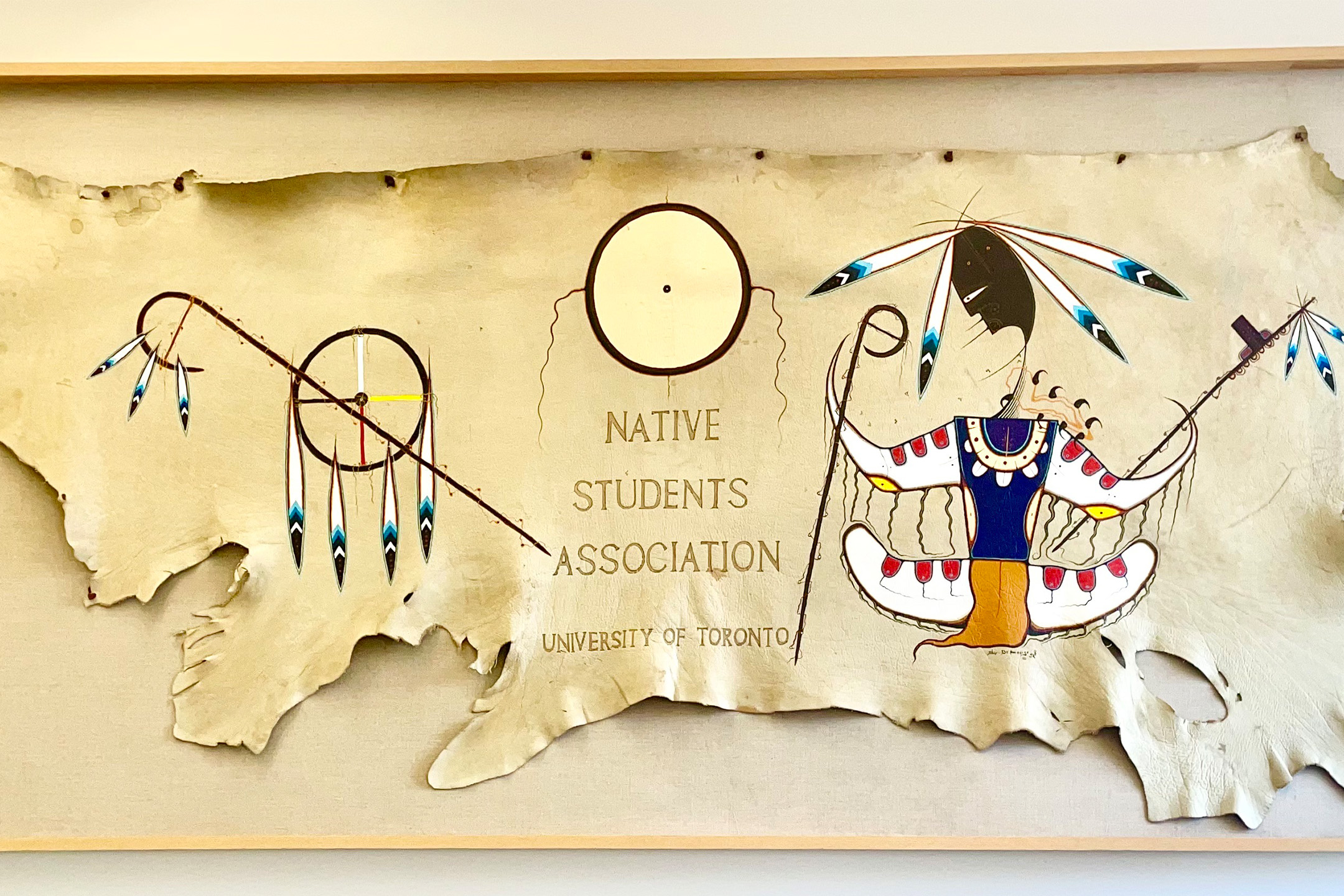
JB: Well, from what I understand, First Nations House really was here for the original Native Students Association. And so they would say, “Hey, I want to learn how to build a sweat lodge,” or “I want to have this kind of event,” and First Nations House would support in any way they could.
We’re really here for the students, and if they tell us they want to do a certain event, we can see if we have the resources, and if we have the people who can come facilitate, we set it up for them.
TV: Are there any struggles that First Nations House faces, or anything that you want to change or wish would change?
JB: Yeah, I think, obviously, more space, but that is coming at some point. And hopefully that more Indigenous students will come and hopefully feel supported, and let us know what their needs are.
A lot of the things we do here are very open. It’s hard to not be pan-Indigenous in some ways. We have to be willing to be open and learn from each other. And then if there is a specific ceremony that a student or a group wants to conduct or host, they bring their elder.
If a student is coming here and they’re disconnected from their community, I always encourage them to just come anyway, because sometimes people might feel like they don’t belong. If you are an Indigenous student, you’re First Nations, Inuit, or Métis, regardless of your Indian status card. We don’t ask for that. We want to make sure that people can come and they can just be themselves.
It’s lovely when I get to sit with other Indigenous people and just spend time together, you know, create community. And I think the biggest compliment I ever got from a student was when I was in my office talking to a co-worker, and we were laughing really hard. And when I came out of my office, the student looked at me and said, “That was you? Your laughter reminded me of being back home,” he goes, “You have a big auntie laugh.” I was like, “Mission accomplished.”
TV: Have you felt like you’ve changed in any way since working here? Has it changed your perspective on your Indigenous identity or the Indigenous community in any way?
JB: I’ve always grown up knowing who I am, and so that’s just the way it is for so many of us — we may not have grown up in our community, but we know who our family is, and they know who we are. And I think it’s just, you know, never letting anyone put you in a position where you feel awkward. You know, I’ve had people be like, “Oh, you’re, you’re half white,” because some people think you’re lesser than.
Somebody shouldn’t make you feel bad for having a mixed identity. I find I connect with a lot of different students who have a different non-Indigenous parent, or heritage. So it’s nice to connect with them and then hear what their experiences are like, and just reassure people that they’re not lesser of a person.
You know, because the Indian Act really messed up so much. You know, it’s like the government determining who’s Indigenous and who’s not Indigenous.
I’m not gonna ask you for your ID card. We look at them as a joke. You know, when you look at your driver’s license, you’re like, “Oh, I hate this picture,” and you show it to your friend. Sometimes we’ll do that with our status cards. We’re like, “Oh god, look at this horrible picture.”
TV: What is your hope for the future of First Nations House?
JB: That we keep going, that we keep having the same awesome staff and the space, the capacity, to assist students and that we have continuous relationships with divisions of student life and with Melanie Woodin — establishing a new relationship with her.
I would personally just love to see it keep going and keep thriving.

No comments to display.