
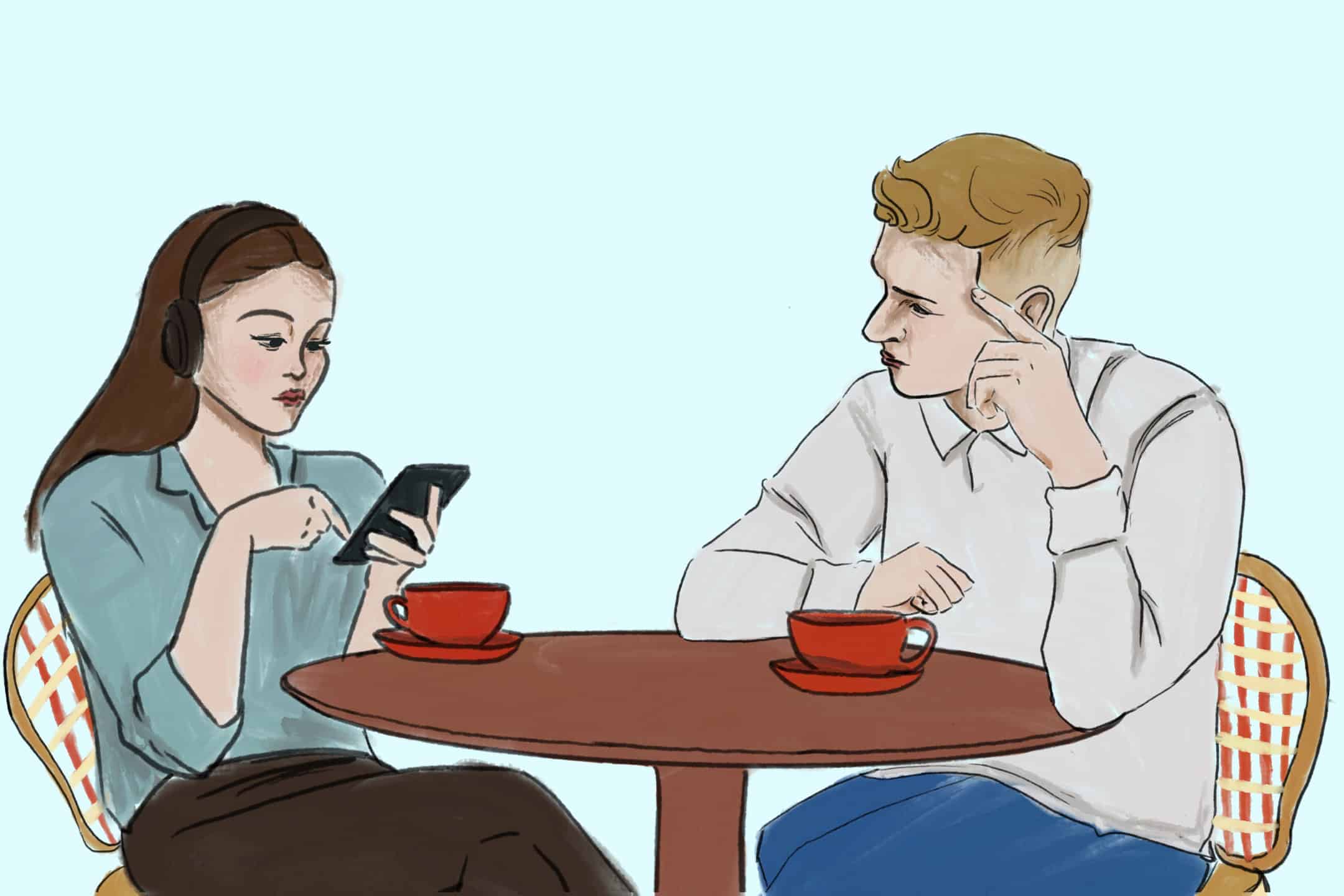
An article published in Vogue in October titled “Is Having a Boyfriend Embarrassing Now?” has gone viral, or as viral as an article can get. In this article, author Chanté Joseph argues that being single is ‘in’ and having a boyfriend is ‘out’. So we asked three U of T students to answer the seemingly simple question: is having a boyfriend embarrassing?
Having a boyfriend can be embarrassing
Having a boyfriend is… embarrassing? The article featured in British Vogue confirms this, but it seems to miss some nuance of why it would be. Joseph writes that many women, herself included, are fatigued or “icked out by seeing too much boyfriend content” online. However, she fails to explain why that is the case, outside of quoting vague podcast comments such as, “having a boyfriend typically takes hits on a woman’s aura.”
Seemingly, Joseph’s article ignores men’s behaviours which often make it embarrassing for women to claim a man as a boyfriend. Instead, she chooses to divide women in two groups: the partnered, and the single; the guilty and the righteous.
I don’t disagree with Joseph’s overarching argument that “being partnered… is no longer considered an achievement, and, if anything, it’s become more of a flex to pronounce yourself single.” However, I find she fails to acknowledge that boyfriends are not a monolith. While some may undeniably become embarrassments to their partners, I don’t believe that every woman has cause to be embarrassed by her boyfriend.
Joseph claims that “women don’t want to be seen as being all about their man, but they also want the clout that comes with being partnered.” This places significant importance on the presence of a man within a woman’s life, by suggesting that heterosexual women waste time worrying about trivial man problems.
On TikTok, user @cleopatra_501 points out that, “it’s all fun and games until we seriously start defining women by the man in their life,” suggesting that the article only serves as another manner of diminishing women; this time, by flipping the usual script so that the single woman can feel empowered at the distinct expense of the partnered woman. The user claims that the stance taken in Joseph’s article is “regressive. lame. anti/feminist [sic.],” due to the tone it takes in othering women in relationships from the ‘single’ status, which Joseph deems “desirable and coveted.”
Make no mistake — having a boyfriend can absolutely be embarrassing. But not because his girlfriend posts about him too often on Instagram, or showcases too much love and affection for him. Having a boyfriend only becomes embarrassing when he gives his girlfriend something to be embarrassed about. And if you do find yourself feeling embarrassed by your boyfriend’s behaviour — not merely his existence — I implore you to dump him.
Ali Zarubin is a fourth-year English specialist at U of T. Having completed the Vic One Frye stream in her first year, Ali’s focus has always been on literature.
Having a boyfriend is not embarrassing
After reading “Is Having a Boyfriend Embarrassing Now?”, I realized the discussion shouldn’t be about boyfriends’ ‘coolness’ but about how digital culture pressures us to question our choices by fleeting standards that determine what makes someone ‘cool.’
In recent years, social media has become a powerful adjudicator of cultural standards. Joseph shows how women face backlash for posting about their boyfriends, probing whether having one is “embarrassing.” Nonetheless, the influence of the digital world is not meritocratic, but fueled by seeking validation from the digital panopticon.
Joseph notes that once “being single was… cautionary,” now it’s aspirational — a rebellion against heteronormativity. Even so, online, singlehood means being independent, hotter, and cooler overall.
But even this becomes performative: you have to post selfies, thirst traps, and curated routines to prove that you’re single in the ‘right’ kind of way. We still end up performing confidence for the digital panopticon, seeking validation from online users who reward us with likes and comments. So, if independence still relies on applause, is singlehood truly rebellious, or just another trend being pushed on social media?
Full disclosure: I do have a boyfriend. And no, this isn’t in defence of him; it’s in defence of myself and authenticity.
I was always the ‘single girl,’ — then life happened. Someone filled my days with warmth, and my singleness disappeared. Yet I’m as strong and self-defined as before; what’s embarrassing about that?
Having a boyfriend isn’t regressive — it’s a choice. A healthy relationship shouldn’t cost your sense of self. For me, it’s made me feel supported and confident. I still laugh loud, speak my mind, and move on my terms. What’s changed is that I’m happier because I have another person to share celebrations and catastrophes with, alongside my friends and family. In a culture obsessed with curated images, being authentically happy may be the most rebellious act.
So maybe having a boyfriend seems ‘uncool’ online. But what’s truly dangerous is letting the internet dictate how we live. What matters most are the real-world connections that fill life with meaning. They are what ground us long after the noise of the internet dies down and screens have gone dark.
Single or not, both are valid, beautiful ways to exist. Even if the panopticon disagrees, chasing real connection is worth losing the ‘cool girl’ badge. Because what’s the point of being cool if you aren’t happy?
Maria Gracia Jimenez is a first-year undergraduate student at UTSG pursuing a degree in the humanities stream.
Boyfriends aren’t embarrassing, men are
Having a boyfriend isn’t embarrassing; men are. With the rise of feminism and ostensible gender equity, there’s a growing prominence of hyper-independent women. We’ve dismantled the ‘taboo’ surrounding the lonesome spinsters we called ‘single women.’
While Joseph’s Vogue article may have incited public debate, her most paramount reading of modern women is this: women are not scared of relationships, love, being loved, or commitment. Women are, almost instinctively, scared of men, and of the bitter ramifications tied to heterosexual romance. Framing relationships as “embarrassing” creates a safeguard, protecting women from unfulfilling and often painful relationships with men.
In my view, as women fight to collapse the cultural narrative of child-bearing as their ‘natural’ role, they’ve created a modernist purpose for their boyfriends: stepping stones, or at times, toys to be played with. I’ve seen women create lists in their notes apps, titled ‘men who will never be good for you,’ as though gathering ingredients to create the ultimate, seriously damaged man; hoping it’ll be enough of a reminder to stay unattached.
In a world that places motherhood on a pedestal, women are striving to be the rich aunt. “You shouldn’t work,” they’re told, and reminded to “focus on settling down.” Every woman I know counters these bits of counsel with numbers: stats on marital rape, infidelity, shameless men who relish in the skewed universal rulebook written for the two sexes. Perhaps when men stop abusing their power, women will stop working to escape it.
It is impossible to pinpoint when our view of relationships grew sour. But the twenty-first-century dating culture that shames women for having a boyfriend reminds me of a patriarchal image of the impure, tarnished woman who has engaged in sex, who has been marked by a man. Does Joseph’s article illustrate the unequal shame and embarrassment tied to romantic association?
According to such puritan logic, it is the male counterpart who determines a woman’s chastity. It is they who commit the act, yet remain flawless, as though immune to an illness that women remain vulnerable to.
As I see it, this nuisance is irrelevant to women entirely, considering it paints men — the determinators — as not merely embarrassing, but as the filth that women grow to carry.
Hana Rabie is a first-year social sciences student, with a focus on political science and cinema studies. She is an Egyptian-Canadian writer.
