
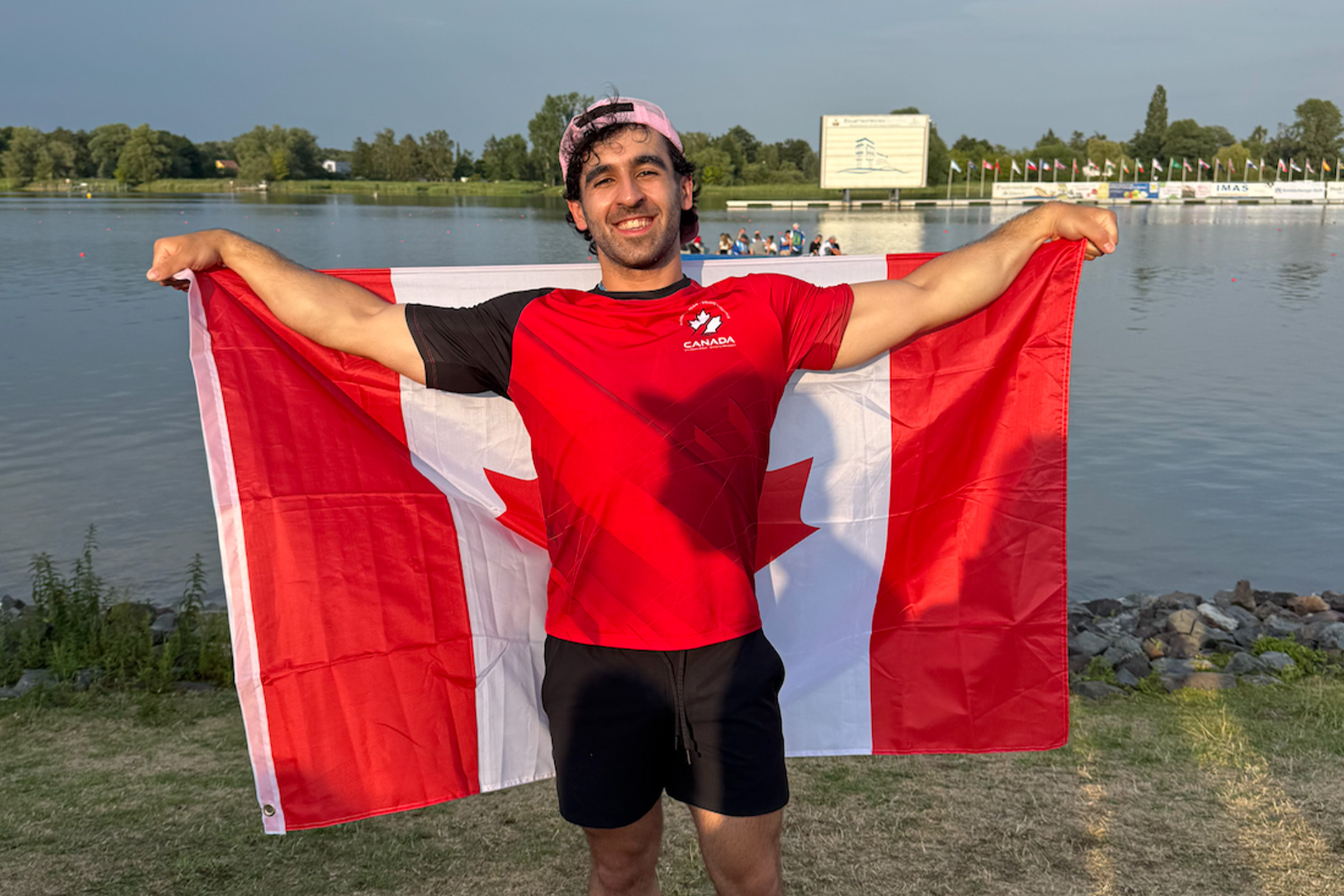
Before arriving at U of T, third-year Faculty of Kinesiology and Physical Education student Aria Shahedi had never even heard of dragon boat racing. Yet, just two years after picking up the paddle, Shahedi has already made a huge splash in the sport.
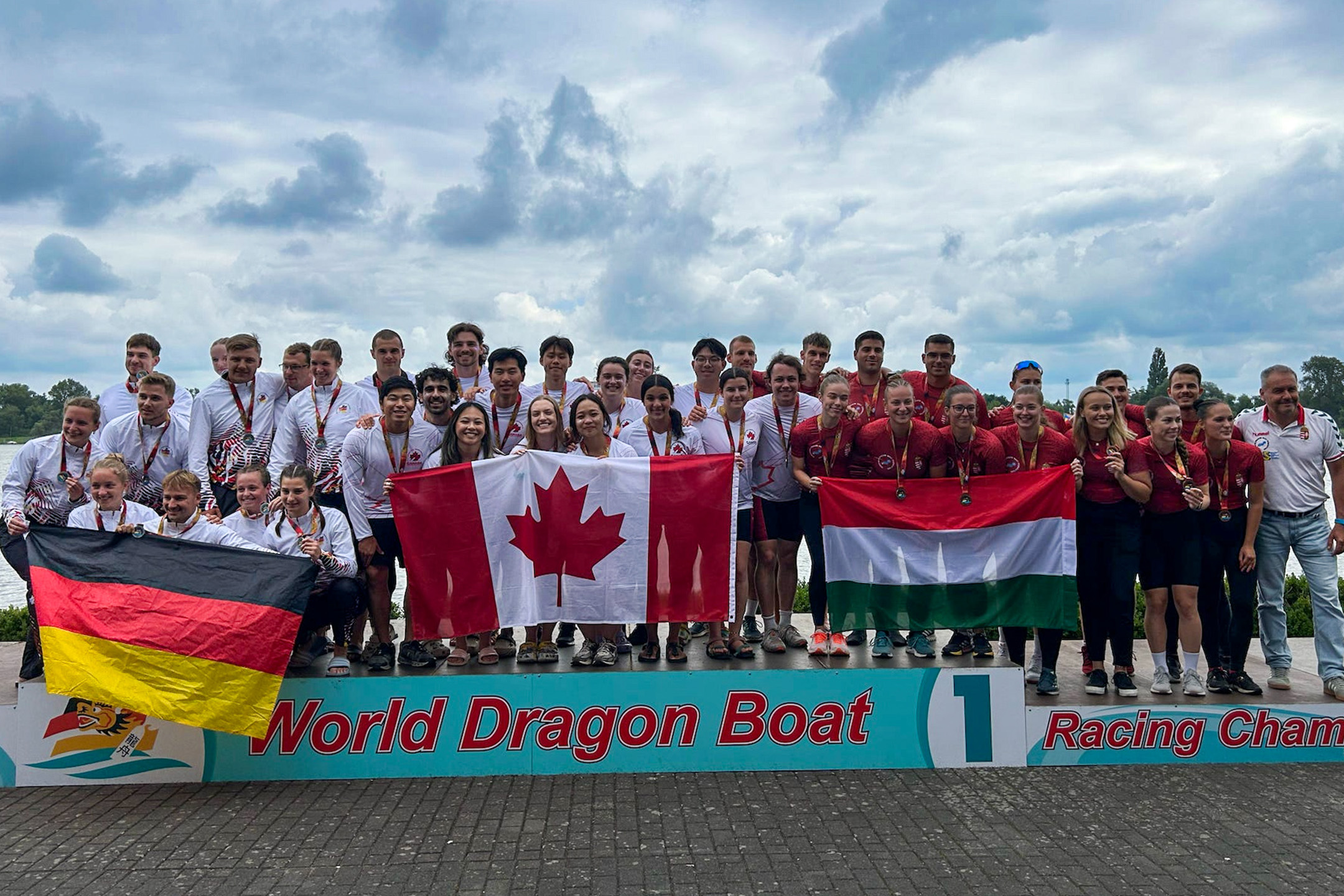
As a rookie in 2024, Shahedi represented the New Dragons Racing Club (NDRC) at the Club Crew World Championships in Italy, grabbing multiple gold medals. He is currently the co-captain of the University College Dragon Boat Club (UCDBC) here at U of T. Most remarkably, Shahedi is a world champion with Team Canada, winning a gold medal at the 17th World Dragon Boat Racing Championships last year.
In an interview with The Varsity, Shahedi sat down to explain the excitement of dragon boating, its presence at U of T, and the immense dedication that goes into becoming the best of the best in the water.
What is dragon boat racing?
Dragon boat racing, or dragon boating, is a team sport where crews race long, narrow, and open boats along the water. Its history traces back more than two millennia to ancient China, where the boats were originally used for various religious and cultural rituals.
The act of racing these boats originates in the Tuen Ng or Dragon Boat Festival, that celebrates the ancient poet Qu Yuan, who threw himself into a river to protest political corruption and persecution. The boats are raced to imitate the fishermen who frantically sprinted out to the water to attempt to recover his body. Today, the Dragon Boat Festival is a national holiday in China, Hong Kong, Macau, and Taiwan.
The modern version of the sport was established by the Hong Kong Tourist Association in 1976. “There’s many iterations of [dragon boat racing], but the one that we compete in, and the most popular iteration, is 22 people on a boat,” explained Shahedi. “20 people are paddling, ten people per side. You have one steersperson… guiding the direction of the boat… and one drummer to keep pace and echo whatever the steersperson wants for the boat to do.”
Making waves in international waters
Shahedi initially joined the UCDBC in 2023, with zero prior experience. “I felt a little lonely being at U of T, so I [thought that] I should get involved in something. I liked to go to the gym at the time, but I wasn’t all that serious about it,” he explained. “So I was like, you know what? I want something that will push me to train harder, but also give me something to apply my strength towards and to meet new people.”
Within the year, Shahedi was competing at the Club Crew World Championships. As part of the UCDBC’s parent club, the NDRC, Shahedi was part of the crews that grabbed an impressive six out of nine gold medals across the U24 Open (3/3 gold), Women’s (1/3 gold), and Mixed (2/3 gold) divisions in Italy.
“I literally had never picked up a paddle before that. But I got to compete internationally, just because our coaches are world-class. Our coaches coach for free… they really invest a lot into us. They take literally anyone, even if you’ve never been to the gym, and they make you into a world-class-calibre athlete,” said Shahedi.
Already on a meteoric trajectory, Shahedi refused to slow down. After trialling for Team Canada in October 2024, Shahedi was rostered on the 200-metre races for the World Championships in Brandenburg, Germany. “You just put everything you can possibly think of into it,” explained Shahedi. “The moment we heard that we won, everyone broke down. That’s the pinnacle, right? You just brought your country pride. You brought home a gold medal.”

Dragon boating at U of T
Returning for another season of racing with a stacked resume, Shahedi is one of three captains for the UCDBC. “We all… are involved in everything, but each of us takes control of a certain aspect of the team. I’m more involved on the training side, making sure our recruits and our vets are being trained properly, and that they are training properly, making programs for them, trying to challenge them,” explains Shahedi.
The club recruits athletes of all skill levels and experience, and although the team takes on the name of University College, it is open to all students. “For people that haven’t tried it before, I was in the same boat two years [ago]… So you really don’t need any experience.”
UCDBC is one of the many dragon boat teams at U of T. Other teams on campus include the New Dragons Dragon Boat Team, UTSC Crimson Dragons, University of Toronto Engineering Iron Dragons Dragon Boat Club, Rotman Commerce Liquid Assets Dragon Boat Team, and Pacemakers Dragon Boat Club. While an unconventional sport, dragon boating is a thriving community on campus.
“I would say the thing that I want people to understand that you get out of dragon boat is the community,” said Shahedi. “It’s unbelievable. The people I’ve been able to meet and the accomplishments I’ve been able to make because of these people around me… It’s really incredible… They push each other, they push you, you push them.”
This sense of community is international in its scope: “I have a jersey from China, and the other day, I was looking at a random Instagram video that popped up on my feed, and I saw this dragon boater in China wearing that jersey… I can’t believe that I have a piece of someone who is across the planet… we have this shared experience that wouldn’t happen if I wasn’t in the sport… I haven’t seen anything like it [like] in dragon boat.”
Monster mentality
The physical and mental preparation that goes behind such a gruelling sport is nothing short of draconian. Naturally, part of these preparations includes intense gym sessions, where Shahedi states that the dragon boat teams are “really loud” and “make a presence.”
But Shahedi’s schedule also includes early mornings, constant meal preparation, pushing through injuries, and many sacrifices along the way. “I would love to go out partying,” laughed Shahedi. “But I know consciously that I have Saturday practice… I do [go out] once in a while, but if I do that, I know that my practice the next morning won’t be as effective.”
What keeps Shahedi motivated is that he knows that his teammates are relying on him. “When you’re on a boat with 22 people, it’s not just about you anymore. You guys are paddling in perfect sync, right?… You feel it every time someone lets off even a little; the water gets heavier.”
But it is precisely this proximity and symbiosis with crewmares that make the sport so uniquely appealing. “In the boat, everywhere you look, there’s someone working hard, incredibly hard, beyond anything they ever thought they could work,” said Shahedi. “Knowing that and seeing that just gives you this absurd amount of respect for [your crew], and it makes them mean so much to you… Many times I’ve collapsed on the guy behind me, and he’s held me up.”
“The only way I can describe it is magic. It’s truly one of a kind. I know there’s a lot of sports where you get these kinds of experiences, but I think dragon boat is [unique because] you’re such a tight-knit team. You’re all in the same boat, you’re all within inches of each other, and you’re all doing the exact same thing for x distance, for x time. That bond that it creates is unshakable. I don’t believe you can find that anywhere else.”
