
Each year, the International Ice Hockey Federation (IIHF) holds the World Junior Championships, an international U-20 tournament featuring the world’s most promising recently-drafted and draft-eligible young hockey stars.
A total of 10 countries participated in the 2026 IIHF World Junior Championship in Minnesota, with Canada entering under immense pressure. Although Canada leads the tournament’s all-time medal count with 20 golds, 10 silvers, and six bronzes, it failed to medal in 2024 and 2025.
Although some of Canada’s top U-20 players did not compete in the tournament, including the San Jose Sharks’ forward Macklin Celebrini, who is currently third in points in the NHL, and New York Islanders’ defense Matthew Shaefer, a top contender for the Calder Trophy, which is awarded to the best NHL rookie each year, a new generation of stars rose to the occasion. Canada’s young players quickly defined themselves through skill, composure, and relentless offensive play.
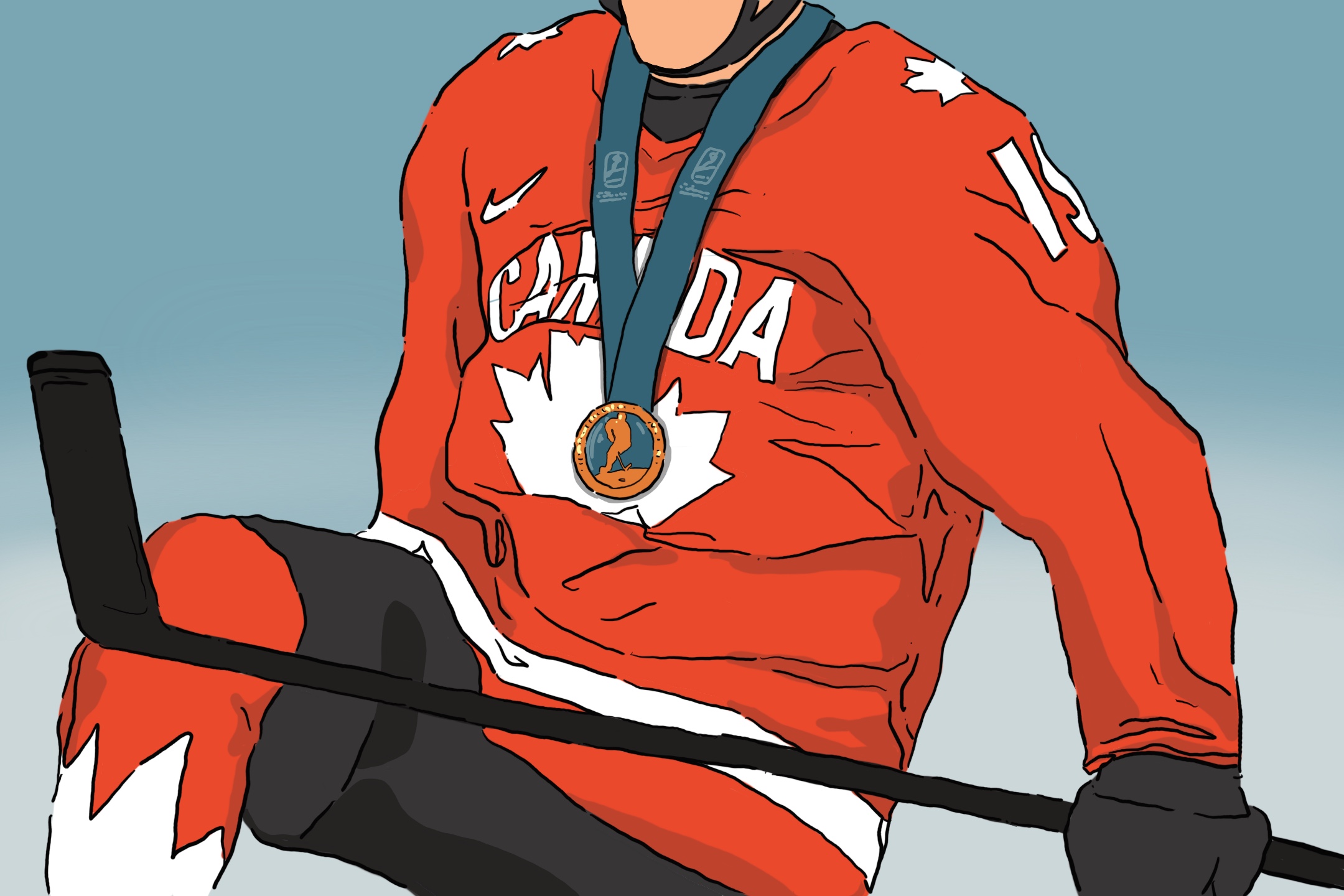
Their efforts peaked with a powerful 6–3 victory over Finland in the bronze-medal match, ending a medal drought and reaffirming Canada’s status among the world’s elite. With standout performances from defence Zayne Parekh, center Michael Hage, and forward Gavin McKenna, the tournament offered a clear glimpse of the bright future awaiting Canadian hockey.
The names behind the highlights
Canada’s tournament was defined by its stars, whose performances stole the spotlight at every turn. Parekh, a force from the blue line, left an indelible mark.
Parekh delivered a historic performance, finishing the tournament with 13 points, six goals, and seven assists, setting a new record for points by a Canadian defenseman in a single World Juniors tournament. In surpassing Alex Pietrangelo’s 2010 mark, Parekh fell just one point shy of the all-time tournament record held by Sweden’s Peter Andersson in 1985.
Parekh’s offensive instincts were on full display throughout the championship, especially on the power play. His composure at the blue line, combined with the ability to fire precise shots, consistently tilted momentum in Canada’s favour.
At the forefront of Canada’s offence, Hage drove the team with relentless skill and vision. Hage was the tournament’s top scorer before the final, finishing with 15 points, two goals and 13 assists. Hage’s vision, patience, and ability to control the pace of play made him indispensable, particularly in high-pressure moments such as the bronze medal game, where he tallied four points.
Alongside Hage, McKenna, a top prospect for the 2026 NHL Draft, put in one of his most complete performances of the tournament, matching Hage with four points in the bronze medal game. His steady play and leadership on the ice reflected the responsibility that comes with learning to wear the Maple Leaf. Beyond statistics, McKenna’s growth over the tournament highlighted his ability to rise to Canada’s elite expectations.
Other Canadians contributed crucial moments throughout the tournament as well. Forward Sam O’Reilly scored twice in the bronze medal game, opening the scoring just over one minute in and setting the tone early on. Team captain and forward Porter Martone provided timely goals throughout the tournament, while forward Braeden Cootes and goalie Carter George offered depth and stability when the stakes were at their highest.
Canada’s road to bronze
Canada finished with a 6–3 win over Finland in the bronze medal game, a result that brought both relief and celebration. It was Canada’s first medal since 2023 and ended an unusual stretch without hardware. Despite Finland outshooting Canada 35–34, the Canadians relied on efficiency, strong special teams, and timely scoring to control and ultimately win the game.
The bronze medal game was fast-paced from the start. O’Reilly opened the scoring just over a minute in, but Finland responded quickly, keeping the first period tense. Goals from Cootes and Parekh, including one on the power play, pushed Canada ahead, and the team maintained momentum into the second period. Martone and O’Reilly extended the lead before Finland struck again, but McKenna’s late third-period goal, set up by Hage, sealed the victory.
The bronze medal offered a measure of redemption after consecutive playoff losses to Czechia in recent years. For a program accustomed to gold, the result might not have been the ultimate prize, but it reinforced pride and provided promise for the years to come.
Games that shocked the ice
Not every game went according to script. One of the tournament’s most unexpected storylines was how frequently Canada’s games veered into chaos, even against opponents traditionally considered manageable.
The tense matchup with Latvia demonstrated this vividly. After Latvia stunned Canada in a 3–2 shootout last year, many dismissed it as a fluke, but history almost repeated itself. Canada led 1–0 late in regulation before Latvia scored to force overtime. Hage’s decisive goal ultimately saved the game, but the scare reminded everyone that margins for error are razor-thin at this level.
Boxing Day brought another dramatic contest against Czechia. Typically a tight rivalry, this game defied expectations with constant lead changes and an offensive explosion. Canada led 1–0, 2–1, 4–3, and 5–4, only for Czechia to respond repeatedly. The game finished 7–5, showcasing Canada’s offensive firepower but also the risks of high-tempo, open play.
Canada’s New Year’s Eve clash with Finland also proved unpredictable. The scoreboard showed a 7–4 Canadian win, but the first six minutes were surreal, with four goals being scored on just four shots. By the end of the opening period, the teams were tied 3–3. Despite the chaotic start, Canada regained control and pulled away, emphasizing the team’s resilience and composure under pressure.
The tournament concluded with Sweden winning gold, Czechia winning silver, and Canada taking the bronze.
The 2026 IIHF World Junior Championship served both as a reminder and a return to form for Canada. While the gold standard remains the ultimate goal, performances from Parekh, Hage, and McKenna showed that the future is bright. Canada’s next generation of stars proved capable of rising to the occasion, combining skill, grit, and teamwork to deliver memorable moments and a long-awaited medal.

No comments to display.