
In a time marked by growing urgency around climate justice and Indigenous sovereignty, Earthwork — showcased at the University of Toronto’s Art Museum from September 4 to December 20, 2025 — provided a powerful retelling of what it means to work with and for the land.
Curated by Mikinaak Migwans, assistant professor of art history at University College, the exhibit critically engages with the term ‘earthwork,’ which is often associated with the 1960s and ’70s Minimalist and Land Art movements. During this time, Earthwork or Land Art referred to large-scale interruptions that treated the land as an object to be shaped, displaced, and industrialized.
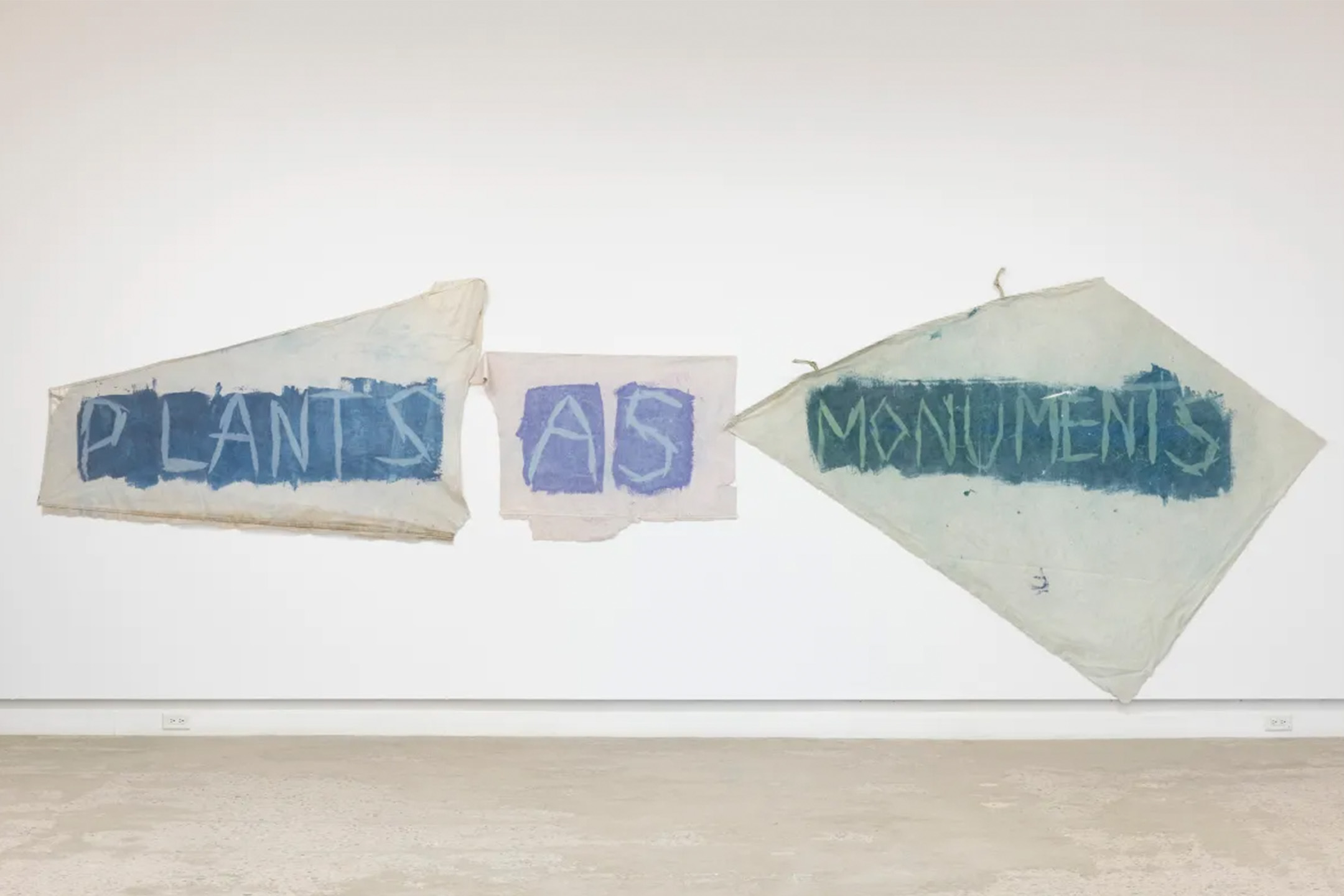
Migwans redefines this term, shifting the focus from monumentalization to actual lived experience and methods. They paint earthworks as an ongoing practice of relationality, grounded in Indigenous systems of care, collectivity, and knowledge keeping.
In Migwans’ engagement guide, they write, “By thinking about the labour that goes into land-based relations, communications, and formations, we can start to see beyond land as a resource and beyond earthworks as monuments. Instead, we can think of ourselves as participants in a relationship that takes work from both sides.”
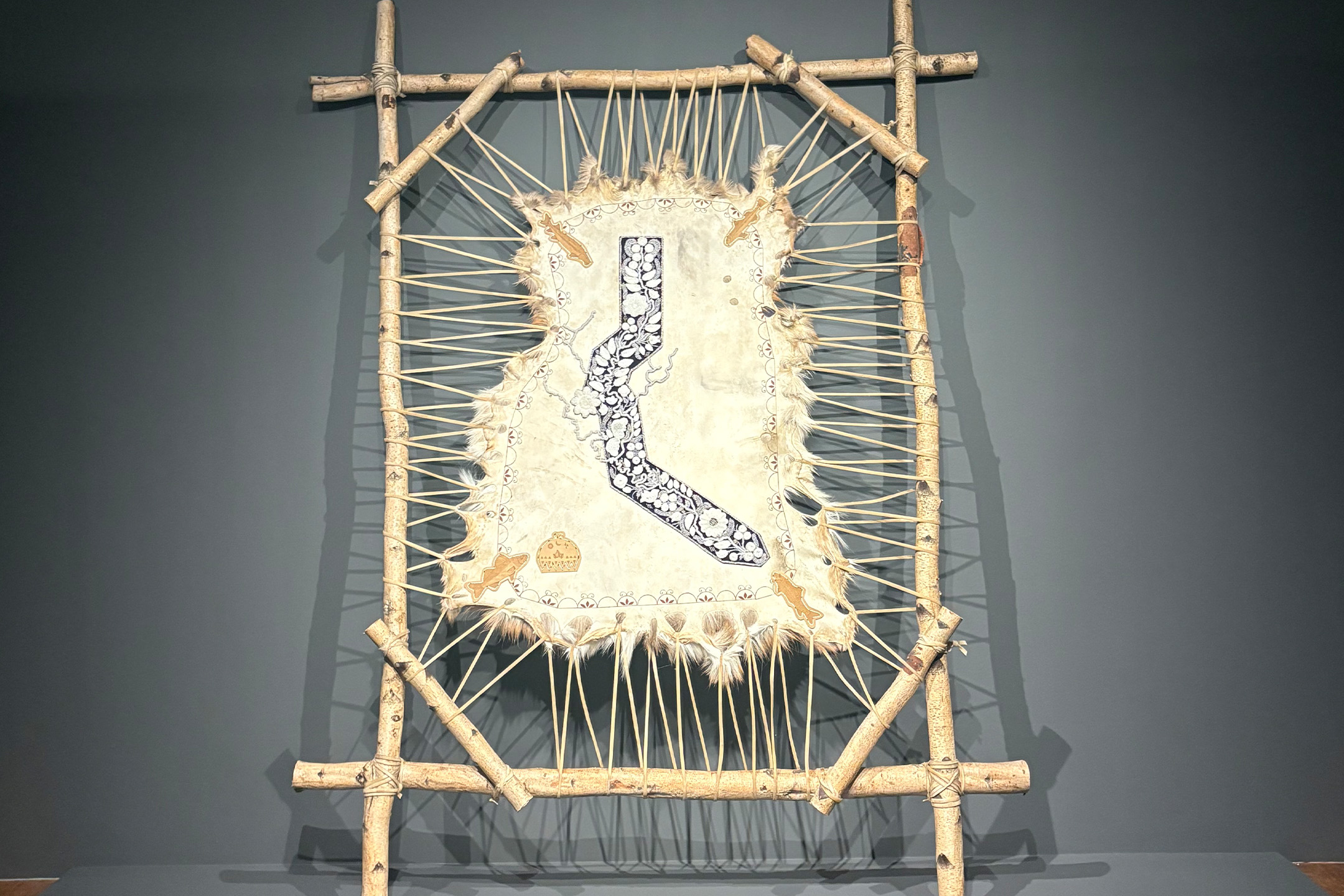
Playing off the term ‘beadwork,’ Earthwork refers to “a way of working, rather than the making of singular objects.” Migwans uses beadwork as a philosophical metaphor, something which is just not decorative or ornamental, but a practice grounded in knowledge of community, kinship, and memory.
The exhibit features immersive pieces from Indigenous artists and land activists. It seamlessly blends contemporary and ancestral practices of restoration, and looks toward a future where land relations and resilience are possible.
Most Western art depictions of Earth use spectacle, or expansive interventions to showcase the Earth’s surface — think of Spiral Jetty, constructed by Robert Smithson in 1970. Spiral Jetty was built by moving thousands of tons of rock and land pieces into the Great Salt Lake. Where Spiral Jetty relies on spectacle and physical intervention with the land, Earthwork emphasizes creating a relationship with what’s already there. Land is not something which is built for artistic inscription.
Migwans centers practices that are inextricably linked to the procedural deterioration of our planet at the hands of industrialization and corporate greed. The exhibition invites us to think deeper about the land itself, and the practices that go into restoration.
Having had the opportunity to visit the gallery for this exhibit, I appreciated the immersive experience that the pieces brought. The exhibit opens with the idea of art as an act of relation.
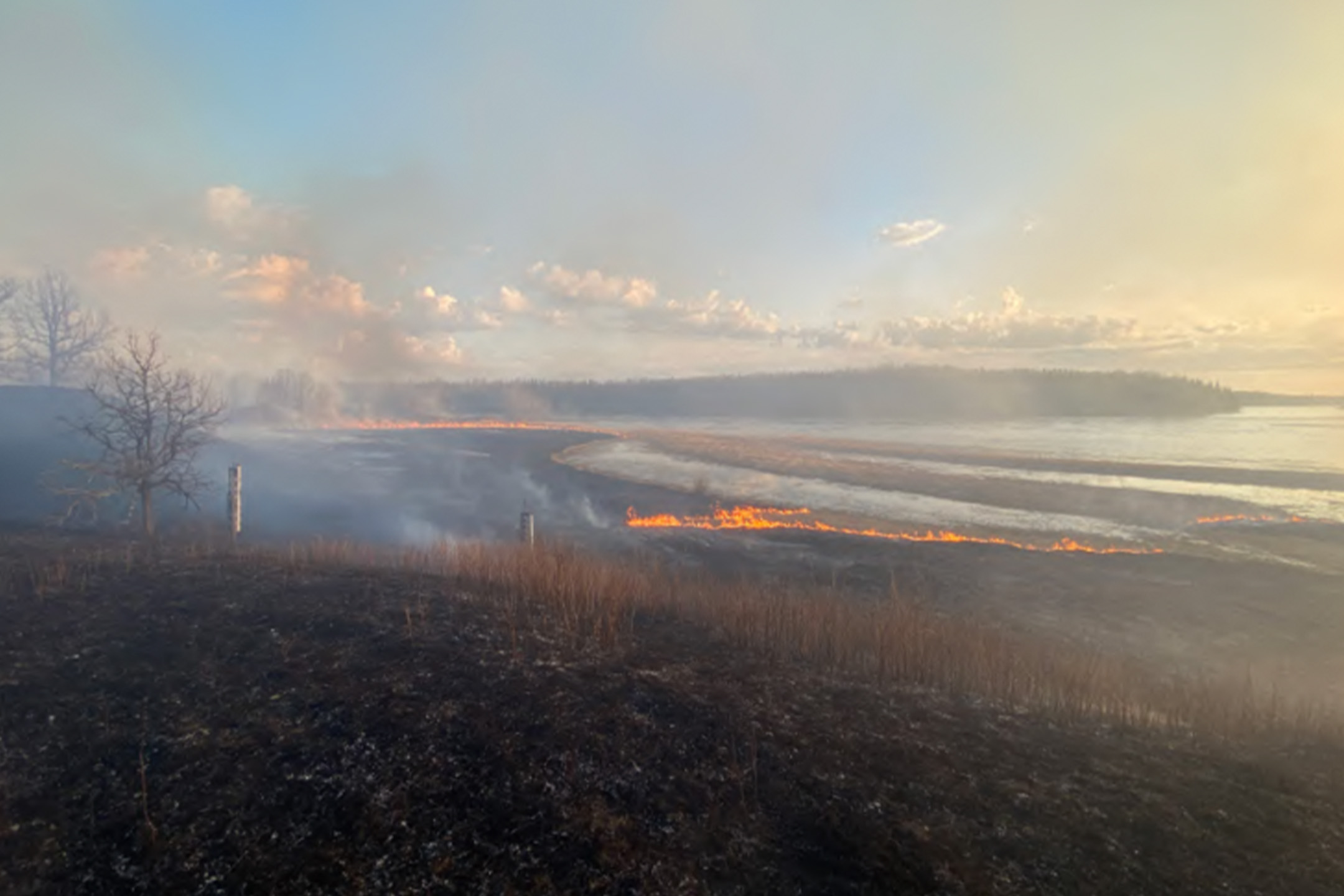
In this introduction to the Kay-Nah-Chi-Wah-Nung ancestral mound sites, Art Hunter diverts the spectator’s attention from the mounds themselves, and instead towards the rare prairie oak ecology, the controlled burns, and ecological stewardship. As we entered the space, we were given headphones to listen to the viewing. The crackling of the flames and the sound of wind blowing above our heads added to the feel.
What I loved about the exhibit was the engagement guide, which, for each piece, invited the spectator to take time to recognize our own senses. As I looked into the flames, I was prompted to think to myself, what does the air smell like? What debris would I bring home on my clothing?
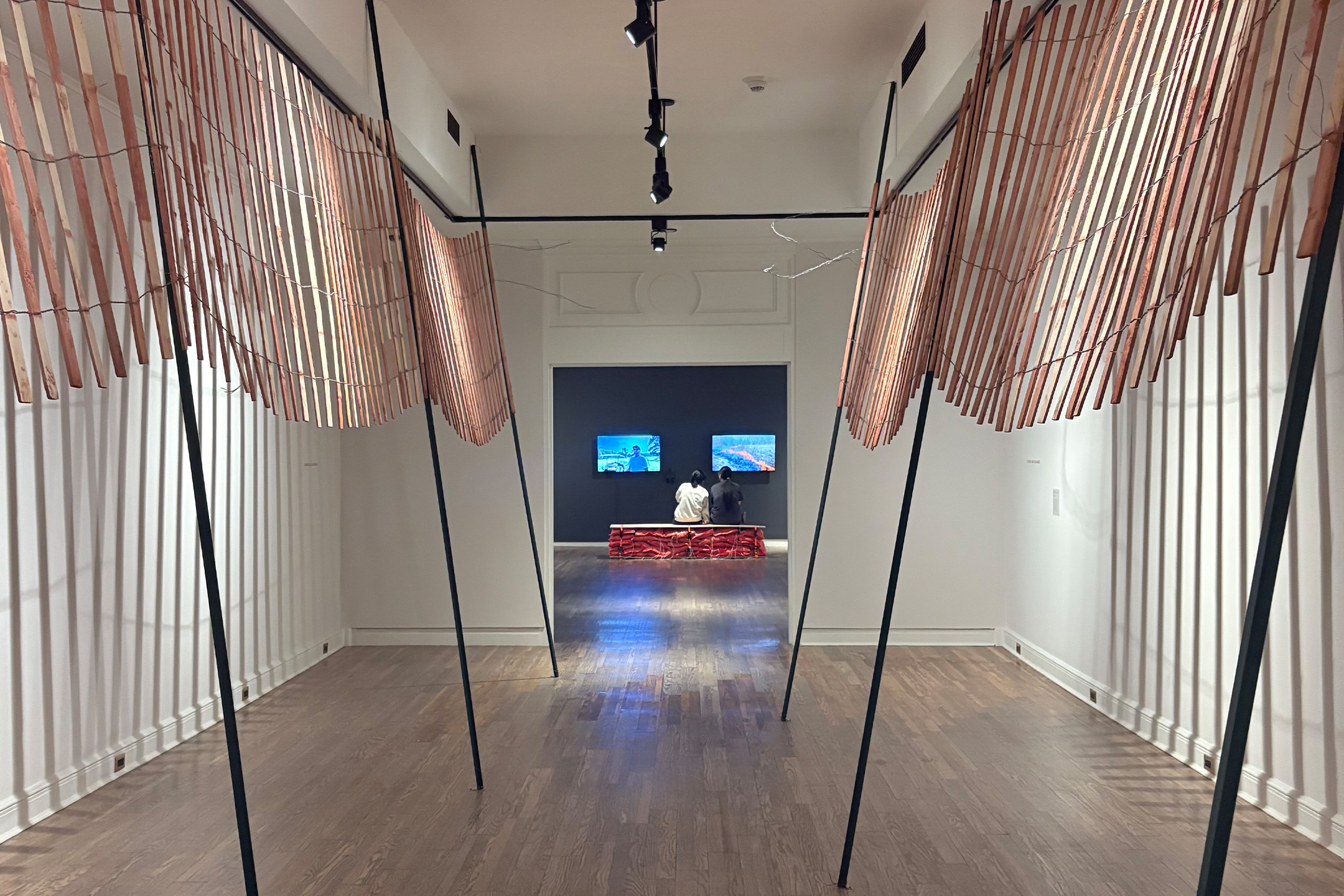
Built on King’s College Circle, Michael Belmore’s Drift utilizes a snow fence, not to stop movement, but to shape it. This installation came with an interactive activity: each red-stained wooden slat had a code sandblasted into it. The design itself visually represents a wampum belt, a shell-beaded object used in Indigenous diplomacy to create and commemorate international treaties. The engagement guide featured a code legend to help in unravelling the message.
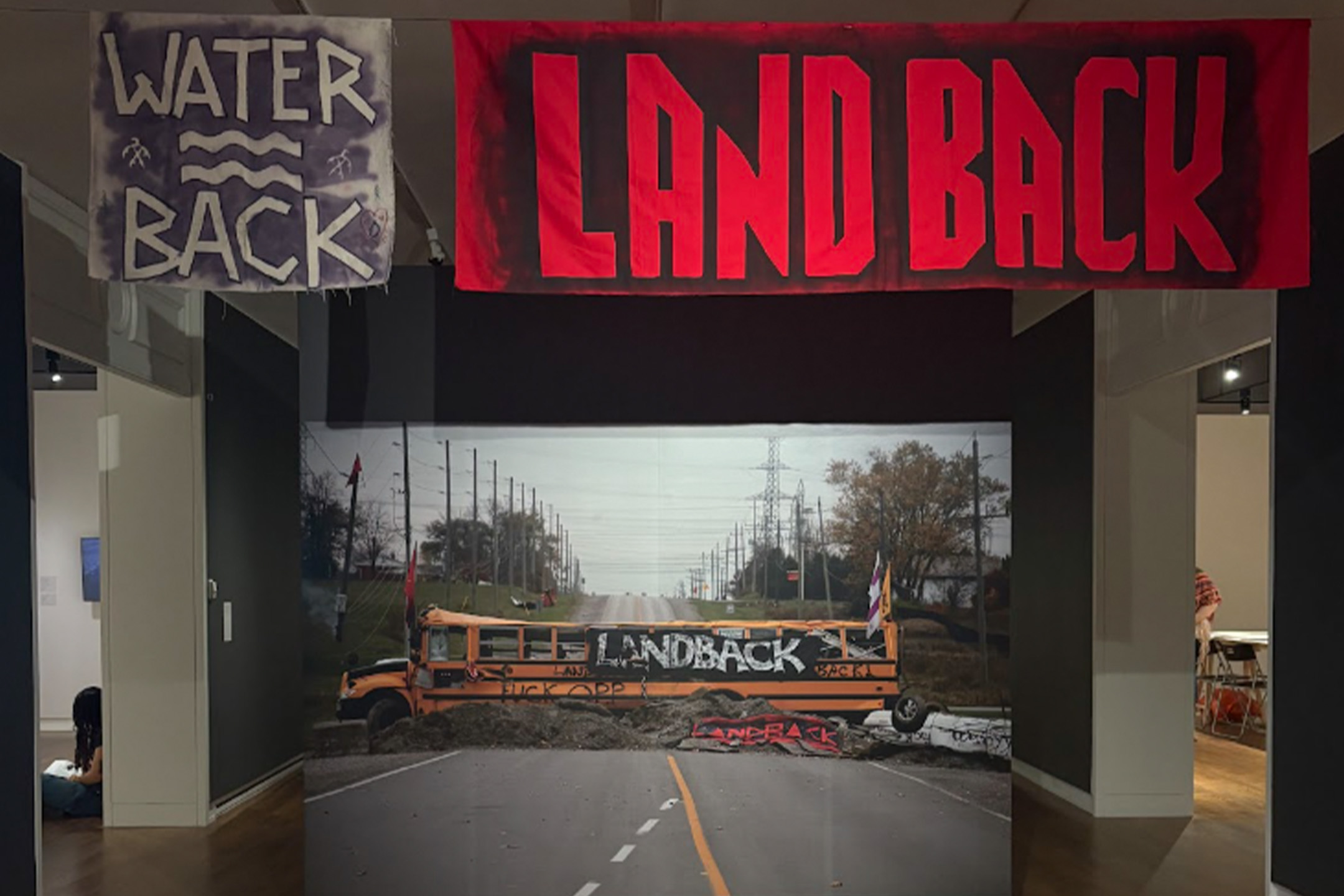
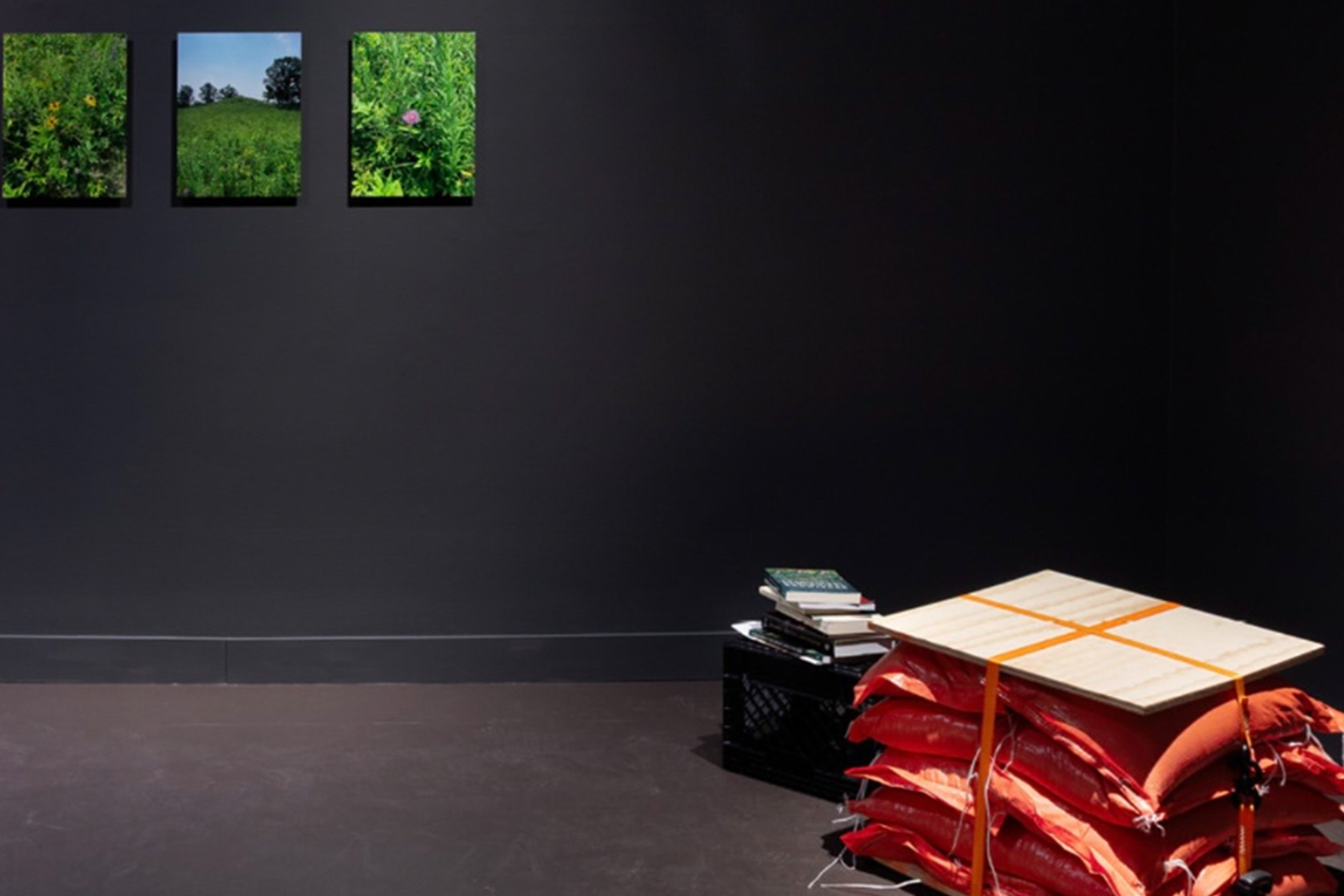
My favourite piece is centred on Land Back Lane, offering an alternative form of ‘earthwork.’ By including real material and video documentation from various land defence protests, including the 1492 Land Back Lane, this piece tied the exhibit together for me. It reminds the spectator of the ongoing relationship between active resistance and collective mobilization, against colonial dispossession. Listening to a protestor’s song during the blockade almost brought me to tears.
Earthwork grounds us in the idea that land should not be seen as something we possess but something we are in tandem with, challenging us to rethink what it means to work on, from, and for this world.

No comments to display.