
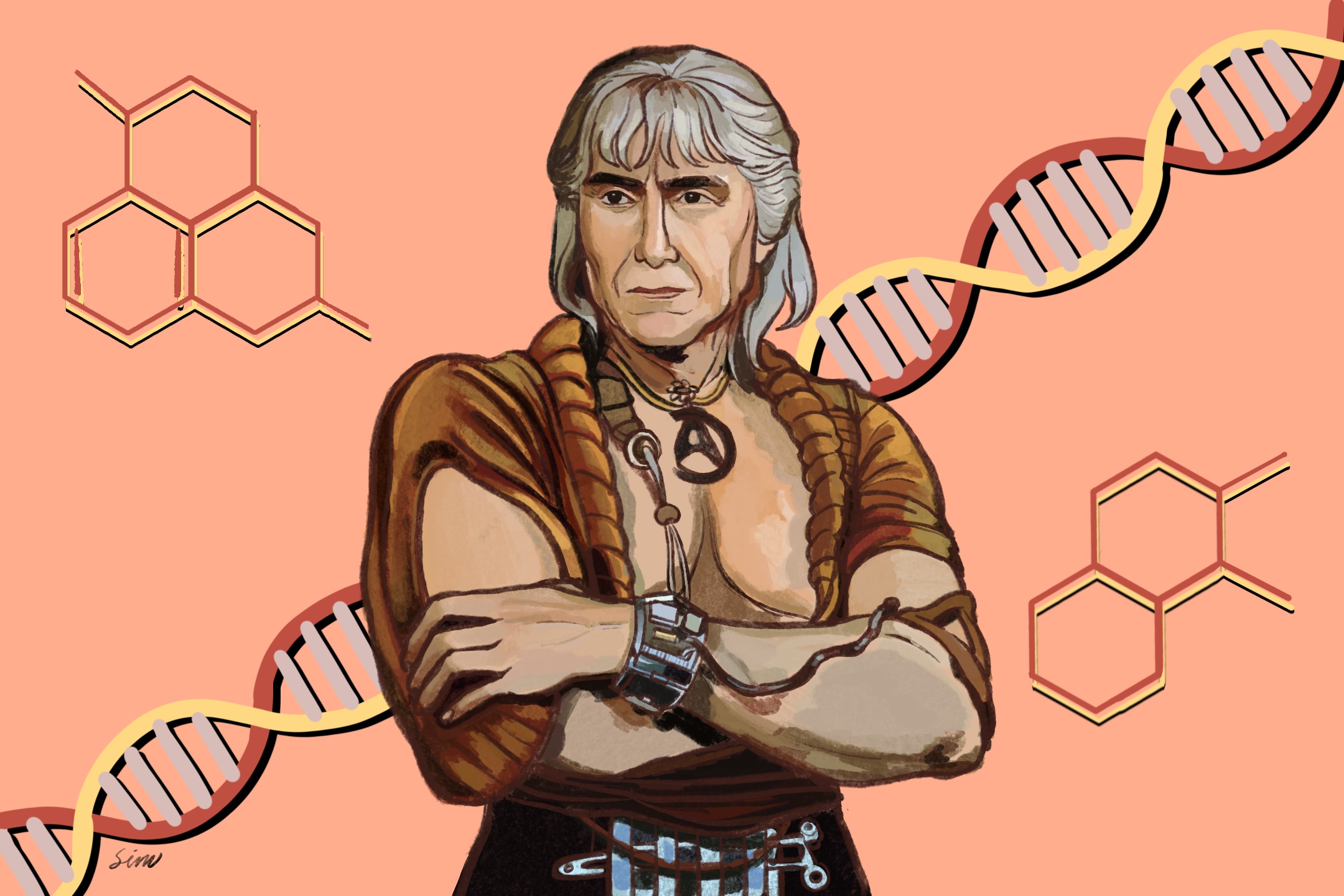
What happens when unchecked scientific ambition alters human nature? In 2022, the complete sequencing of the human genome — or the complete set of an organism’s DNA — was an unprecedented achievement that revolutionized the study of human genetic engineering.
In 1982, Star Trek II: The Wrath of Khan portrayed genetic engineering as a means to create superhumans with enhanced psychological and physiological abilities. Scientific ambition, when unchecked, raises questions about how far humanity should go in altering its own nature. Since 2022, genetic engineering has advanced significantly, and applying novel technologies to enhance human genetic expression now seems imminent.
In 2025, scientists found themselves facing a new frontier in genetics: AI-enhanced genome editing. As gene editing has evolved at an extraordinary rate, so has artificial intelligence. The market for AI is growing, from $189 billion in 2023 to a projected $4.8 trillion by 2033, according to the United Nations’ Trade and Development 2025 Technology and Innovation report.
These advances have implicated AI tools in the field of genomics, the study of a person’s genes, where over 90 per cent of disease-causing DNA mutations are point mutations, which involve a single change in the building blocks of DNA. Scientists could now use AI technology to fix harmful DNA changes before they cause problems, preventing genetic diseases like sickle cell anemia.
“Captain … I’m getting something on the distress channel.”
In their 2025 Nature Reviews Genetics article, Tyler Thomson and colleagues describe how AI-based prediction modules, which are algorithms trained on prior gene editing efficiency and specificity, can optimize clustered regularly interspaced short palindromic repeats (CRISPR) and guide RNA (gRNA) design.
Picture CRISPR-Cas9, a gene editing technology, as a GPS-guided scalpel: gRNA directs the Cas9 enzyme, a protein that cuts DNA, to an exact place in the genome. Before the cut is made, built-in recognition sequences at checkpoints in the DNA verify that the system has arrived at the correct address.
Recently developed AI models have proven to be more effective than earlier computational methods at ensuring the accuracy of gene editing. AI extensive public genomic databases and predict the optimal single-guide RNA (sgRNA) — synthetic gRNA — required to target each gene.
Older prediction models relied heavily on input from researchers. However, CRISPR predicts the activity of Cas9 directly in living organisms using a deep learning model — a form of AI. The model is trained on genetic datasets through pattern-based prediction by identifying relationships within these data.
“Course heading, Captain?”
Integrating CRISPR into self-driving laboratories, run completely by AI, could substantially reduce the need for human involvement in gene editing experiments. Thomson and colleagues highlighted one study that reported AI automation of genome editing enabled two junior researchers to successfully conduct multiple experiments using AI-enhanced CRISPR technologies.
Researchers suggested that as the technology improves, CRISPR gene-editing will become cheaper and faster; the editor-in-chief of the CRISPR Journal, Rodolphe Barrangou, told National Geographic in 2018, “CRISPR has been democratized.”
This prediction is based on the assumption that the benefits of science flow to broader society, increasing our knowledge and therefore the greater good. If, however, a democratic society is fundamentally ruled by the people, it’s important to note who rules over this technology.
Currently, CRISPR-based therapies are among the most expensive medical interventions worldwide. In a 2024 Review of Political Economy article, Erica Borg and Amedeo Policante discuss how corporate interests convert public research into private capital, impeding the process of democratizing AI-enhanced biotechnologies.
Patents belonging to wealthy corporations, such as CRISPR Therapeutics, which received over $5 billion in capital investment as of December 2023, show the commercial demand for gene-editing technologies. These companies directly monetize CRISPR technologies by granting exclusive rights to their use, enabling them to charge high licensing fees, restrict who can develop therapies to treat genetic diseases, and prioritize commercially profitable applications.
These practices maintain substantial financial barriers to widespread public access, despite CRISPR’s origins in publicly supported university research.
“To boldly go where no one has gone before”
Science fiction media provides a means of exploring these concerns, and Star Trek II: The Wrath of Khan stands out among them. The film follows Admiral James T. Kirk as he is confronted by Khan Noonien Singh, a genetically engineered superhuman whom Kirk exiled from society years earlier.
Seeking revenge, Khan hijacks a starship and pursues the Genesis Device, a powerful technology capable of creating or destroying life, forcing Kirk into a battle. Together, Khan’s genetically-engineered superiority and the Genesis Device anticipate modern debates surrounding CRISPR, illustrating how technologies that grant humans the power to rewrite life can yield both extraordinary promise and profound ethical danger.
Advances in AI-assisted genome editing reflect both the promise and peril suggested by Star Trek. As humanity continues to expand the frontiers of genetic engineering, the challenge remains not only to innovate, but to do so responsibly. There is only one way we’ll ever find answers to these ethical dilemmas, which is to, as Star Trek’s Admiral Kirk famously says, “boldly go where no one has gone before.”

No comments to display.