
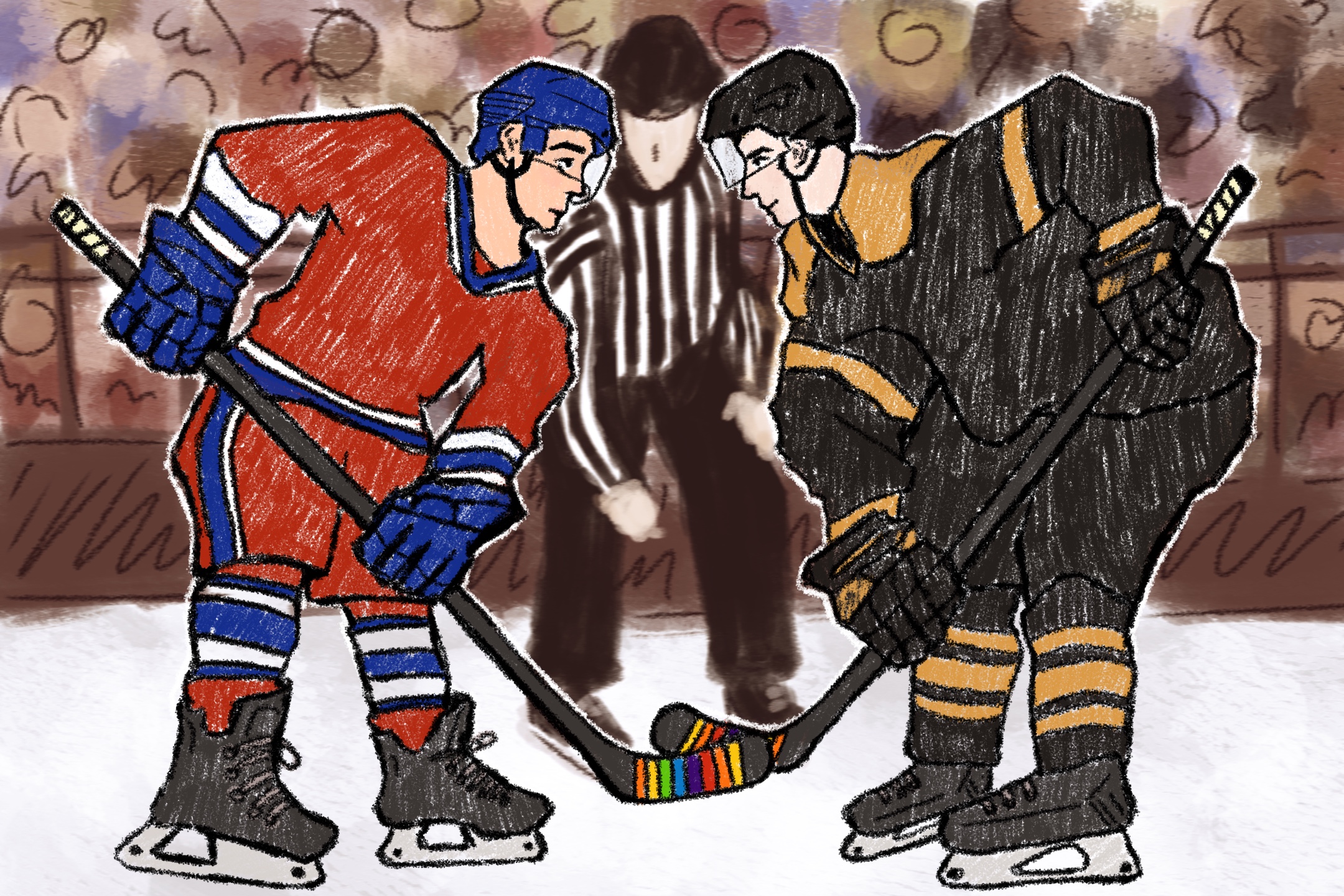
The Canadian TV show Heated Rivalry — based on the book by Rachel Reid of the same name — has taken over the internet in the past month and a half. The show’s six episodes follow hockey stars Shane Hollander (Hudson Williams) and Ilya Rozanov (Connor Storrie) over almost a decade as they fall into a secret romance they hide from their teams, friends, family, and the rest of the world. Loved and known for its equally emotional and explicit plot, the show has introduced hockey to a whole new audience that previously never showed such interest in the sport.
However, the reality of the NHL does not quite align with the audience of queer people and allies that the show brings in. This misalignment threatens to create dissonance between the sport and new fans.
Working through their own internalized homophobia and their feelings for one another, these fictional hockey players shed light on the very real struggle for queer athletes in professional sports. The clashing of these two very different worlds leaves the future of queerness in sports uncertain.
The NHL’s extensively complicated history of homophobia
At points, the NHL posed an almost paradoxical stance of inclusivity. In 2017, it launched the initiative Hockey Is For Everyone, which was focused on including and attracting people of different identities to the sport, including LGBTQ+ people.
This sentiment was followed in the NHL’s first annual report on diversity and inclusion from 2022. The thought to include and support LGBTQ+ individuals in their employment and the sport was echoed through donations and hollowly vague programming. While this document is still accessible, it has been removed from the official NHL website.
However, this initiative was short-lived as in January of 2023, Ivan Provorov from the Philadelphia Flyers boycotted their pre-game warmup in which the team was supposed to sport rainbow pride tape and pride-themed jerseys. This led to more players rejecting their Pride jerseys in the following weeks, and by that summer, the NHL walked back the Pride-themed equipment altogether.
By October of 2023, the league had instituted a ban on themed equipment altogether, including Pride-themed jerseys and tape. Travis Dermott of the Arizona Coyotes quickly challenged the ban as he played against the Los Angeles Kings using rainbow tape. After being met with a wave of support, the NHL was ultimately forced to rescind their ban.
Now, with the popularity of Heated Rivalry, a spokesperson for the NHL gave a lighthearted but futile welcome to new fans introduced through the show, telling the Hollywood Reporter, “There are so many ways to get hooked on hockey. In the NHL’s 108-year history, this might be the most unique driver for creating new fans. See you [all] at the rink.” Their failure to acknowledge and take a stance against homophobia in the league reflects their wavering and conditional support for the LGBTQ+ community.
This lack of support is reflected in the condition of the players themselves in the NHL and other major sports leagues. According to Outsports, on October 1, 2024, none of the 4,592 active players across the NHL, NBA, NFL, MLS, and MLB were publicly out as gay or bisexual, with only a handful of former players in the leagues identifying as queer.
The only out gay hockey player under a contract with the NHL — and the only one in a US men’s pro sports team overall — is Luke Prokop, who played for AHL Milwaukee Admirals, but has yet to play in the NHL. Currently, the NHL is the only professional sports league with no former or active player to come out.
Former youth hockey players, such as Matt Kenny, leave the sport due to the interwoven homophobia. In response to watching Heated Rivalry, Kenny shared his personal experience in the sport as a closeted athlete. In an interview with the CBC, Kenny said, “It just kind of felt like I was giving everything to this sport, and deep down inside, I just knew that this sport I loved probably wasn’t able to love me back.” Experiences like these paint the reality of major league sports, one that does not practice the inclusivity it occasionally preaches.
These experiences are not specific to the NHL in the slightest. Fans and even celebrities like Lil Wayne responded with hate for the Chicago Bears’ Caleb Williams over his painted nails after a game on January 11.
This is one of the recent incidents that highlight the standards of masculinity that athletes in the major sports leagues are expected to adhere to. Even though there has been no confirmation on William’s sexuality, his nails painted in team colours is enough of a violation to the heteronormative model of masculinity that critics are now questioning him as a leader in the NFL.
Is Heated Rivalry affecting inclusion in professional sports?
While the NHL itself has yet to make a statement on the show and its history surrounding inclusion in the league, past their hollow welcome to fans, athletes across the board are responding both publicly and anonymously. Like Kenny, Jesse Kortuem left hockey due to the conflict between the condition of the sport and his sexuality. While he left before the release of the show, he recently came out publicly and credited Heated Rivalry.
In his statement coming out on Facebook, he notes the constant fear, saying, “I loved the game, but I lived with a persistent fear. I wondered how I could be gay and still play such a tough and masculine sport… I spent every week in a locker room with guys I respected, yet I still did not feel safe enough to tell them who I truly was.”
While no current NHL players have come out or commented on the show publicly, players from across the leagues have reached out to the author and actors anonymously. In a recent interview with Andy Cohen, Hudson Williams revealed that closeted athletes from professional leagues in hockey, football, and basketball have reached out about their experience in professional sports. He added, “Sometimes they’re just reaching out privately through Instagram, and those are the ones that really just kind of hit you and go, ‘Oh, so this is a fun show, and it’s celebratory, but also, sometimes it’s just hitting people right in the nerves.’ ”

No comments to display.