
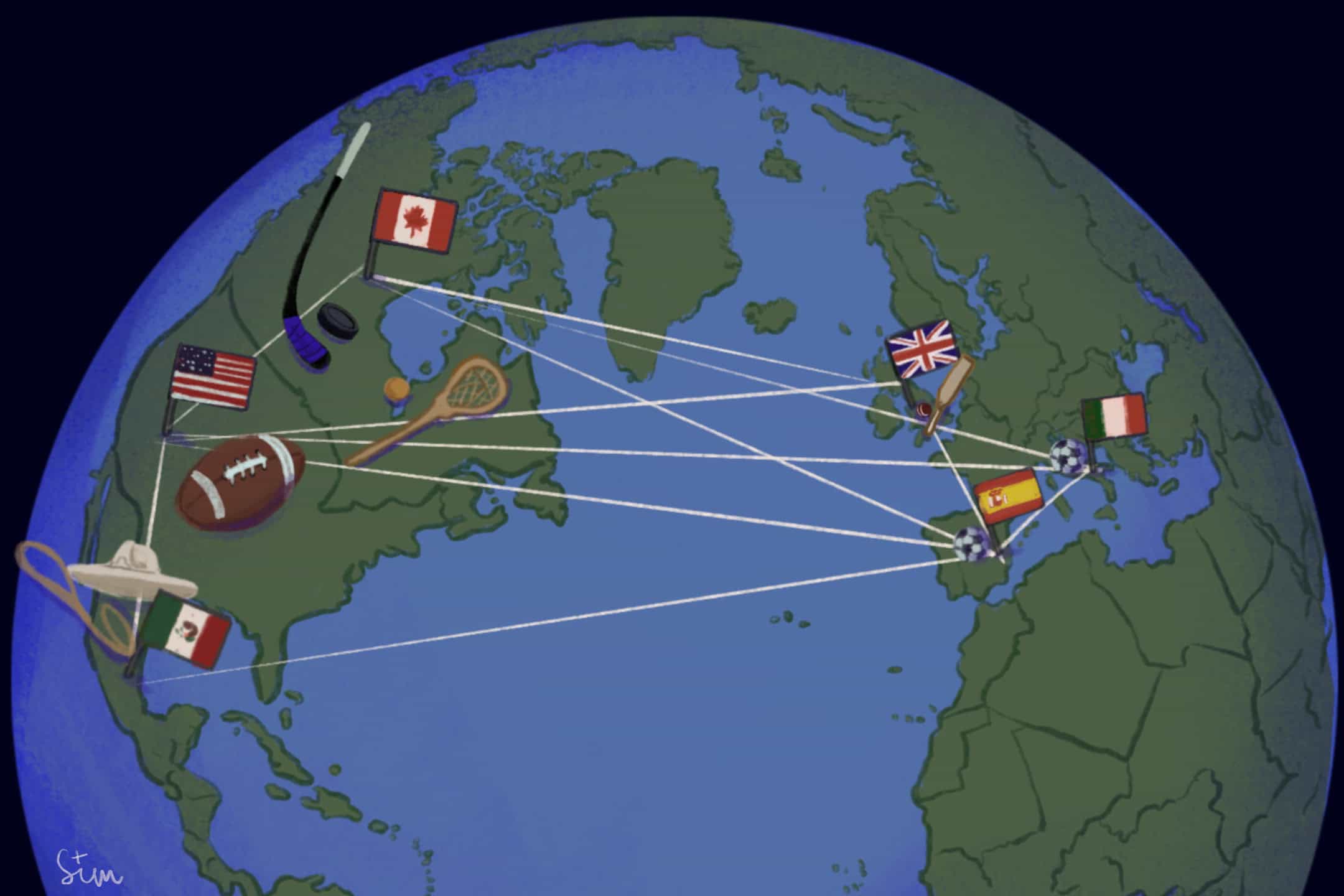
Before the anticipated draw of the 2026 World Cup fixtures on December 5, 2025, FIFA President Gianni Infantino awarded the inaugural Fédération Internationale de Football Association (FIFA) Peace Prize to US President Donald Trump.
The prize, to be awarded annually, recognizes “individuals who, through their unwavering commitment and their special actions, have helped to unite people all over the world in peace.”
This controversial award has reignited the ongoing debate on whether sports should, or could, remain politically neutral. The award has garnered criticism from many, including FairSquare, an organization that seeks to promote accountability in sports, who point to it as an example of how sporting institutions like FIFA can become entangled in the world of geopolitics.
The FIFA Peace Prize
FIFA announced the introduction of the FIFA Peace Prize to reward individuals who have taken exceptional actions for peace and united people across the world. Many question whether Trump deserves an award that recognizes “enormous efforts for those individuals who unite people,” considering Trump’s polarizing presidency has been defined by actions such as mass deportations.
FIFA’s self-proclaimed ‘political neutrality’ has also come under heavy scrutiny. While Infantino emphasized the political neutrality of football to protect its autonomy and values in 2023, he contradicted himself by awarding the Peace Prize to one of history’s most controversial leaders to celebrate peace and unity.
Infantino and Trump have also seemingly forged strong personal ties, with Infantino being a regular guest at the White House and attending a ceremony in Egypt to formalize the Gaza truce. This raises further questions about FIFA’s political neutrality.
If the FIFA Peace Prize controversy has taught us anything, it is that sports have never existed outside of politics, despite claims by federations such as the International Olympic Committee (IOC). The Olympic Charter reads, “Recognising that sport occurs within the framework of society, sports organisations within the Olympic Movement shall apply political neutrality.” When sporting institutions involve themselves in geopolitical affairs and with political figures, a level of symbolic political power and moral authority is implied, given their viewership and global influence.
This demonstrates how sporting institutions like FIFA can command political power to determine political legitimacy, shape geopolitical narratives, and mirror international power structures. The FIFA Peace Prize, therefore, serves as a tool of political symbolism. By honouring a controversial sitting political leader for non-sports-related reasons, Infantino is mobilizing the cultural authority of football and FIFA to confer political legitimacy to Donald Trump’s actions.
Role of sporting events in fostering national pride and strength
Sporting events and institutions have been a powerful platform for countries and governments to project national pride and prestige, combining global visibility, emotional appeal, and symbolic legitimacy in ways traditional diplomacy cannot. Hosting and investing in major sporting events promotes an image that signals national unity and patriotism, while neglecting political tensions and underlying conflicts, such as human rights abuses in Qatar in preparation for the 2022 World Cup and Israel’s violence in Gaza.
Sporting success from these events is also considered a proxy for national strength. Indicators of athletic success, such as tournament victories and medal counts, are framed as a source of national vitality. This cultivates international admiration and domestic togetherness, as narratives translate athletic success into national prestige.
Governments and political figures are not the only ones who capitalize on the world of sports to make their voices heard. Institutions, athletes, and fans engage in political activism, reflecting political realities in ways state actors cannot control.
Cases like the exclusion of Russian athletes from the 2026 Winter Olympics following Russia’s invasion of Ukraine in 2022 offer a clear example of how sports reflect geopolitical affairs. Such bans illustrate how recognition (and exclusion) from sports can operate as a form of reputational and cultural sanctioning, signalling a recognition of the atrocities committed by Russian troops on the Ukrainian people among the international community. Sports, therefore, become an indicator of a state’s moral and political standing, mirroring geopolitical dynamics and sentiments.
Sports as an avenue for political expression
Major sporting events serve as a powerful stage for political expression and reflection, further driving political activism and social change. Fans and athletes are no longer just performers and spectators; they are public figures with public voices, using their platform to engage in political activism within the world of sports.
In the age of social media, athletes leverage their presence to disrupt narratives through gestures, speech and collective action. Instances such as the NBA’s advocacy for the Black Lives Matter Movement, with players participating in protests and printing messages on their jerseys, show how effective sports can be in jumpstarting conversations on social injustices.
Fans transform stadiums into forums of political expression through chants, banners and boycotts. Fans and athletes, therefore, reveal sports as a space to contest and reflect on geopolitical affairs, presenting a rare platform where institutional powers and social inequalities are brought to the surface and challenged.
Sports are often an escape from the real world, where we play and watch for the love and excitement of watching our favourite athletes perform at the highest level. However, it is more important than ever to remember that beyond the sidelines, sports are deeply embedded within sociocultural and political conversations that cannot be overlooked.
As 2026 unfolds as a monumental year in both international politics and sports, the question is no longer whether sports and politics are connected, but rather how we choose to engage with the messages that bring the intersection of sports and politics to the forefront.

No comments to display.