
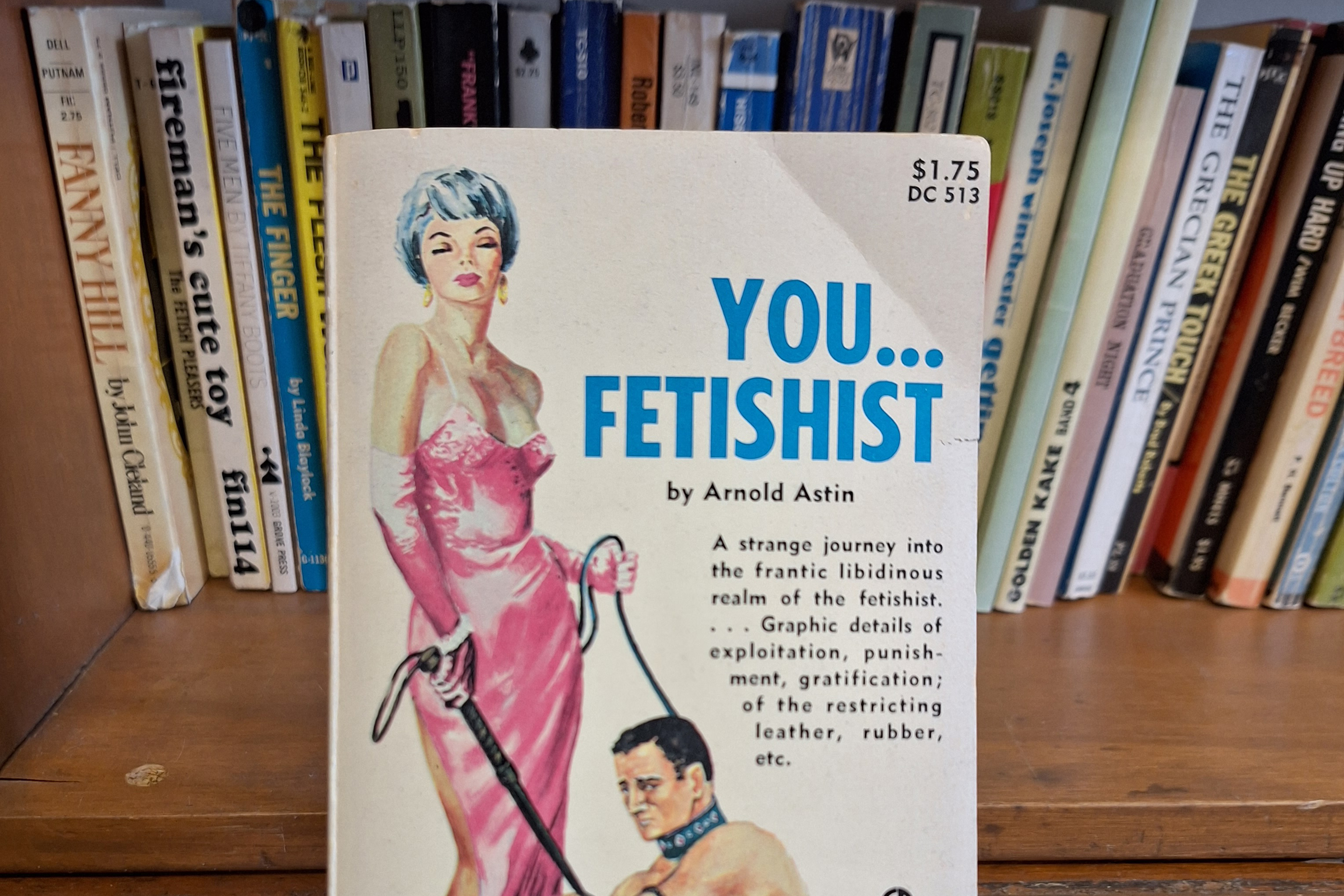
With the ongoing mainstream erasure of queer and trans histories, and the right-wing attempt to mandate queer and transness out of existence, I become more and more drawn to small press print publications, and am reminded of the importance of physical media and personal collections; media that can more readily escape censorship.
I spoke with Helen Chazan, project manager of the Sexual Representation Archive (SRA), and a graduate of the Faculty of Information’s Master of Library and Information Science program. We spoke about queer and trans histories, the importance of small press and DIY publishing, and how to see yourself in trans porn for straight men.
Described by Chazan as “in between a community archive and a university archive,” the SRA is home to videos, magazines, zines, pornography, and erotica, with a focus on “feminist, queer, trans, and kink sexual cultures.”
Now tucked away in the basement of University College, the SRA began in the ’90s when Max Allen — a CBC reporter who was an activist involved with the Canadian Committee Against Customs Censorship — donated his collection of media that had been censored by the Canadian government.
By following these censorship cases and collecting the materials in question, Allen ended up with pornographic, queer, and subcultural literature. As the collection grew, it bounced around different departments and locations at U of T, until the SRA found its permanent home in the Sexual Diversity Studies department.
The SRA is not the only dedicated academic porn archive in Canada, but Chazan explained it’s particularly unique and expansive because “its history is rooted in what was censored on the basis of being pornography, erotica, or obscenity.”
Preserving these histories is particularly important for queer/trans communities because the Canadian government has a history of targeting queer and trans literature (think Glad Day’s censorship and seizures by Canadian Customs in the ’80s and ’90s).
Chazan shared that a recent anonymous donation to the library contained porn magazines that, alongside explicit photographs of trans women, had additions from the publisher that described support and acceptance from family members. These magazines, in particular, stood out to Chazan because “part of the fantasy being conveyed is that she’s happy.
The ‘heterosexual male consumer’ of trans female porn is not necessarily that heterosexual or male 100% of the time.” Even in extractive magazines aimed at cishet audiences, we can see proof of queer and trans histories — in this way, Chazan can see herself in the women being pictured.
On other Toronto-based archives
Aside from the SRA, Chazan is the founder of Gynoid Distribution — a Toronto-based “trans, feminist, sex positive” micropress that publishes “personal zines, art, comics, erotica, anything that feels compelling and boundary-pushing in the right ways.” She is also involved with DIY publishing and community-driven spaces in Toronto, like the Toronto Zine Library, and The Canada Comics Open Library.
What I love about the zine library — and the works I find when I go there — is the connection I feel to the creators as I read their work. Especially with the DIY pieces, I can see the care the creators put into it — their penstrokes and typos, their messy handwriting and rough sketches and crooked hand-stapling. The medium allows artists to push boundaries without worrying about whether their work is publishable through more traditional channels.
For Chazan, zines are particularly important and compelling as a medium because “they can’t go away, in the same ways that a website is keen on just going away these days. As the internet gets worse for sharing information and art, the channels that paper creates are going to be more and more important.”
Queer and trans histories are long and rich, and have always been preserved through personal collections and physical media. Even bigger Toronto institutions, like Glad Day Books and The ArQuives, began as a backpack or a shelf full of books.
In May and June 2025, the Zine Library had its trans popup library, coordinated by McKenna Gray. It was a shelf of trans literature, zines, and comics donated from local people’s personal libraries, which ranged from periodicals to information on how to recover from gender-affirming surgeries to personal stories and photo essays.
The popup also became a community space. Chazan, who is a volunteer at the Zine Library and donated to the trans popup, remarked, “It’s amazing what a shelf can do for people.”
Chazan ended our interview by saying: “Read trans literature and read writing by trans women, read small press writing by trans women. Read widely. Go to comic stores. Go to weird little bookstores. Look for the queer stuff. Look for the trans stuff. Look for transgressive literature by queer authors. Look for compassion. Look for real ways to show solidarity from what you learn or what you feel from seeing profound queer expressions.”

No comments to display.