
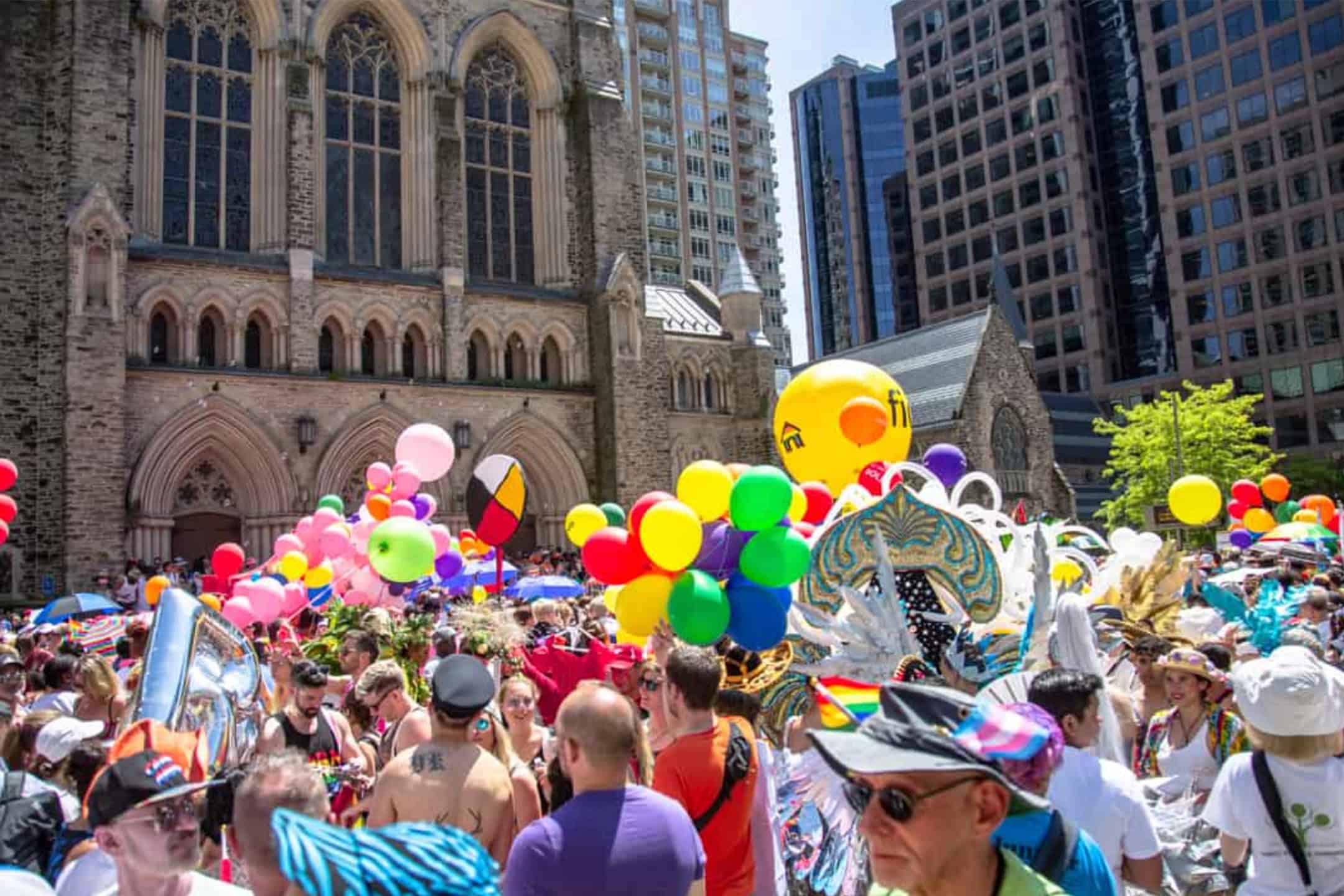
Pride Toronto, the official organization behind one of North America’s largest annual Pride parades, is no stranger to financial instability. Over the past four decades, the non-profit has navigated political controversy, government grant repayments, governance challenges, and potential bankruptcy.
However, with the withdrawal of several major corporate sponsors in 2025, the organization’s financial situation has only worsened. Earlier this June, the Executive Director of Pride Toronto, Kojo Modeste, told reporters that the non-profit is facing a $700,000 deficit in its budget.
How did we get here?
Like many non-profits, Pride Toronto relies on stable external funding to sustain its operations. Maintaining an event on such a large scale requires substantial financial resources, with the annual parade, weekend-long festival, and numerous events leading up to the end of June incurring significant costs. For example, security costs can run as high as $425,000 for a single year.
Pride Toronto’s most recently published financial statements, from 2024, show that its revenue streams are broken down into sponsorships, permits and fees, government and non-government funding, donations and fundraising, and others. Sponsorship funding was its single largest revenue source, accounting for almost 65 per cent of total revenue.
Concerningly but unsurprisingly, costs are quickly outpacing revenues — a trend mirrored across many sectors due to inflation and rising input costs. As a result, the deficit grew from just under $100,000 to nearly $1 million within a year.
Entering 2025, Pride Toronto was already facing financial strain when several major sponsors — including Google, Home Depot, Nissan, Adidas, and Clorox — withdrew funding completely. Other companies, such as Tim Hortons, reduced contributions without exiting altogether. The added complexity of a challenging economic climate amid tariff policy changes also resulted in scaled-back sponsorship sizes.
The resulting funding gap left Pride Toronto facing a $900,000 shortfall in 2025. The City of Toronto increased its annual funding by 35 per cent, to $350,000, partially offsetting this spontaneous loss.
In 2026, the organization still faces a $700,000 shortfall despite reducing programming and staffing, as well as securing several new sponsors. In order for the organization to continue running at this scale, not only will renewed corporate sponsorship be necessary, but greater support from individual donors and government will also be required.
The Diversity, Equity, and Inclusion (DEI) pullback
In response to the 2025 sponsorship pullback, Modeste said at a press conference, “We believe there is a direct connection between the policies that we’re seeing coming out of the White House and the organizations that are pulling out.”
These companies have kept their reasons for withdrawing vague. For instance, Nissan Canada attributed it to changes in marketing and budget priorities. Yet, many connect these moves to the wave of DEI scalebacks in the US private and public sectors after President Donald Trump began his second term.
From the moment Trump took office at the beginning of 2025, he got to work gutting DEI protections for government workers, signing an executive order titled “Ending Radical and Wasteful Government DEI Programs and Preferencing” and setting the tone for the remainder of his term. Since then, he has attacked educational institutions, erased jobs, and threatened to terminate contracts as part of his efforts to end DEI programs. Private companies have mirrored these values in an effort to avoid losing business.
Corporatization of pride
This situation is a stark reminder of the risks associated with heavy reliance on corporate money to sustain community organizations and stage events. While these partnerships provide valuable financial support and visibility, they have also become concentrated and risky, raising questions about what the nature of corporate involvement in pride should look like.
When companies publicly align themselves with LGBTQ+ causes, that support often exists alongside broader marketing and branding efforts — a practice referred to as pinkwashing or rainbow-washing when the support is superficial. Pinkwashing allows companies to reap the benefits of appearing supportive of the LGBTQ+ community without taking any meaningful action, such as establishing inclusive internal policies.
At the end of the day, marketing efforts such as these sponsorships ultimately remain discretionary decisions that shift as economic, political, and social conditions change, not just domestically, but particularly south of the border.
Future of Pride Toronto
Some see this as a window of opportunity to reset and return to the original meaning of the parade and festivities: political resistance. Beverly Bain, co-founder of No Pride in Policing, said in an interview with The Canadian Press, “We go back to the political roots of Pride [as] a political struggle for the liberation of queer and trans and non-binary and those who are racialized and those who are Indigenous and Two-Spirited and Indigenous and queer.”
Bain also argued that Pride Toronto has not adequately addressed genuine problems the community faces, including barriers to housing or mental health struggles.
Pride organizations across the country have asked the federal government to provide a $9 million support fund over three years. Without stable additional financing, festivals may have to scale back entertainment, use smaller stages, and reduce other programming. The erasure of an annual Pride celebration will be a major blow for members of LGBTQ+ communities, local businesses, and Toronto’s history and culture.

No comments to display.