
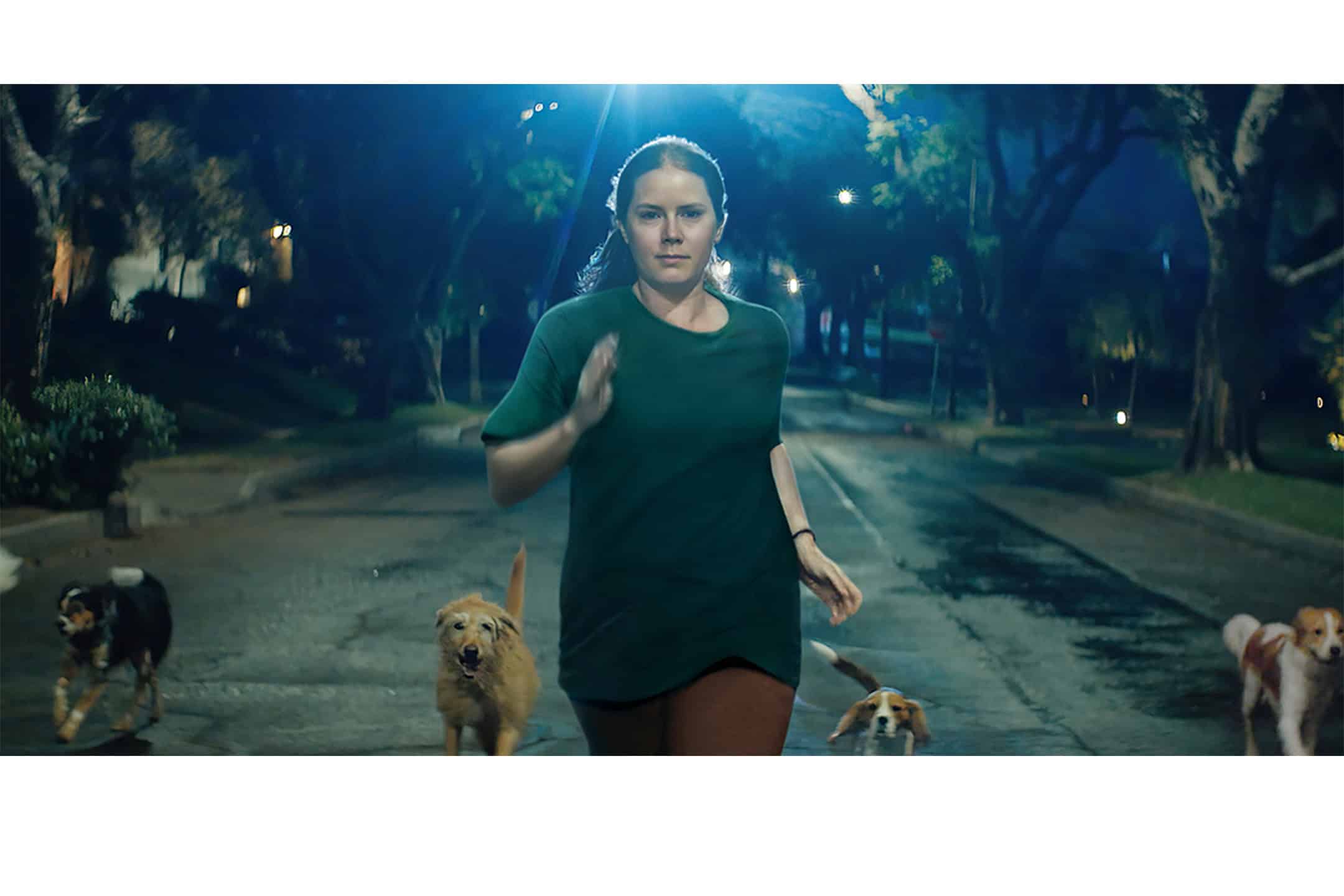
‘Female rage’ movies are having their moment.
Films such as Andrzej Żuławski’s Possession (1981), featuring Isabelle Adjani’s iconic bloodcurdling meltdown in a subway tunnel, or the X Trilogy starring Mia Goth, have become favourites among social media girl-bloggers. Unchained female protagonists, whose anger at the world turns murderous or gruesome, has girls flocking to theatres for a dose of catharsis.
When first presented with the plot of Nightbitch — a stay-at-home mom’s repressed anger slowly turns her into a wild dog — I had high expectations. Would this be another standout in the growing canon of female rage movies?
Unfortunately, while director Marielle Heller’s Nightbitch tries to be a sort of plucky dark comedy, the film plays it far too safe to be dark or genuinely funny.
Nightbitch firstly lacked the body horror element one would expect from a film about a woman morphing into a dog. The story didn’t linger on the toll of this transformation on her body, nor witness her wreak havoc in a half-woman, half-animal feral element. Its handful of gruesome shots felt out of place. Rather, Nightbitch takes its central metaphor all too literally: Mother turns into a CGI-rendered German Shepherd. If watching a dog gallop down a tree-lined street was supposed to symbolize Mother’s fearsome final form of unbridled rage, it was laughable. Heller’s rich opportunity for gore and suspense was defanged and replaced with something far more domesticated.
Amy Adams’ performance as the film’s unnamed protagonist was decently strong, but eventually sabotaged by Nightbitch’s contrived screenplay. Each time the protagonist (let’s call her “Mother”) breaks into a rage at her laissez-faire husband (Scoot McNairy), her dialogue is packed with the same feminist witticisms and jargon you might hear in a Michelle Obama speech. It felt as though Heller were trying to signal her cultural fluency and relatability. Several lines in the film were so on-the-nose I suspected they were swiped from Twitter. As a result, Mother’s exasperation with her daily routine comes off with about the same authenticity as a busy mom in a Subaru advertisement.
Mother’s canine transformation — and “enlightenment” — begins when she checks out a book about women deities from the library, which introduces us to powerful half-animal, half-human goddesses from Inca or Hindu mythology. As Mother unlocks her ‘primal’ side, she starts playing ‘doggies’ with her son — buying him a dog bed because he sleeps better on the floor, and deciding that they eat with their hands as dogs do. We watch her make growling noises while shovelling mashed potatoes into her mouth — a scene meant to show Mother unleashing her inner mama bear.
Not only did these scenes muddle the film’s driving message, but they also came off as painfully cringe-worthy. Many cultures traditionally eat with their hands and sleep on the floor, yet we watch Mother ‘discover’ these practices in a way that feels dismissive. “Maybe we’re all just animals,” she earnestly muses, as the movie closes with her family living in a pillow fort — an upper-middle class American parody of primal living. The entirety of Nightbitch reeks of well-meaning white naïveté: by trying to make Mother’s descent into a feral creature into a simultaneous Eat Pray Love moment, the film achieves neither.
One almost feels pity for Mother, clumsily trying to grasp a communal, intuitive ethos of motherhood that many mothers outside global Western civilization already understand. Yet, the film fails to touch upon the root of her struggles — the isolating nature of suburbia. Mother treats mommy-and-me playtime groups with condescension, and then laments her loneliness and lack of support while her husband is at work. The walls of Mother’s beautiful Tuscan home, where she supposedly feels confined like a caged animal, never creak with darkness. Instead of destabilizing her world, Mother finally fulfills her dreams by divorcing her husband and relinquishing custody of their child, who moves into a new condo with his dad. Only then, when she is left alone, can she create the art she had bottled up during her motherhood in the hopes of proving her worth as an artist to her husband. Heller pedals a tired and oblivious Western second-wave feminist narrative: women were trapped as housewives until they entered the workforce, left their husbands, and found self-actualization.
Nightbitch never fully leans into its eerie premise, offering about as much nuanced feminism as a tampon commercial. The film spoon-feeds the audience was an obtuse and veneered feminist tale. For those seeking a film that delves into the complexities of motherhood in all its gruesomeness, I suggest looking elsewhere.

No comments to display.