
Between grain, salt, dune, and sky — an exhibition curated by Sarah Edo — was presented at Gallery TPW from September 18 to December 13, 2025. Edo aimed to feature East African artists with work that explores desert geographies, displacement, archives, and counter archives.
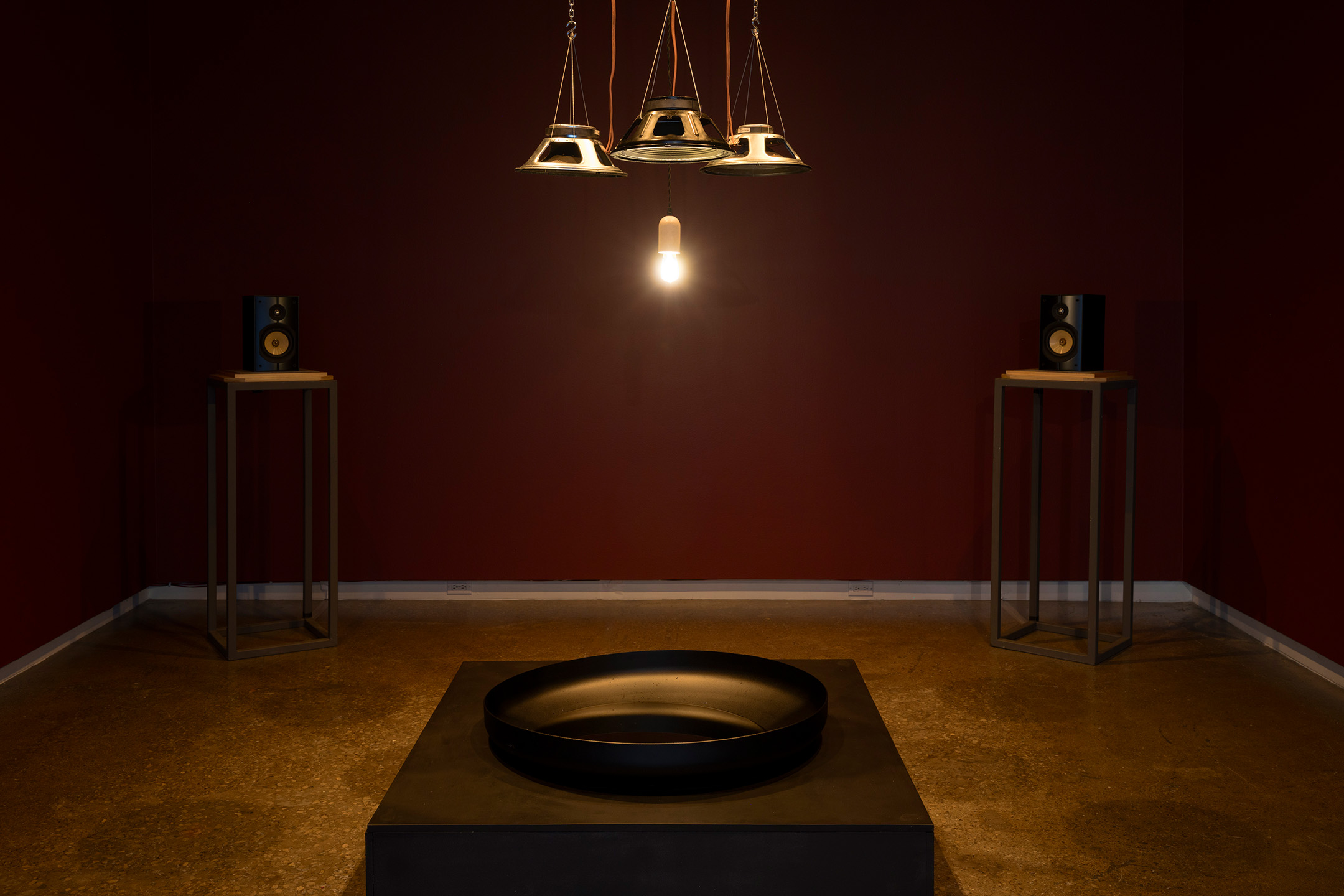
Entering the gallery, I was met with the smell of incense, the sound of deep, rhythmic breathing, and ambient noise and vibrations coming faintly from a room deeper inside. This room featured Wintana Hagos’ Dimtsi Adey, or Sound of My Mother, a sculptural sound piece inspired by her family’s stories from the Red Sea. This piece was in a dim room lit by one yellow bulb hanging low above a shallow basin of water.
Sitting in the room, I listened to Hagos’ mother singing a folk song and conversations between the artist and her mother, which broke up long interludes of ambient noise. The basin vibrated, causing ripples in the water, and travelling through my body from the soles of my shoes. The track, scored by an audio engineer, ebbed and flowed throughout its run time — from peaceful and nearly silent, to busy layers of talking under music, under vibration.
Edo is a U of T alum, who most recently graduated with a Master of Arts in women and gender studies. For this exhibition, she was inspired by the work of Sudanese-Canadian writer Nehal El-Hadi, who writes about sand as a way to think about Blackness, migration, and extractivism in her journalism and poetry.
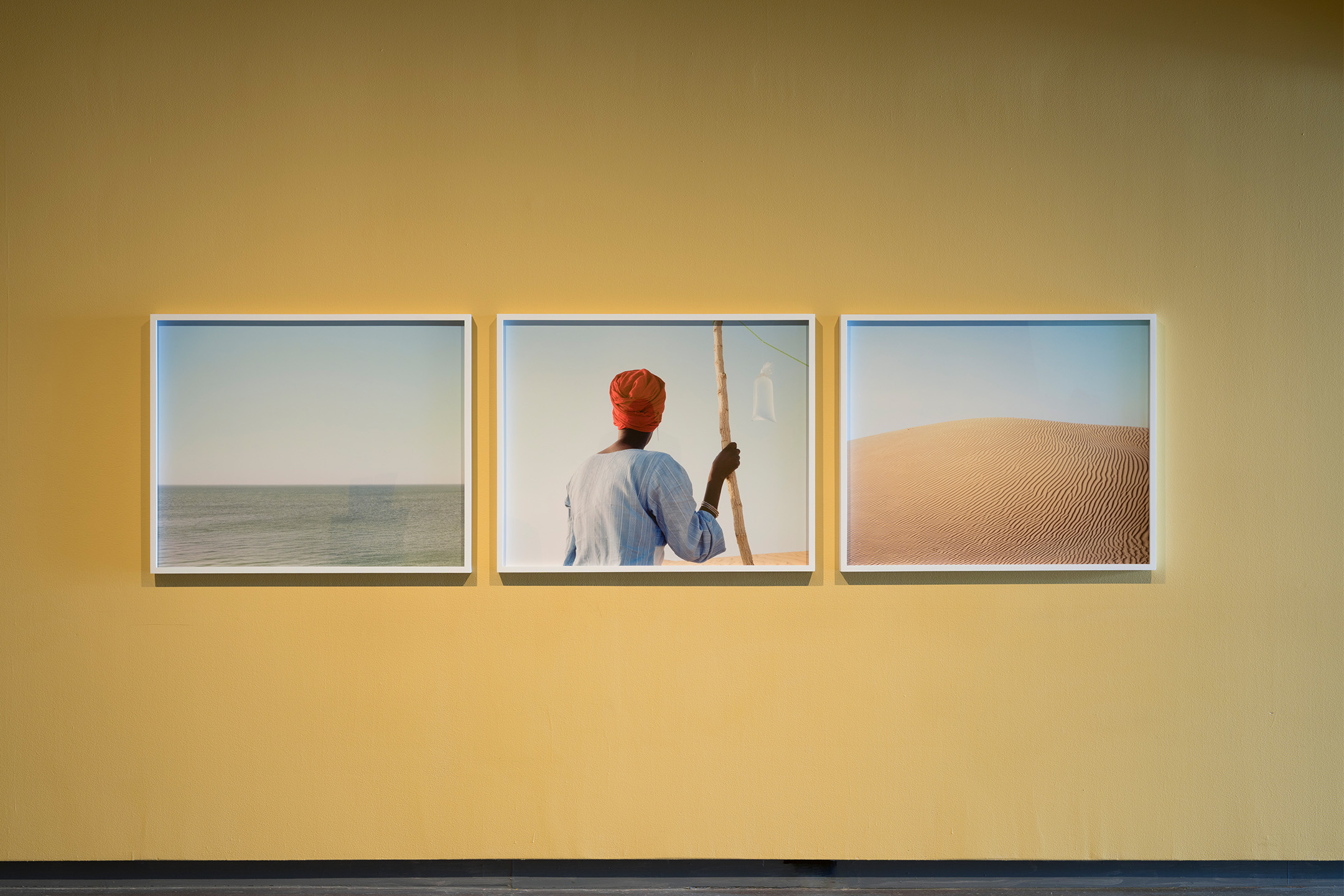
Sand appears most clearly in Dawit L. Petros’ photo series, The Green March — which depicts a desert landscape.
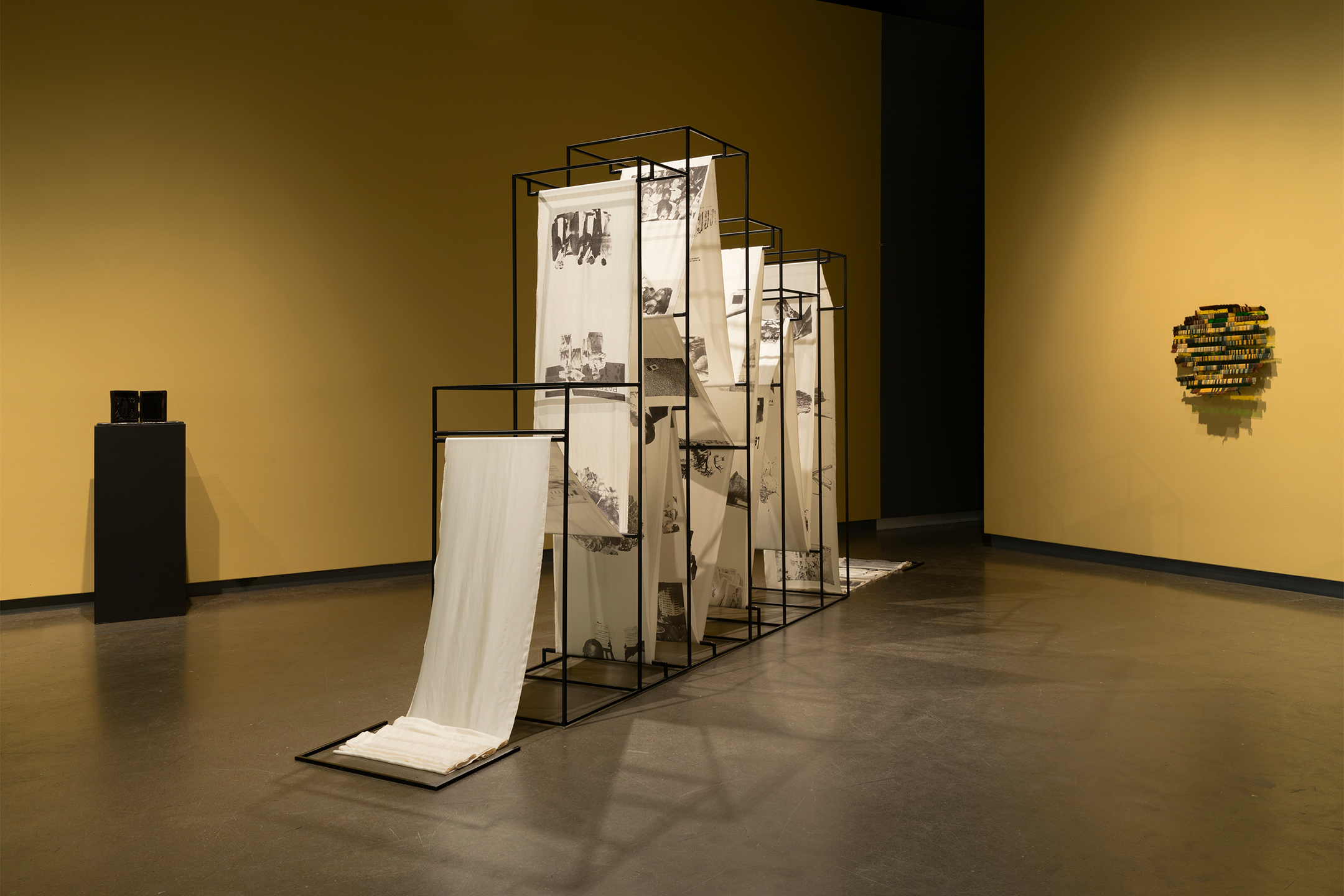
It also appears in more unexpected ways — like Senegalese artist Adji Dieye’s untitled photo sculpture — where Edo was thinking about sand as a material in built structures. The piece considers the French colonial development in Dakar, combining archival photographs from the national archives, newspaper headlines, and Dieye’s own photographs of the city.
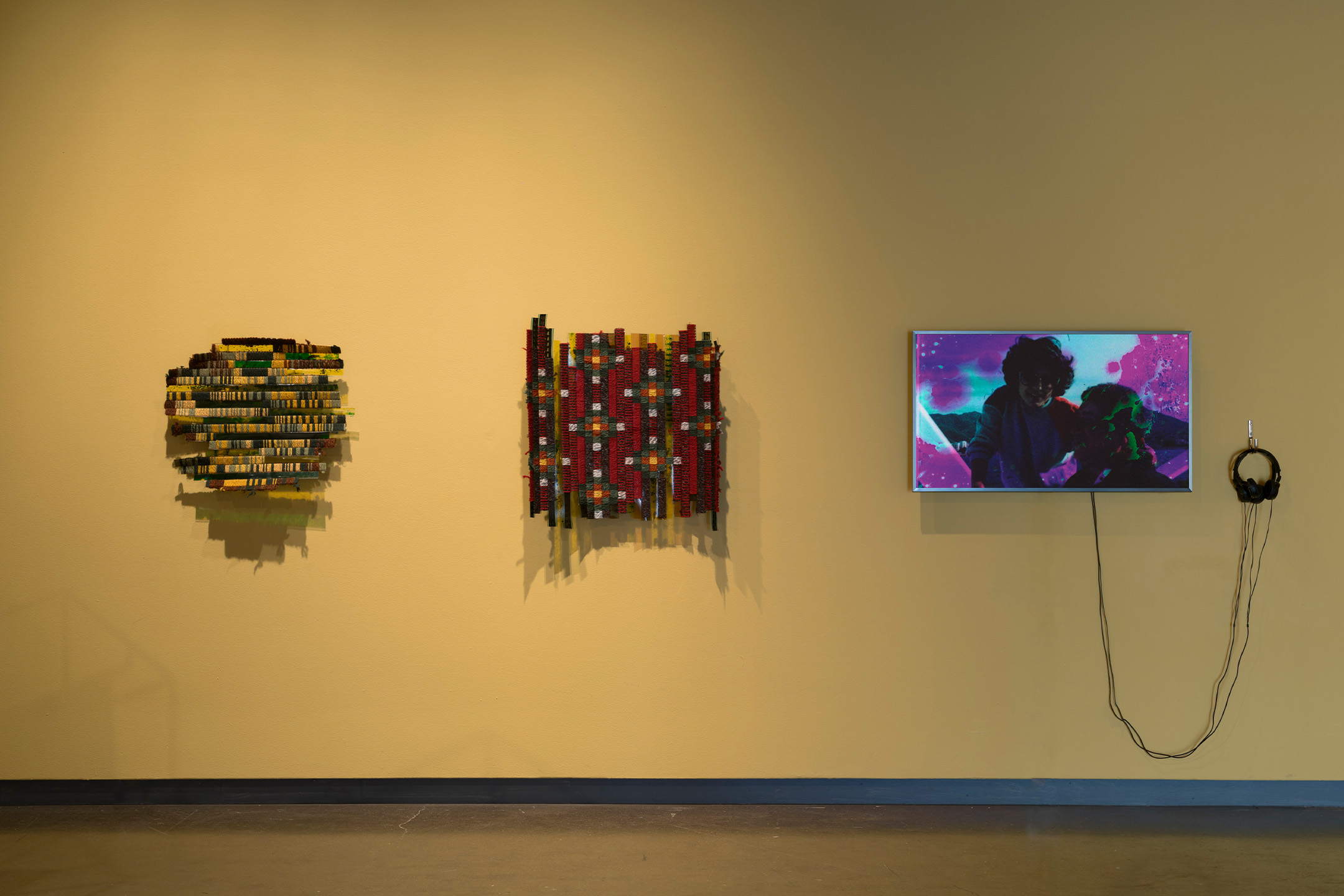
The highlight for me was Rolla Tahir’s short film Sira, where Tahir’s mother tells the story of her family’s migration from Sudan to Kuwait, then out of Kuwait during the Gulf War. We see home videos of Tahir’s family and hear the music of their parties, which is cut abruptly with brightly coloured static and footage of Iraq’s invasion of Kuwait.
Speaking about Tahir’s work, Edo said in an interview with The Varsity, “migration is often an ending because of the political conditions that many parts of the Global South are in.” But Tahir subverts this typical ending — her film ends with a screen that reads “To be continued, part 3: Canada.”
Hanging next to the TV that played the film were colourful panels Tahir had made by entwining the film negatives with yarn in a technique inspired by Bedouin Sadu weaving. Through these weavings, the artmaking process continues even after the film’s ending.
In her curator’s statement at the gallery’s entrance, Edo writes that the exhibition explores the “camera as a colonial tool,” but also works towards re-archiving. She says the different textures of the art pieces — weavings, silk — invite “the possibility of touch.”
I liked the idea of intimacy from a distance. It invites viewers to engage with the art and the archival materials in a way that is respectful but also invites the possibility of intimacy between the subject and the observer.
I saw this at play in The Green March, where in one photo, we only see the back of the subject’s head. In another photo in the series, we see a scarf in midair, cutting the desert landscape in half — but not who it belongs to or how it got there.
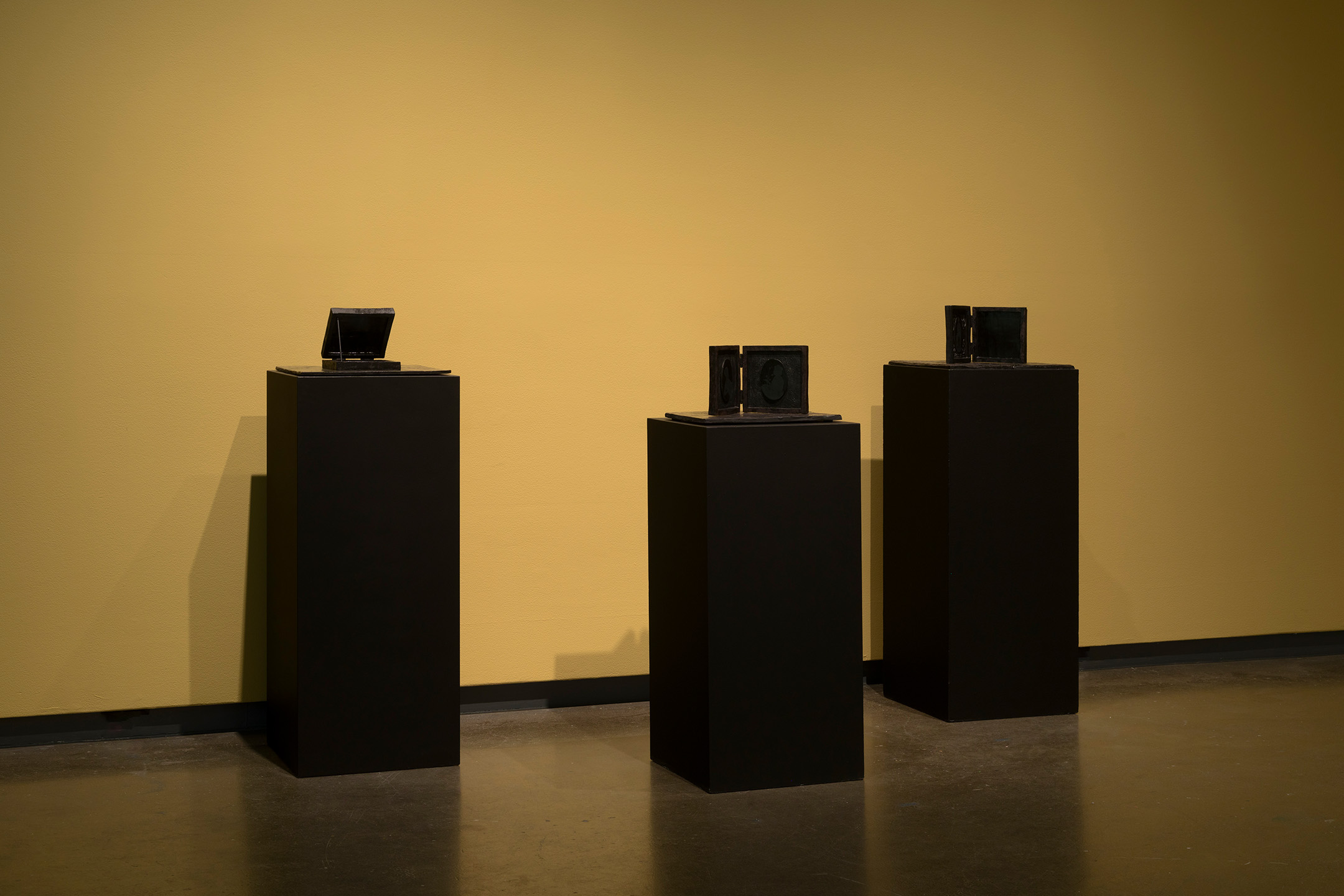
Mallory Lowe Mpoka’s Camera Obscura features pieces that imitate the style of daguerreotypes. Edo told me these were all the artist’s self-portraits, but they only show her silhouette with different clothing and props, so I hadn’t recognized each portrait as the same person.
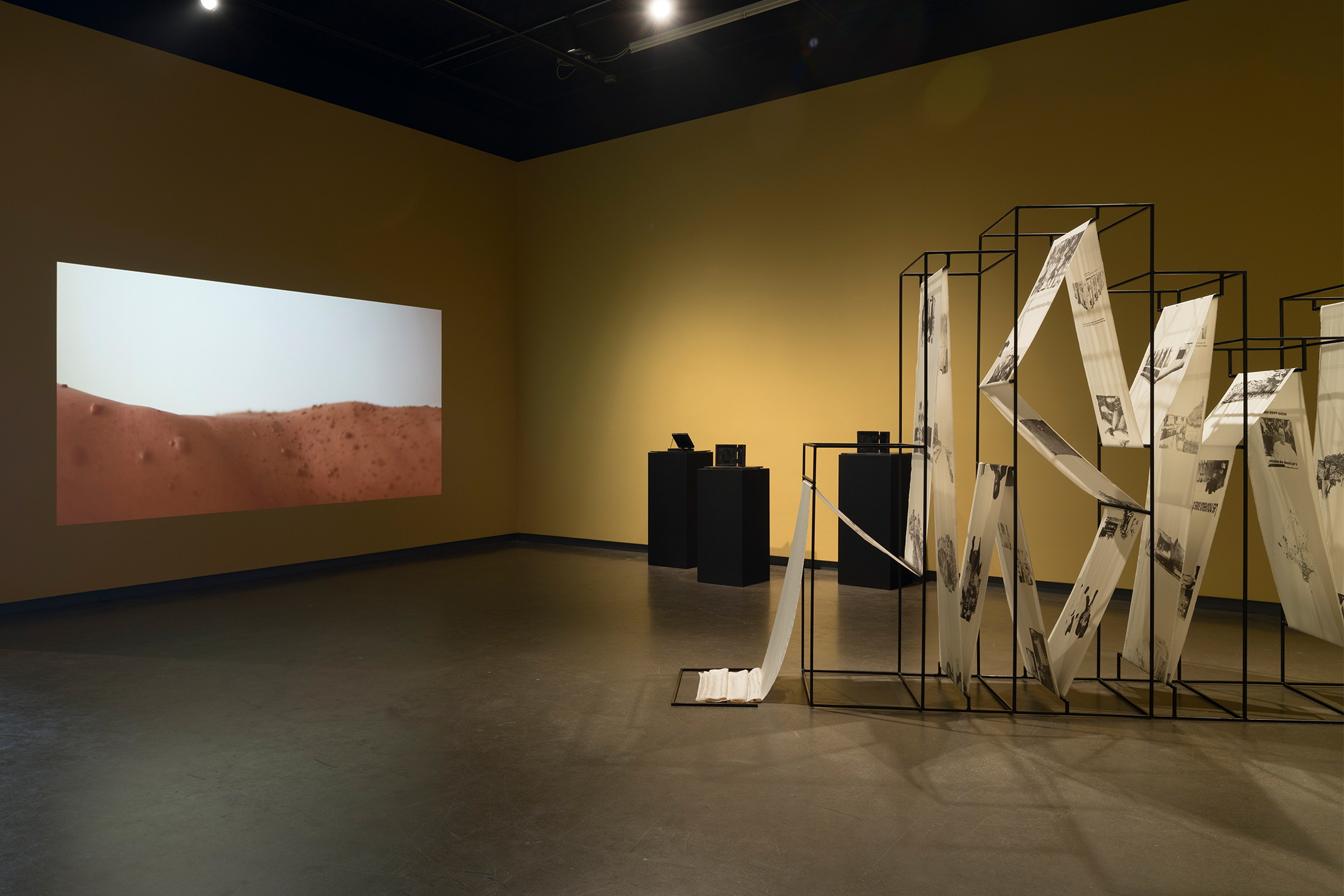
I watched Jessica Karuhanga’s Body and Soul, a video projected on the gallery wall of the artist’s chest rising and falling with her breath, zoomed in too far to see any gendered or identifying features.
Between grain, dune, salt, and sky is a re-archiving project that documents long journeys across desert landscapes, the intimacy of unseen mothers singing softly to their children, and the invitation of a screen full of Canada geese and “To be Continued,” before rolling credits take over the screen.

No comments to display.