
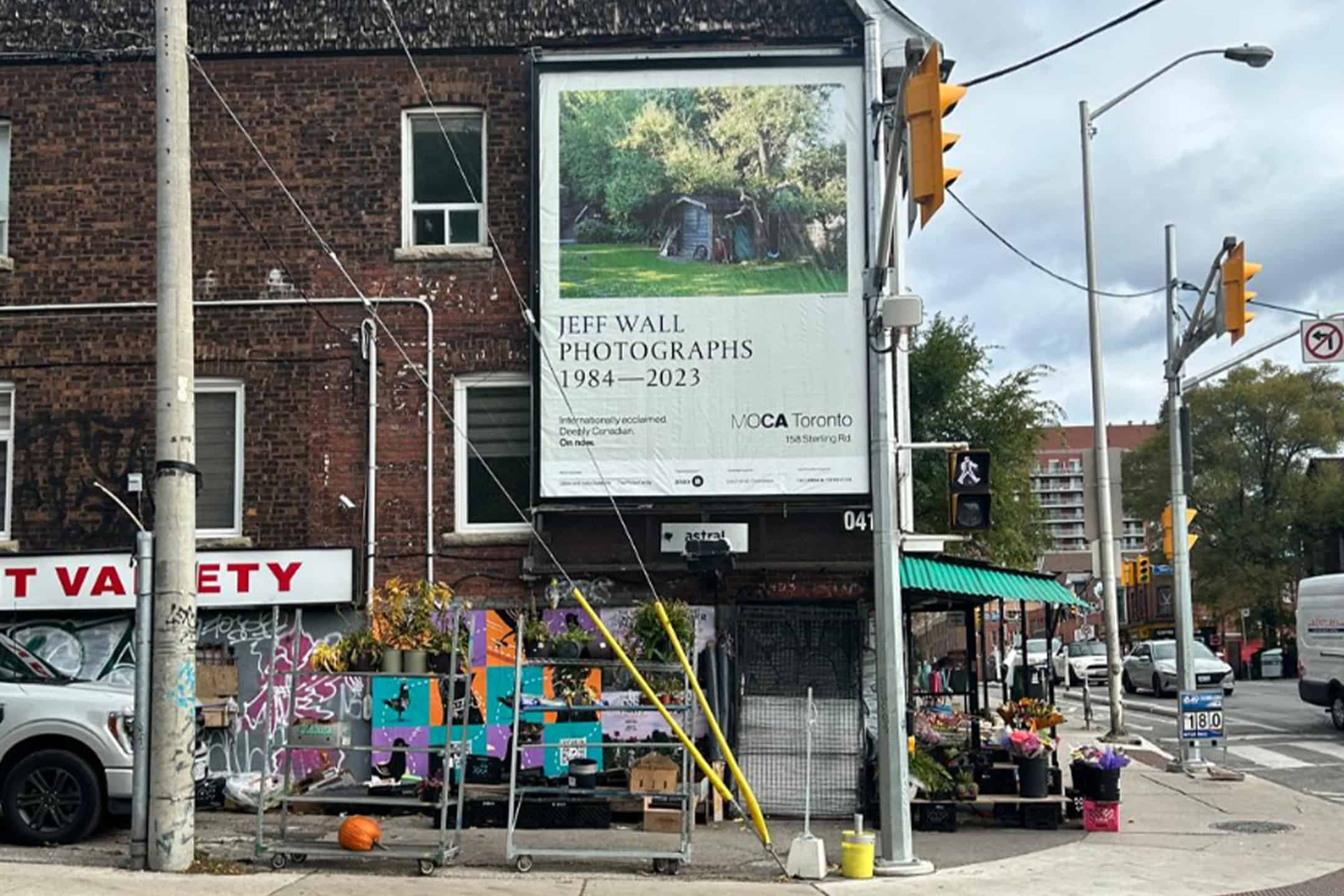
Vancouver-born photographer Jeff Wall is renowned for framing his pictures in a style that combines the aesthetics of Old Master paintings and illuminated commercial advertising signage. His meticulously staged photographic stories are a sharp study of human interaction and space. Thus, the awkward social dynamic of the opening night of the Jeff Wall Survey exhibit at the Museum of Contemporary Art Toronto (MOCA) could have fittingly been choreographed by Wall himself.
After stumbling through badly-lit, narrow residential streets, upon entering the exhibit, I was greeted by an uninspired, dull crowd, standing stationarily in their corners, talking only among themselves, while a DJ played disconnectedly.
Art show opening nights in Toronto are usually fun. You meet interesting people and get to hear the artist talk.
But at this one, the crowd consisted primarily of wealthy donors who looked bored to be there. Additionally, the only art that seemed to be on display was nine circular portraits of children with a backdrop of clear blue skies — a collection cloyingly dubbed Children. Because the rest of the floors were closed for most of the preview, and a lack of direction or itinerary, I left the preview disappointed.
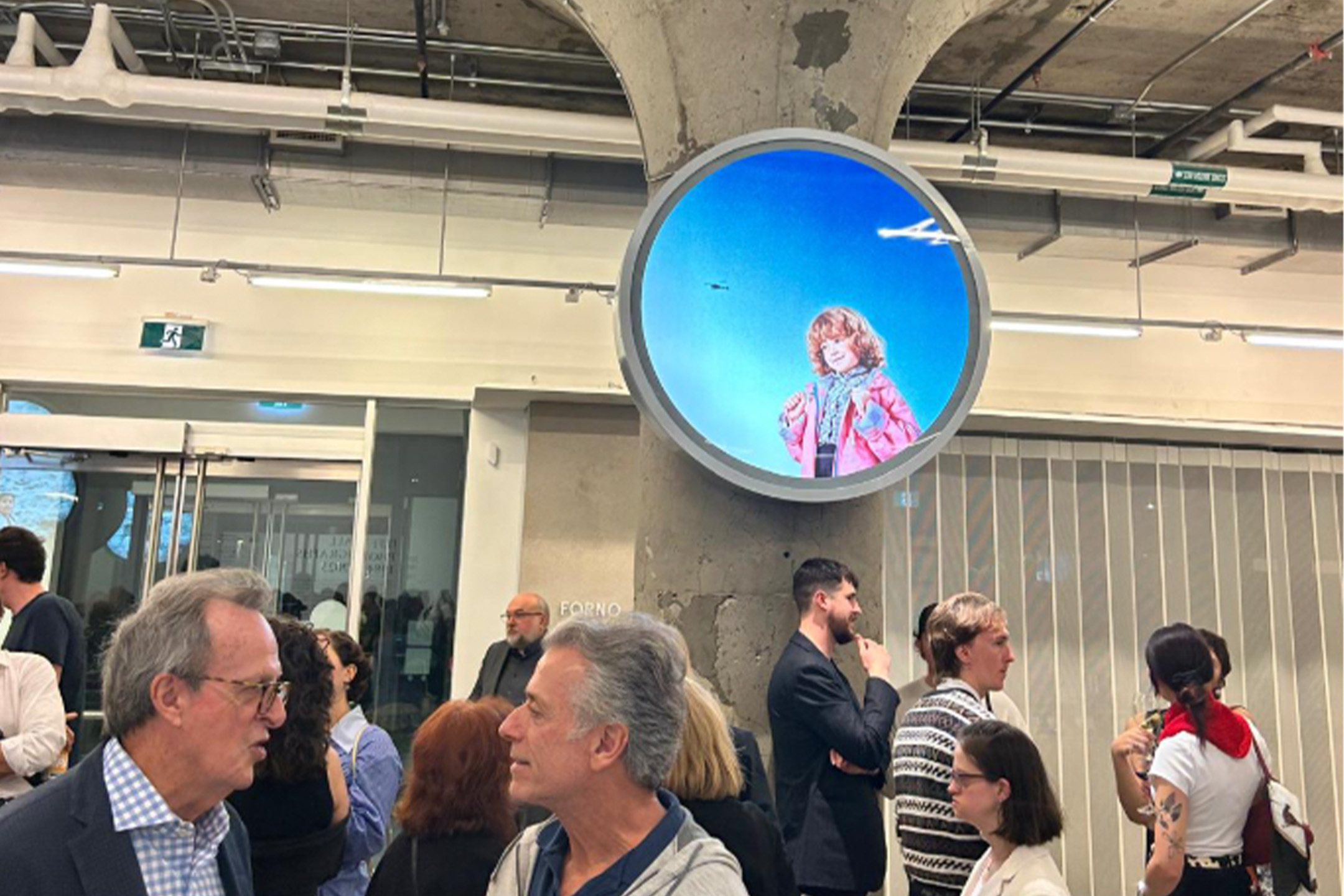
I later found out through posters advertising the exhibition plastered all across TTC lines, how large and varied this survey — an exhibition that presents a prominent artist’s works over a long career — of Wall’s body of work actually was, and I returned to give it another chance. The survey at MOCA, open until March 22, is Wall’s first major Canadian exhibition in 25 years. It aims to showcase how extensively Wall’s work from across his 40-year-long career has influenced contemporary photography.
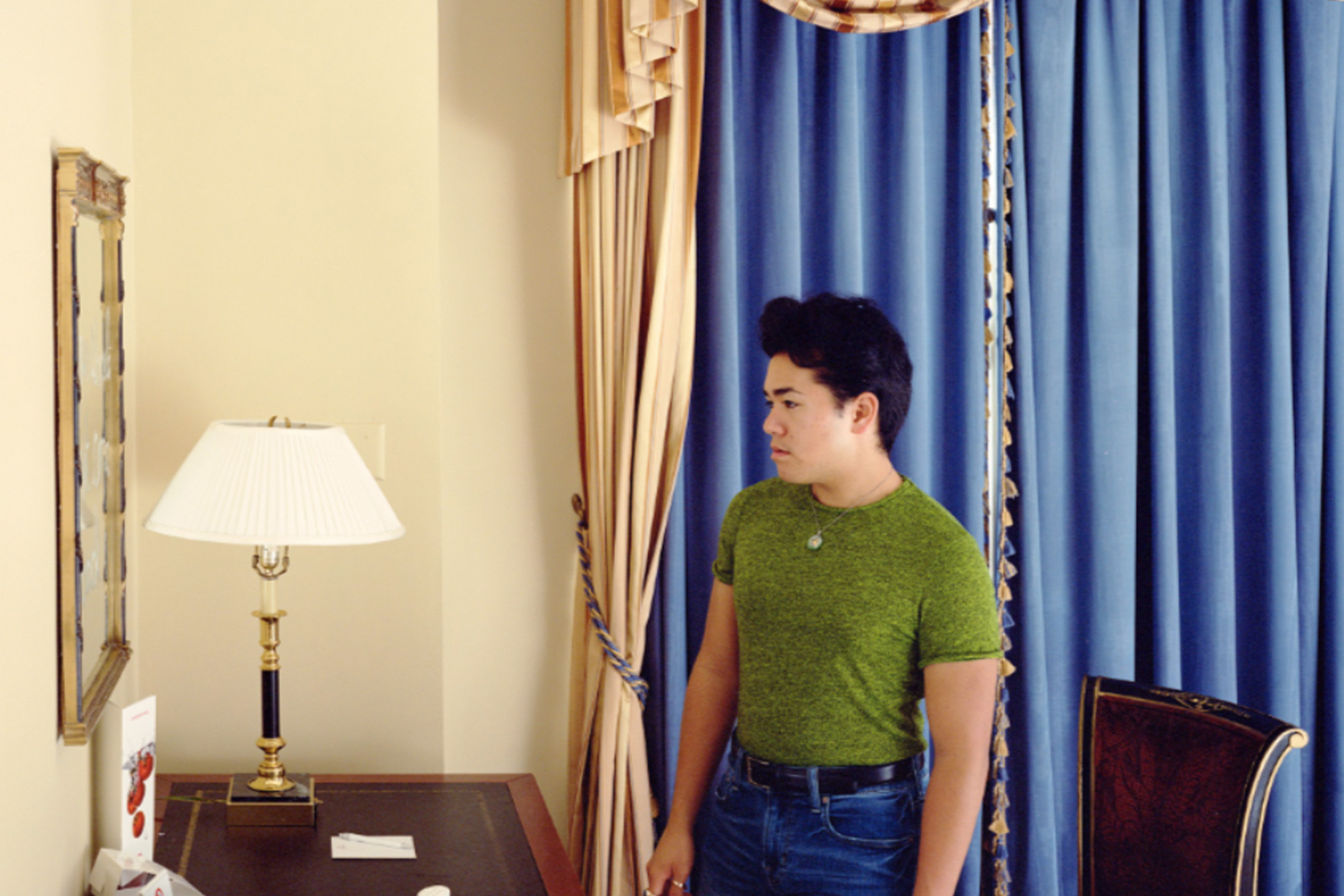
The survey spans three floors. The first floor displays Children, which was the focus of the exhibit’s opening night. The second and third floors feature more interesting works than what the lobby has to offer. These floors showcase the full extent of Wall’s visionary thinking. Man at a Mirror (2019), for instance, is a striking study in colour placement.
The left half of the picture has muted colours with its beige walls, brown desk, white lamp, and mirror. Facing the mirror on the right is a man in a striking green t-shirt with jeans that meld into the blue of the curtains behind him. The man’s stiff, unsure stance in front of the curtains brings into question whether he is even the main subject of the piece, or just another prop adding to the story.
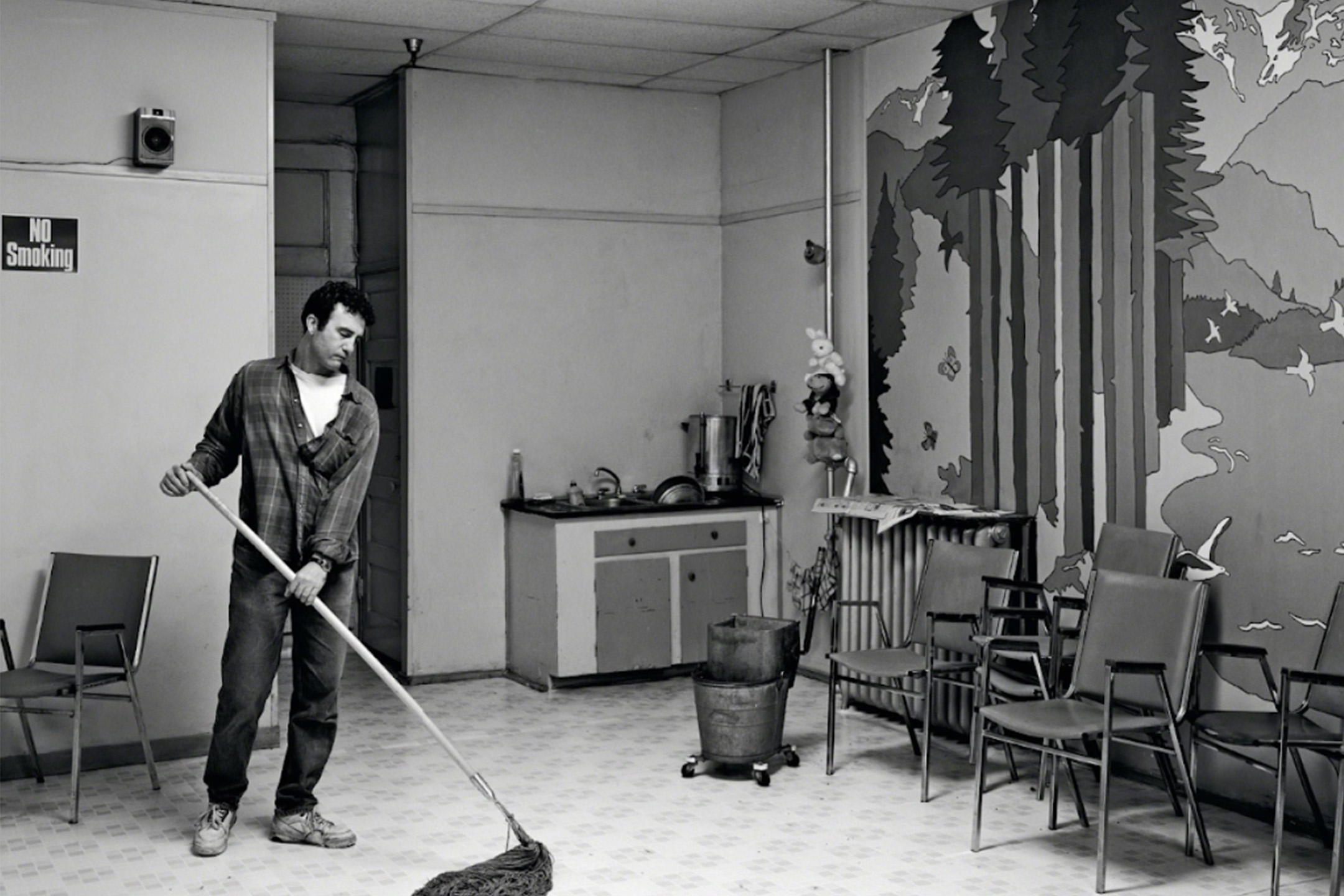
Volunteer (1996) –– an 87 ⅕ by 123 ⅕ inch long gelatin silver print –– is a beautiful portrait of the motion of ordinary tasks. In the photograph, a man in a flannel shirt is caught mid-mop at a community centre. There’s a sinkette in the back right corner, piled high with dishes and children’s stuffed toys tied to a pipe. There is so much work to be done, but the look of devotion in the volunteer’s face perseveres through time.
Wall’s decision to make the simple devotion of a community volunteer the focus of the picture illustrates his skill. He is able to capture the depth of emotion in a stranger while incorporating the context of their surroundings.
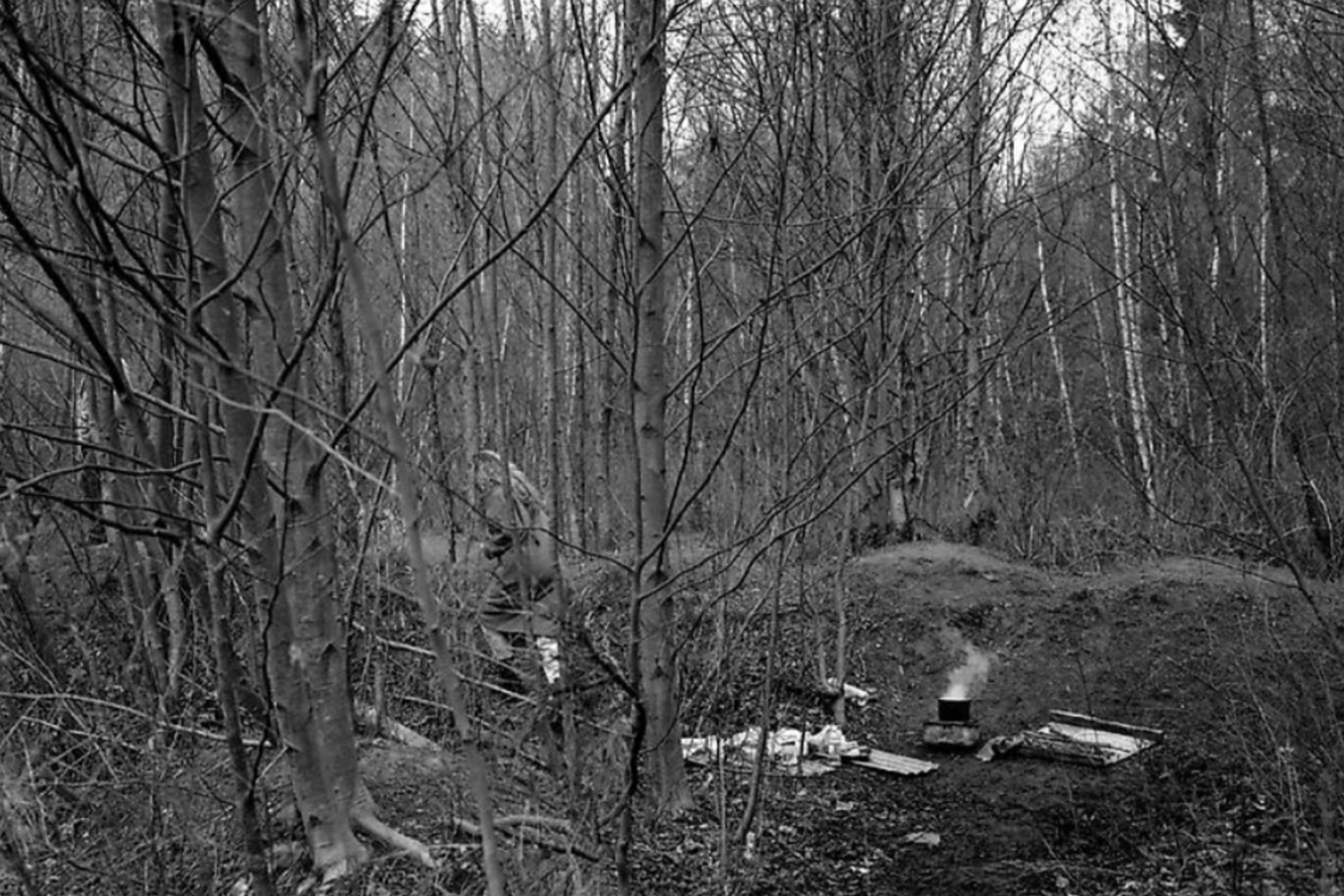
Forest (2001) is a black-and-white print that raises so many questions. A shot of a clearing in a deciduous forest with camping supplies and a pot with clouds of steam wafting up from it clearly points to active use. But when you look closer, you see a figure of a woman abandoning the site that she presumably had a hand in creating. Why is she leaving? Where is she going? The viewer is forced to accept that they will only be given fragments from the full story.
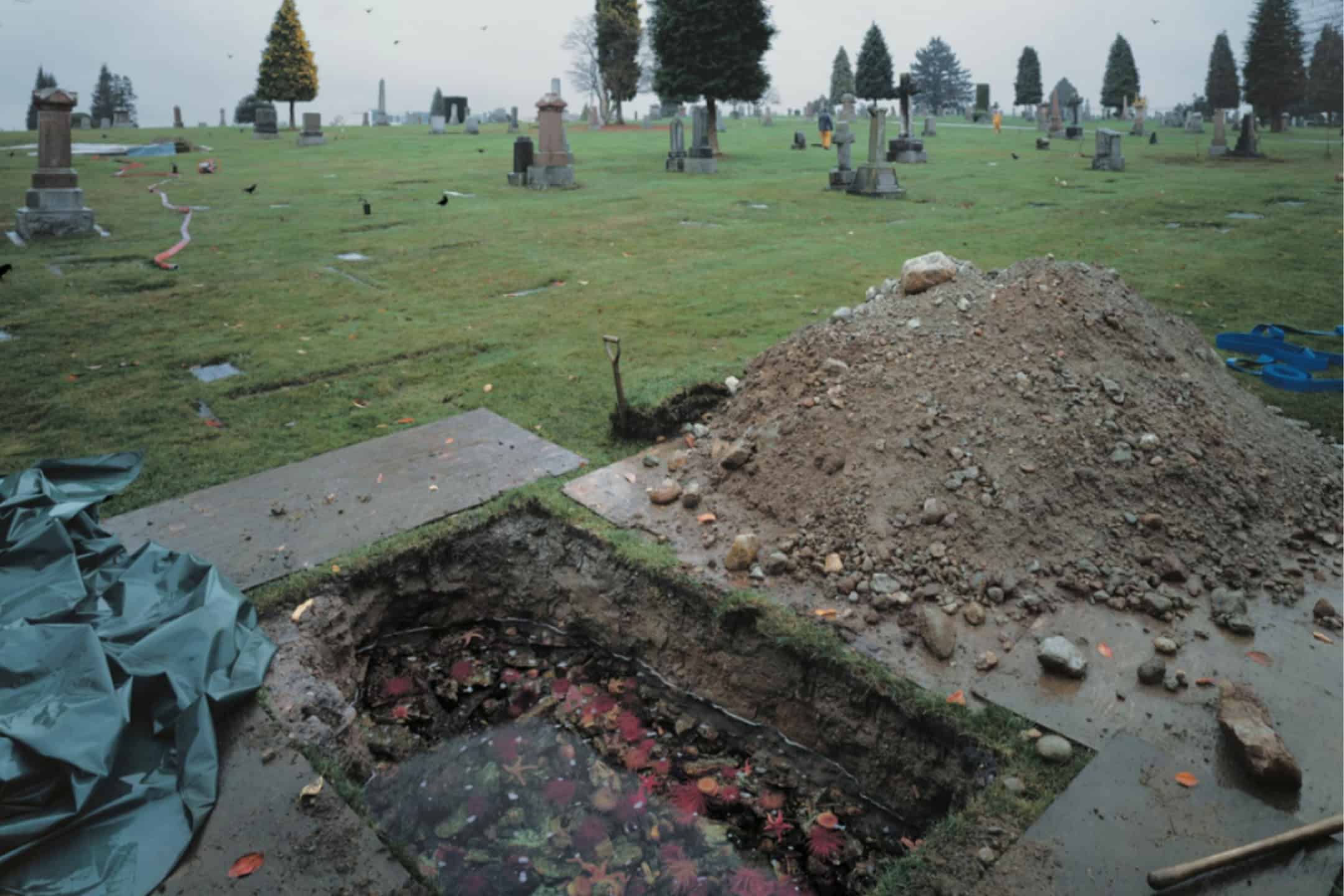
The Flooded Grave (1998–2000) is a beautiful ground-level shot of a freshly-dug grave filled with rainwater. Starfish and coral occupy the water in the grave, but everything else in the graveyard is typical.
This surrealist aspect makes Wall’s photography transcend the expectations one has for subject-based photography. Here, the subject is not a person but the absence of one. A place for death is subverted with the unexpected presence of vibrant marine life.
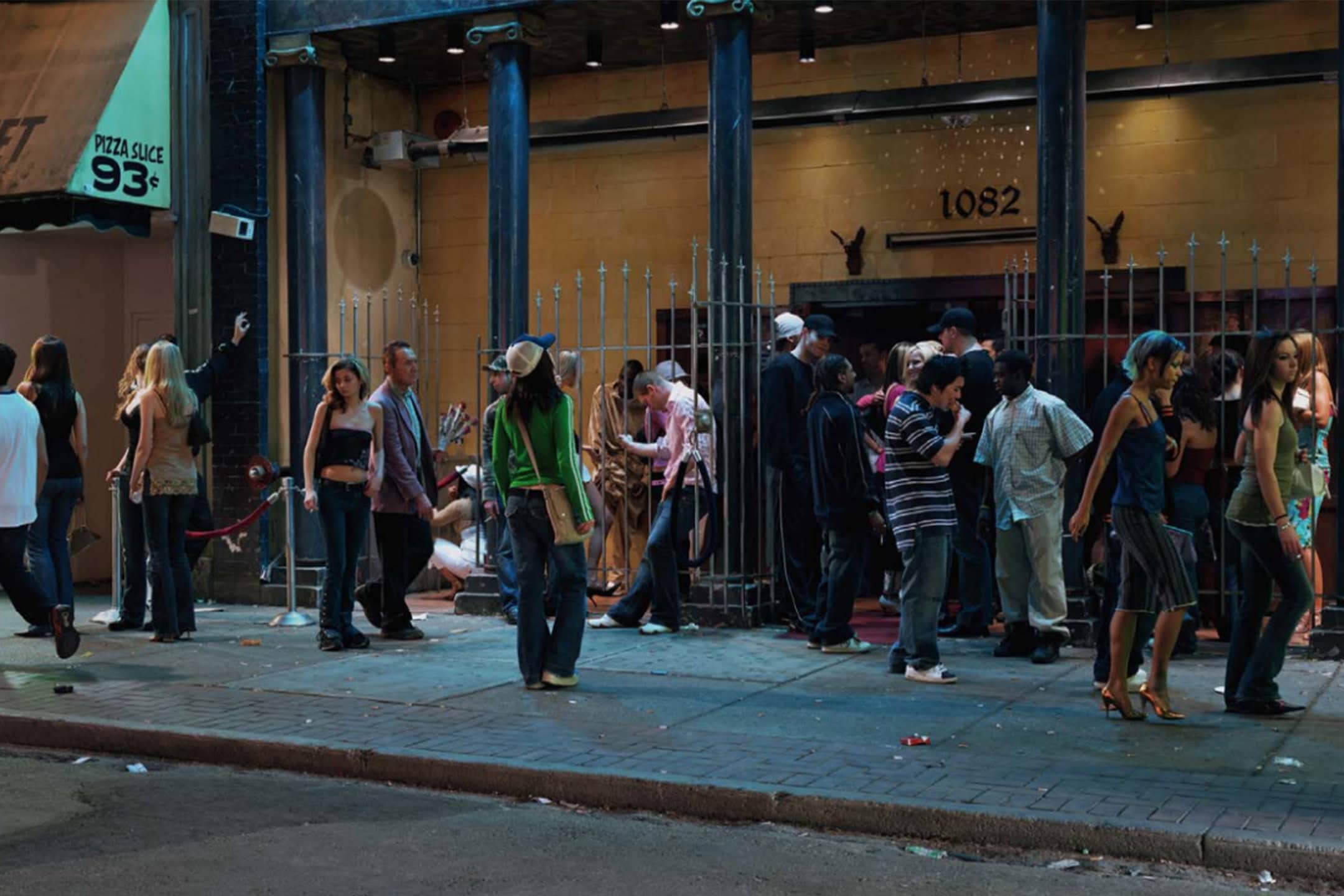
The best piece in the show for me was In Front of a Nightclub (2006), which showcases Wall’s ability to read the way people interact with each other and their surroundings. The picture centres a young woman in a green tracksuit jacket standing out on the street, looking at a nightclub, and the crowd around it.
The photograph, which is 7 feet long and 12 feet wide, is a marvel. The lighting is soft in such a way that you cannot tell whether the scene was shot at dawn or dusk. People are both leaving and entering the club.
The small indifferent ways that strangers interact with each other create the drama and the story. We can sense the hesitation of the young girl as she contemplates the sight in front of her, before she decides whether to join the fray or not. Wall captures the uncertainty of youth and our human desire to be incorporated into a group.
Wall likes to create documentary-like images of everyday moments, but puts a magnifying lens on the complex emotions they might hold and evoke. Although his subjects are posed, we are presented with works created with a masterful presentation of the tension in the minutiae of human interactions.
Wall makes us reexamine our everyday actions and intentions, and how much importance we give ourselves in our own narratives. Even Wall’s photographs without human subjects have the heavy expectation of human behaviour haunting them.
This survey presents a Canadian photographer who has truly mastered creating a conversation between his subjects and his settings. Missing out on this showcase would be a true loss for any photography and art aficionado. Catch the show before it closes in March!

No comments to display.