
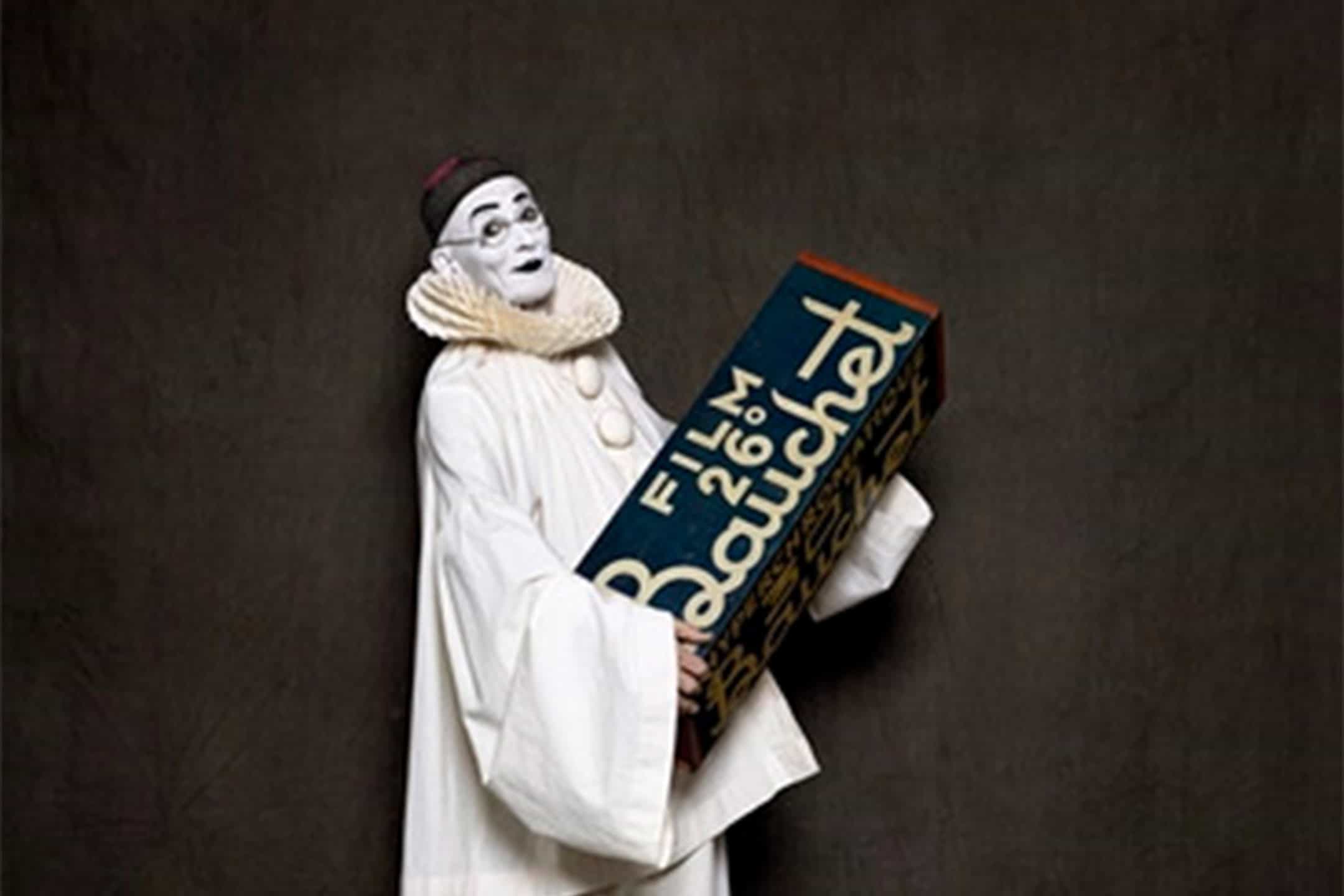
On May 9, the Stephen Bulger Gallery held the opening reception for Arnaud Maggs: Selections From The Archive as part of the CONTACT Photography Festival. Put on by the international modern and contemporary photo gallery in Little Portugal, the exhibition featured some of Arnaud Maggs’ most popular works from five of his collections across his 39-year-long artistic career.
Maggs was a Canadian visual artist, known for his conceptualist photography and his distinctive portraits of people, commodities, and places. In conceptual art, an artist places more importance on the idea behind the work than on the finished artwork itself. Maggs’ devotion to the concept was made apparent in this retrospective.
The portrait as a mugshot
These included a variety of black and white photos from his series, “48 Views” in which he captured the various profiles of famous writers and artists 48 separate times. At first glance, to me, these profiles looked like arrest mugshots. These front, side, and back profiles were the first to grab my attention in the gallery. I was particularly intrigued by a piece in the collection that repeatedly posed the subjects facing away from the camera at the same angle.
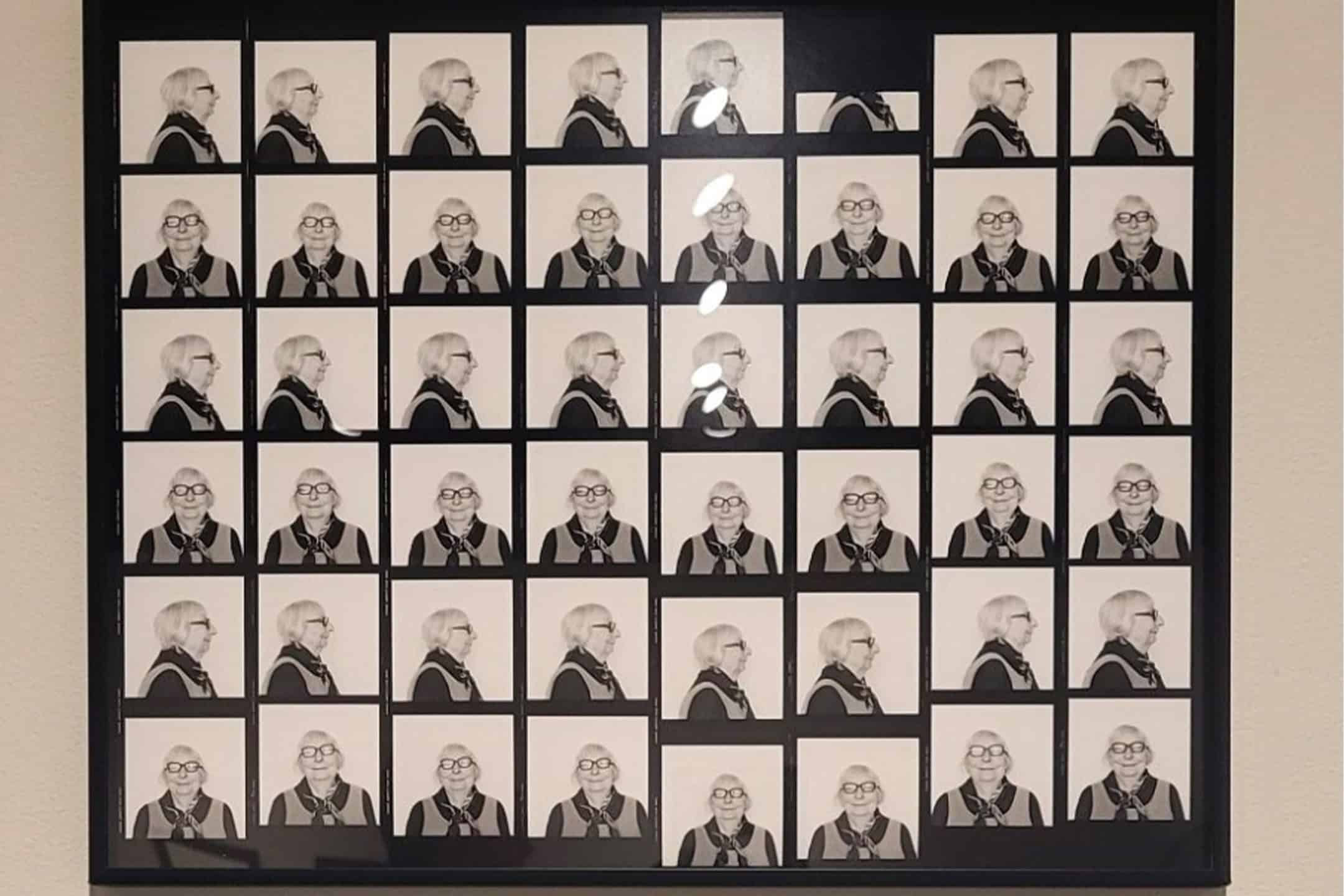
Arnaud Maggs’ “Jane Jacobs” (1981–1983). JULIET PETERS/THE VARSITY
The collection includes a piece starring Jane Jacobs. Jacobs was a Canadian-American author and urbanist. She advocated for the administration of cities and economies to centre the people who lived in them.
At first glance, the photographs look to be simply reproduced to fill the eight vertical film strips that make up the area of its frame. However, a closer look reveals differences in Jacobs’ appearance in each frame through a smirk, a head tilt, or an angled chin.
This particular piece also features some misprints. Jacobs’ head is cut off in the first picture in the sixth film strip from the left, showcasing the mechanical flaws of film photography as a medium.
Maggs uses his grid portraits as a medium for archival practices. Unlike the stereotypical standards for archival practices, these film strips are not all perfect final products. By laying bare the mechanical difficulties in photography, Maggs emphasizes the particularities of the medium and his subjects. There are errors in each frame that contrast the strict symmetry of the grid.
Maggs bends what the audience expects from portraiture, typically a more formal medium of art, through “48 Views.” By decentering the single front profile and incorporating the flaws of his medium, his work forces the viewer to not hold a rigid perspective of his subjects. Additionally, with Maggs’ work, the viewer is never sure if the story being portrayed is of the subject or merely the concept.
An intimate creative process remembered
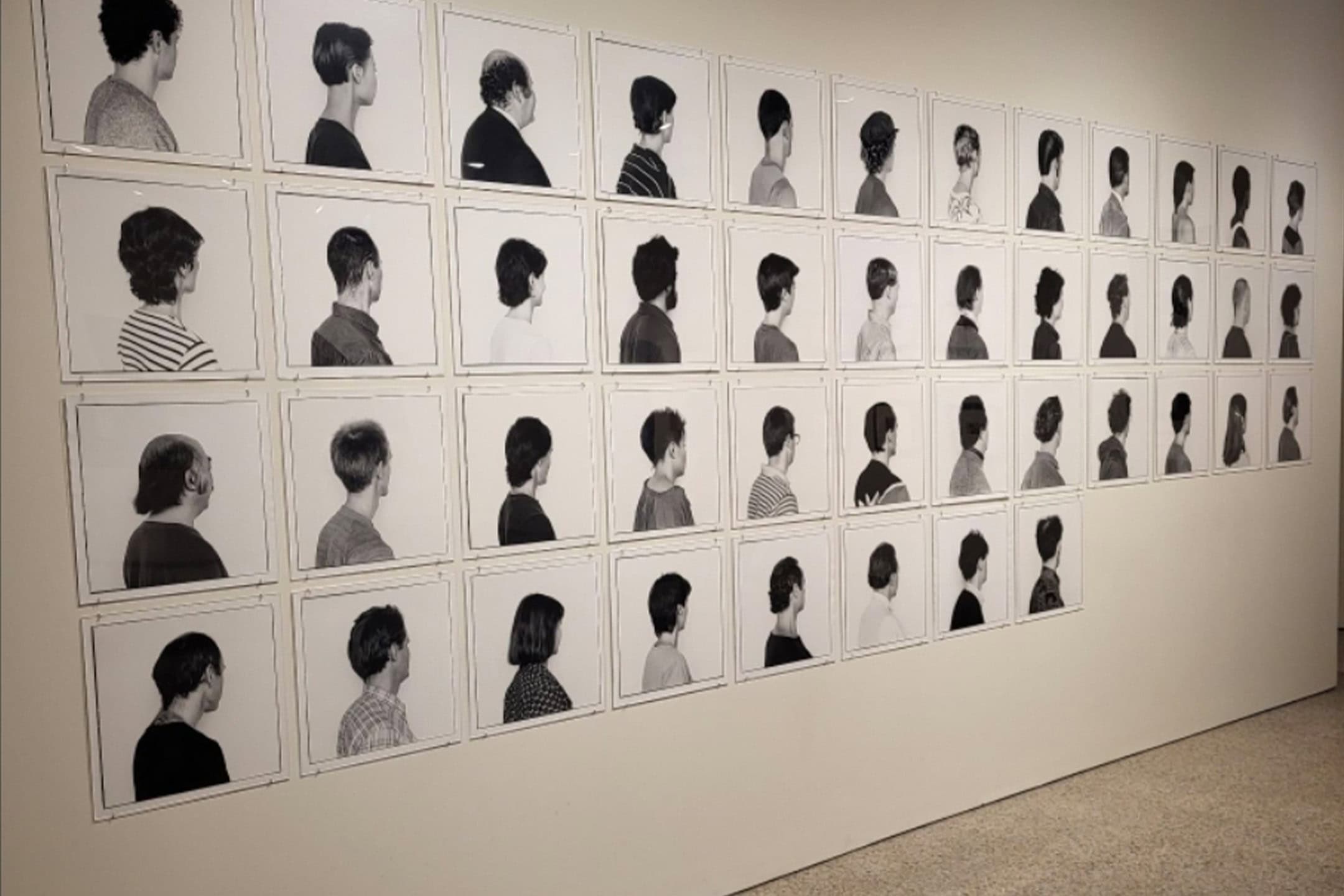
Arnaud Maggs’ “Downwind,” (1981–1983). JULIET PETERS/THE VARSITY
This pattern is continued in his large-scale piece “Downwind.” The work features 44 prints, all of different models, captured in portrait. However, in all 44 profiles, the models are angled away from the viewer, obscuring their faces. What results is an illusion of a crowd that the viewer finds themself standing behind.
Every head is turned in the same direction, creating the effect that all the models are looking at the same thing. The repetition of this pose makes for an imposing work. Because of the magnitude of the piece, I was tempted to look for repeat prints, but in light of the “48 Views” collection, I decided instead to look for the differences.
Each model had a different hairstyle, hairline, jewelry, and clothing. On some prints, the model was turned just enough to the side that you could see the makeup highlighting their cheekbones.
While taking an inventory of the differences between the prints, I noticed two eventgoers trying to guess which print featured a friend of theirs standing to the side. After one of their guesses struck true, they remarked they could tell it was her because she was smiling. The print in question was of the back profile of Suzy Lake, a Canadian-American visual artist.
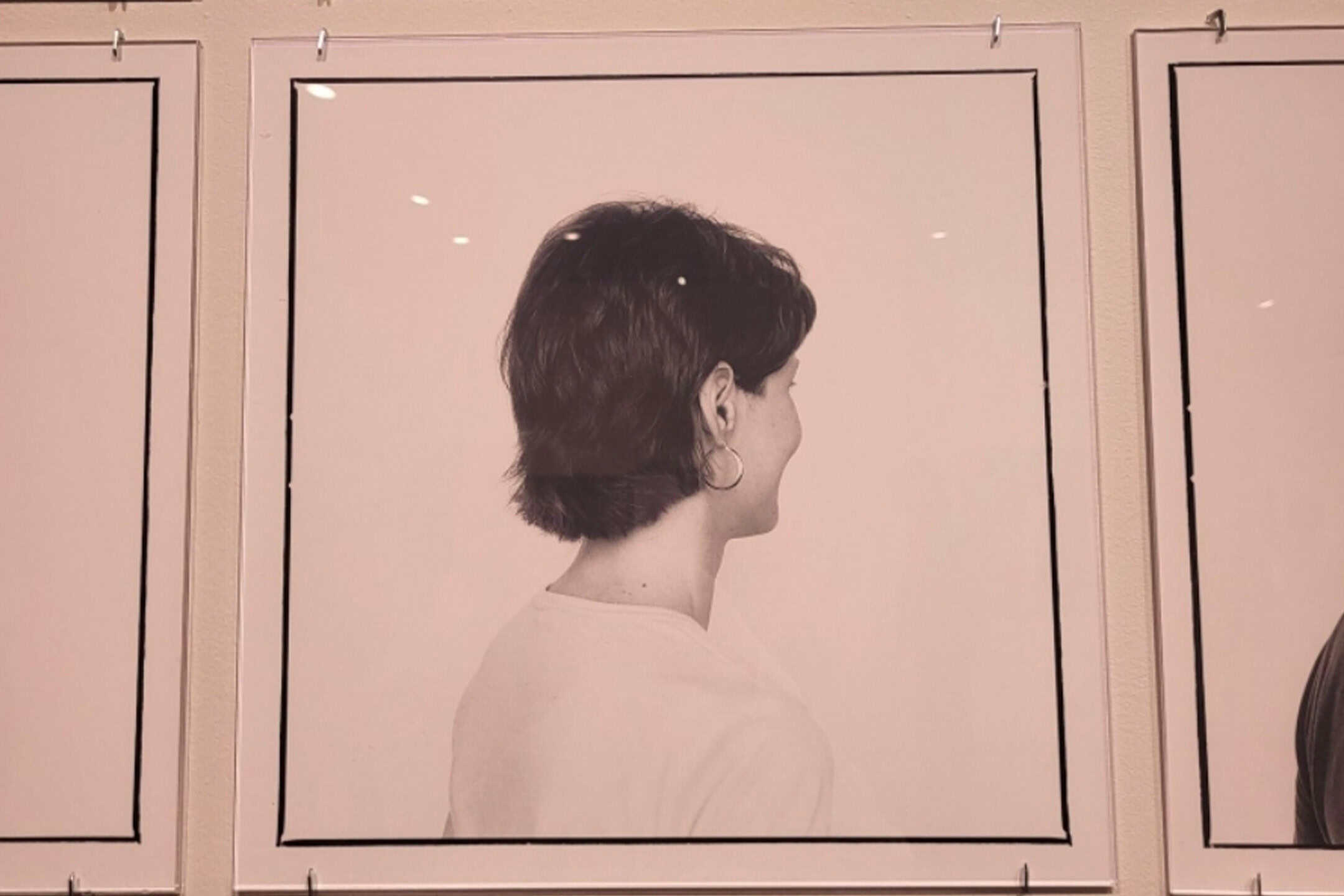
A close-up of Suzy Lake’s portrait in Arnaud Maggs’ “Downwind” (1981–1983). JULIET PETERS/THE VARSITY
I spoke with Lake, who was present at the opening. She described sitting for Maggs as a process that “really depended on the jawline.” Lake said that Maggs did not advertise for models, and described his scouting as “they’d [his potential models] be sitting and having a glass of wine, and he would say, ‘Can I photograph you?’”
Lake also tIn an interview with The Varsity, Lake also described how she and the other models of the “Downwind” portraits had formed something of a group. Maggs had even printed the “Ledoyen Series, Profile Views” and “Ledoyen Series, Working Notes” in Lake’s personal darkroom. The whole experience created an intimate connection between the models and the artist.
Reframing the catalogue
The “Ledoyen Series” captured the side and front profiles of 20 different Parisian chefs and sous-chefs. Maggs was drawn to the chefs because of their uniforms. In a lecture he gave at the Toronto Metropolitan University in 1994, he shared his belief that because each chef would be dressed the same way, the repetition would “hold the work together in a graphic sense.”
The repetition of the white toques, jackets, and aprons deceives the viewer into expecting uniformity. However, upon closer inspection, the particularities of each model’s pose and the way they interacted with the background exposed their unique personalities.
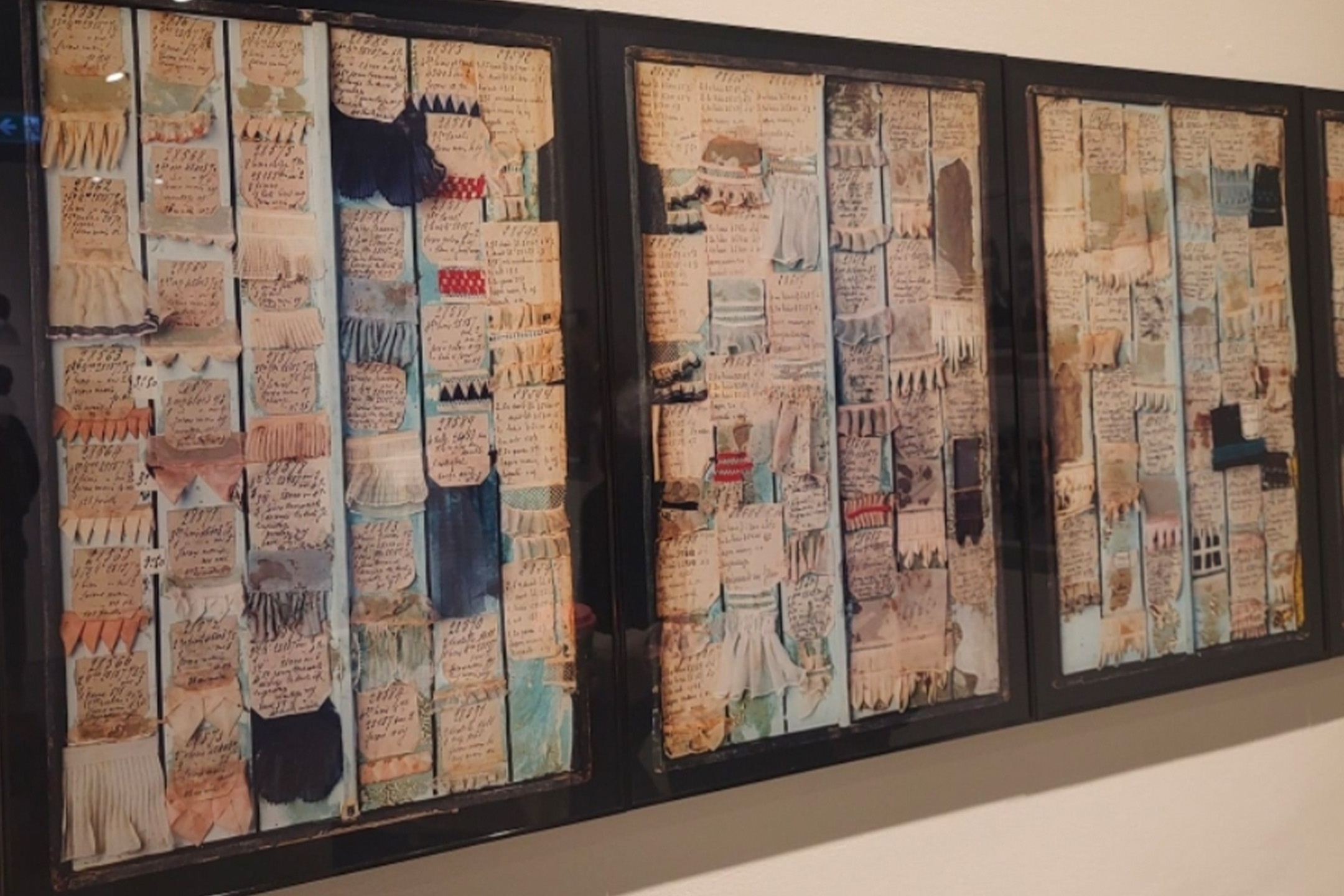
Arnaud Maggs’ “L’Échantillonage i” (1999). JULIET PETERS/THE VARSITY
The influence of Maggs’ background in commercial graphic design and photography is apparent in pieces like “L’Échantillonage i.” The piece captures four panels from the interior of a salesman’s travelling case.
Each panel captures the rows of the blue-lined case and their contents, which mostly include fabric samples and labels. These labels attempt to organize the case, but the items themselves do not appear neat or perfect within their rows.
The artist’s penchant for documentation also prompted visitors to try cataloguing by taking photos of themselves. As I walked through the gallery, I noticed many people mimicking the ‘mugshot’ poses of Maggs’ portrait subjects.
Standing in the gallery, I felt as though I was seeing a combination of someone’s ‘everything’ drawer and their most prized possessions at the same time.
Maggs’ art argues that the regular and the special are not unequal categories in the archival process. His interrogation of societal ideas of perfection and order challenges expectations of what we should preserve or discard. Maggs’ insistence on the distinct nature of the subject, no matter how small, is a sincere and deeply human reckoning.

No comments to display.