
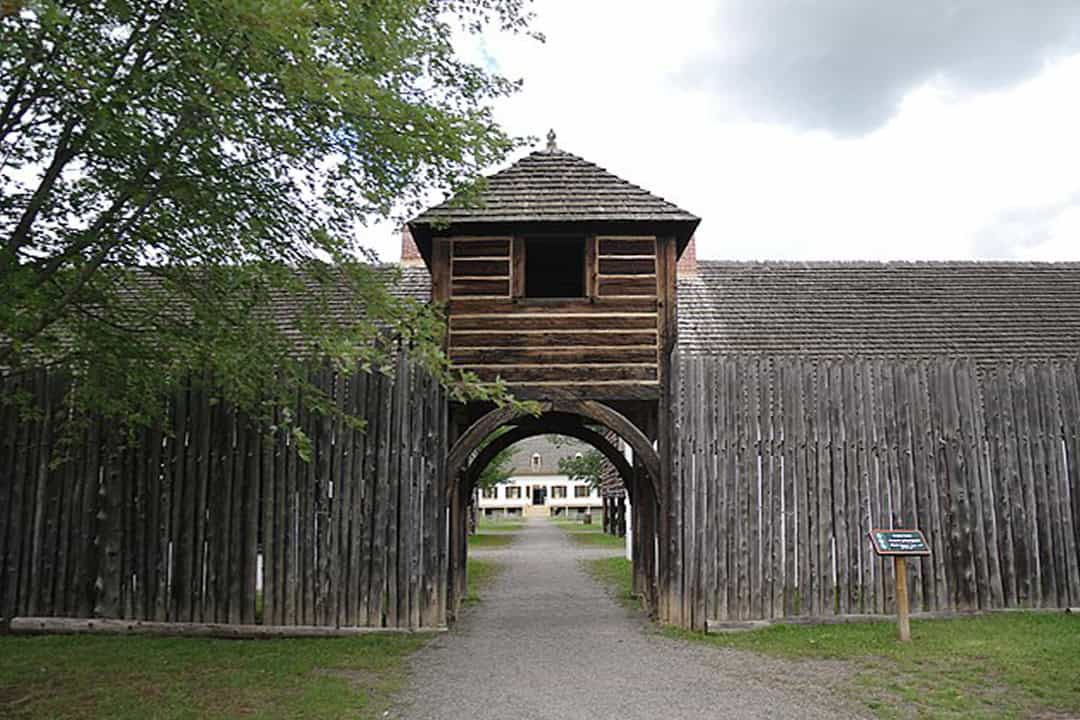
When representing Indigenous cultures, museums often fall prey to the spectacle of neocolonial capitalist consumption — a system where wealthy nations maintain control over poorer countries by exploiting their resources, labour, and markets through economic and cultural influence. Often, Indigenous artifacts and narratives are commodified for visitors’ consumption instead of being exhibited through methods that allow Indigenous people to tell their own stories.
This commodification perpetuates distorted and reductive perceptions of Indigenous peoples, reinforcing colonial power dynamics and erasing Indigenous identity. Ultimately, these distorted perspectives reflect outsiders’ viewpoints, which are projected onto these exhibits, as audiences. This, as the American anthropologist Benedict Burton says, presents how “the display of people is a display of power” rings terribly true.
Throughout the nineteenth and early twentieth centuries, academia and museums in the US were deeply enmeshed in the systematic collection of Indigenous human remains, primarily for scientific inquiry across the American and Canadian North West. Notably, anthropologists like Franz Boas — widely considered the father of cultural anthropology in America — often resorted to robbing Indigenous peoples’ graves to meet the burgeoning demand for research specimens.
The US Congress passed the Antiquities Act of 1906, further subjecting Indigenous material culture to this anthropological inspection, and reducing human remains to the status of archaeological artifacts under federal authority. This legislative framework, while ostensibly aimed at safeguarding cultural heritage, perpetuated scholarly institutions’ appropriation of Indigenous remains.
It was not until America enacted the Native American Graves Protection and Repatriation Act in 1990 that concerted efforts began to repatriate cultural artifacts from museums, federal agencies, and private collections. This shift was rooted in the 1960s Native American self-determination movement, which challenged museums and inspired broader Indigenous activism, as noted by cultural anthropologist Patricia Pierce Erikson.
In Canada, similar changes in museum practices emerged around the same time, marked by events like the return of the Cranmer potlatch collection to the Kwakwaka’wakw of British Columbia in the 1970s, and the 1988 report Turning the Page, published by the Canadian Museums Association, which advocated for equal Indigenous participation in preserving their heritage.
Though we have fortunately progressed away from such ‘exhibits,’ museums will always nurture a contextual disconnect between the visitors and the exhibited cultures. Contemporary museums not only physically separate visitors from cultural displays using ropes and glass, but also encourage them to merely ‘look in,’ mirroring how Indigenous peoples were distanced and objectified by European settlers during their first encounters, and viewed from the so-called ‘civilized’ perspective.
Museums perpetuate the idea of the ‘Vanishing Indigene,’ a myth informed by pseudo-scientific theories out of nineteenth-century social Darwinism, which posited that Indigenous people belonged to an earlier stage in evolutionary history and were therefore doomed to disappear with the rise of modernity.
This restricted viewpoint can often become the primary lens through which Indigenous cultures are perceived, given the educational role of history museums in shaping public understanding of Indigenous peoples and their history. This situates museums as strongholds for the exploitation of culture as a commodity — museums become less about “collection-based work in studying and interpreting cultures, or what people do, say or think, but rather the assumed needs or impressions of visitors.”
Hence the importance of cultural heritage museums — some like Huronia Museum and Huron-Ouendat Village that centre on telling “precontact” stories, and others like Ska-Nah-Doht Village and Museum that describe an overarching history, telling its visitors that the Indigenous people existed before and after European first contact, despite many efforts to deny this history.
Cultural heritage museums serve as vital counterpoints to mainstream narratives, offering Indigenous communities a platform to accurately represent their cultures, histories, and worldviews. The museums help foster empowerment, greater cultural understanding, and respect among both Indigenous and non-Indigenous audiences. For example, the Curve Lake Cultural Centre of the Curve Lake First Nations collaborates closely with the Elders Advisory Committee to ensure traditions, ceremonies, and language continue to be passed down across generations. Thus, these museums become pivotal in shaping public perceptions and narratives, particularly regarding Indigenous cultures.
Museums are not inherently incompatible with Indigenous sovereignty; rather, it is their design as institutions that consume other cultures — through exoticization and the reduction of complex identities to commodified experiences — that creates misalignment.
Archaeological remnants can also serve as tangible representations of histories that Indigenous communities endeavour to safeguard, defend, and in certain instances, revive. Instead of continuing to deliver the idea of the Vanishing Indigene, Indigenous people can use the very same artifacts to tell completely different — and more accurate — narratives.
In Ontario, there are many places that are made and run by Indigenous people. Given that art and education serve as mechanisms for social, economic, and cultural reproduction, the interactive nature of community museums — coupled with the agency Indigenous peoples exercise in facilitating them — can foster a necessary shift in Indigenous peoples’ self-perception and viewers’ mindset.
Heritage museums frequently underscore Indigenous survival and resilience in their exhibitions, serving as a poignant affirmation of cultural endurance. Central to this narrative is a compelling emphasis on the significance of the present and the future, firmly rooted in connections to the past. This counters the trauma-centered narratives that previous museums deployed.
Amy Lonetree (Ho-Chunk), associate professor of American studies at the University of California, Santa Cruz, highlights the challenges inherent in navigating cultural heritage museums, emphasizing that Indigenous peoples are at the forefront of overcoming these obstacles. Lonetree notes that Indigenous peoples assert their agency and reclaim their identities within curatorial spaces, shaping public perceptions according to their own perspectives.
Through their interactions, creations, and ongoing adaptations, Indigenous communities assert control over how their culture is displayed and presented. They have the autonomy to choose to collaborate with other museums or to operate independently. This assertion of autonomy is a powerful manifestation of Indigenous sovereignty, especially within an industry that historically denied them control over their own culture.
By acknowledging and supporting the transformative potential of cultural heritage museums, other museums and conservation efforts can take meaningful steps toward decolonizing their practices and ensuring a more equitable representation of diverse cultures and perspectives.

No comments to display.