
Indigenous people remain underrepresented in the Canadian business world — only one to 1.5 per cent of small and medium-sized businesses in Canada had a majority Indigenous ownership in 2020, even though Indigenous people made up five per cent of the population.
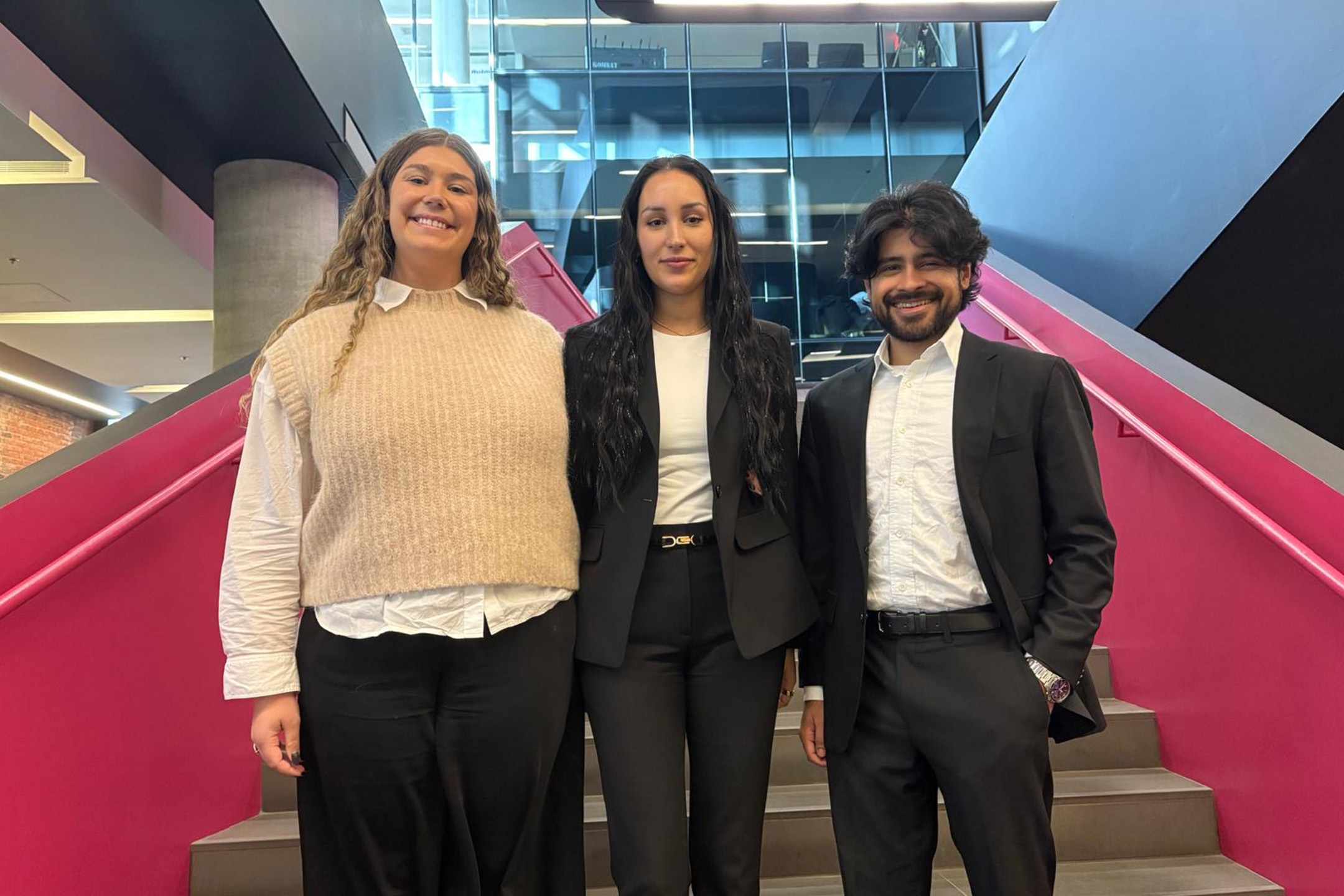
Improving Indigenous representation in executive spaces begins at business schools, and the new Rotman Indigenous Business Association (RIBA) aims to support that shift. Evanne Bell, a third-year student in the JD/MBA program and the President of RIBA, spoke with The Varsity about the club’s goals.
The inspiration behind the club
When she began the MBA portion of her studies, Bell noticed that Rotman had no Indigenous student associations, even though many other cultural associations existed.
After enjoying other leadership roles — including serving as president of the Indigenous Law Students Association — Bell thought, “Why not?” and began the process of creating a club for Indigenous students at Rotman.
One of the RIBA’s main goals is to build greater interest in Indigenous business topics. Bell pointed out that a general lack of awareness about this subject at Rotman could be a challenge for the club. She said, “[Many students] don’t know a lot about it, and because of that, [they] can be a little hesitant to engage with these topics.”
Still, Bell stresses the importance of understanding these topics. “Lots of big infrastructure projects right now, they’re all going to have Indigenous involvement, right? So even if you’re not an Indigenous person, if you’re going to do business in Canada, you need to be aware of this stuff,” she said.
In fact, two of the club’s executive members — Claudia Velimorovic, a fourth-year MBA/MGA student, and Aaditya Juvekar, a third-year JD/MBA student — are non-Indigenous students. who share this passion and support the club’s mission. “They’ve been an amazing support… they are passionate about the topic and they believe in it,” Bell said.
Economic reconciliation at Rotman
Only 22 per cent of Indigenous employees in business, finance, and administration held professional or middle-management roles, compared to 36 per cent of non-Indigenous employees in these sectors.
Bell believes that this underrepresentation may stem from the limited number of Indigenous students in business schools. As a result, RIBA has been working with the Rotman faculty to address this gap and support efforts to recruit more Indigenous students. “There [have] been conversations about how do we do that? How do we get more interest from indigenous students in doing an MBA or a masters degree, and how [we run] those recruitment events?”
Bell is also working to address a lack of Indigenous material in the Rotman MBA curriculum. An essential tool in MBA classes is the case study — a detailed, real-world analysis of a business scenario. “As a first-year MBA student, I didn’t come across a single Indigenous business case,” she said.
Bell sees the introduction of more case studies on Indigenous businesses as the most effective way to Indigenize the curriculum. She has already begun contributing to this effort. “I’m actually writing a business case study on an indigenous business. My hope for that case study is that it gets included in the business school curriculum,” she said.
How to engage with RIBA
Since its establishment in February, RIBA has hosted several events to encourage student engagement with Indigenous business topics. The club invited lawyers Thomas Isaac and Jeremy Barretto from the Canadian corporate law firm Cassels to discuss their new book, The Law of Indigenous Ownership and Projects, at its inaugural event — held in collaboration with the Rotman Energy and Natural Resources Association (RENRA).
RIBA’s kickoff event for the new academic year took place in September, featuring a speaker from the Canadian Council for Indigenous Business — an organization that aims to strengthen relationships between Indigenous and non-Indigenous businesses. Bell described these events as highly educational, and said, “You always learn something new.”
Most recently, in October, RIBA partnered with RENRA again to host an event titled Indigenous Leadership in the Energy Transition. Guest speakers from energy corporations and Indigenous businesses discussed the future of Indigenous leadership in the sector and how Rotman students can contribute.
Students interested in getting involved will be able to visit RIBA’s website once it launches, as it is still being set up. “We also have a LinkedIn page where we’re now posting about events and stuff. So keep an eye [out],” Bell said.

No comments to display.