
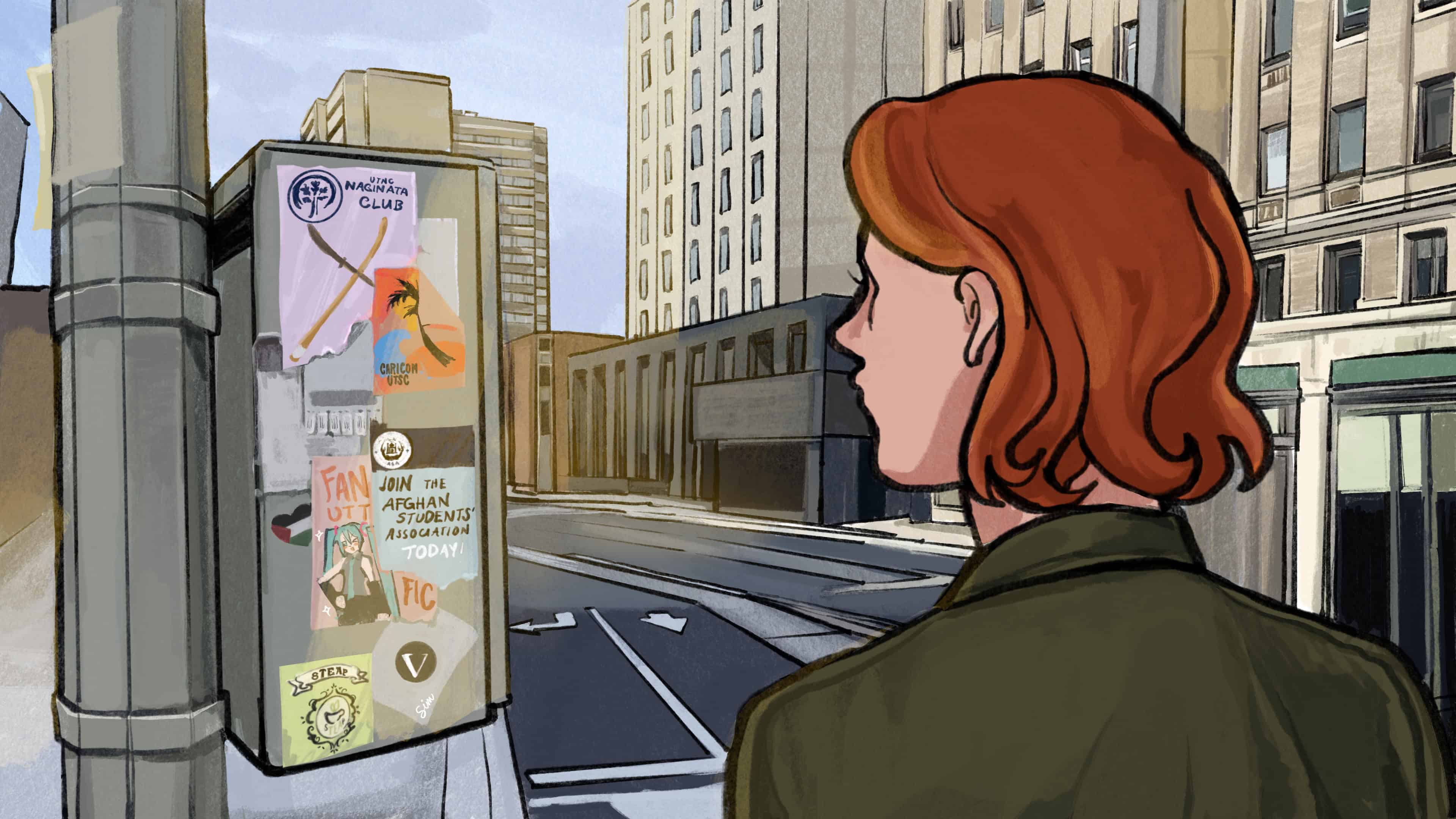
You step forward onto Front Campus. It’s your first week of university, and orientation ends with a club fair that might introduce you to your new community on campus.
You stare at the hundreds of tables with endless poster boards, abundant with free stickers, pins, and pamphlets to catch your attention and invite you in. The people behind the tables call out to passersby, asking if they’d like to become their club’s latest member. You see a person carrying a spear in full armour — is it fencing gear?
Suddenly, you hear representatives ask you, yes, you, if you’d like to join the university’s radio station. Football club? Black Students’ Association (BSA)? That’s when you realize that this university has something for everyone — including you.
U of T boasts a diverse range of clubs — with over a thousand registered clubs across all three campuses, practically every niche interest is covered by some student group. While popular clubs like the BSA or the U of T Marathon Club enjoy wide visibility, there are a multitude of lesser-known clubs for students with other interests.
Clubs can center around both hobbies and interests, like sports or gaming, or be a cultural haven for people of specific cultural backgrounds and ethnicities. Students are diverse people containing a multitude of aspects they might want to express, so these clubs are central to having a place where they might meet like-minded people to do that.
Writing your own friendship story
Zain Butt, creator and head of the U of T Fanfiction Club (UTFFC), works to promote a community of people who can simply share their interests. Fanfiction, or the art of writing stories using existing characters in popular media, may at first seem like a strange thing. Sites like Archive of Our Own (AO3) and Wattpad are notorious, especially on social media, for fan-written stories featuring things like noncanonical romances and hyperniche storylines.
Butt says the UTFFC has turned into a meeting spot for various fandoms, gathering to discuss whatever they are passionate about. “I was worried about [judgment] when I first started the club. Sometimes you do get some looks… But that was only a few people. Most people are kind enough that even if they think [fanfiction] is a little weird, [after I explain our club to them] they’ll be like, ‘Oh, that’s nice.’ ”
That sense of welcoming goes a long way to attracting people who might not otherwise have a space to talk about their more niche interests. For Butt, one such interest is Yaoi, a common trope in manga and anime fanfiction writing involving two young men in a romantic relationship, but he says that club members will discuss anything from common fanfiction tropes to popular media such as Dandadan, or Deltarune, a popular manga and video game series.
When he created the club, he was shocked by the 30 people who showed up at the first meeting. The number of members and social media followers has only grown since then, alongside the range of topics covered in the club.
UTFFC members gather most frequently at UTSG, where they know the wide variety of club events will welcome them with open arms. Finding and joining such a club can be as simple as hearing about them, looking them up online, finding the social media they use to communicate — often Discord or Instagram — and attending the next meeting that aligns with your school schedule! Butt welcomes anyone to join the meetings, even if they have only a passing curiosity, and see if the community is for them.
UTFFC prides itself on offering space for community and allows for new friendships to bloom. It acts like a hot spot for friendship origin stories because it provides a space for people with more niche interests to nerd out about them. Butt himself proudly boasts that various members have stepped into leadership positions, taking on important roles out of passion and care for their community.
Carving out community
The Naginata Club is similarly enthusiastic about uniting members through a hobby many people don’t know of. Naginata, a style of Japanese spear, involves a long tradition of martial artistry and consists of two parts: Engi — choreography — and Shihai — sparring. Club treasurer Wai Yuk Wong and Vice-President Erica Lai say that they are able to attract new members by telling them of the club’s existence and demonstrating how naginata works. After the curious arrive for their first meeting, many decide to stay long term!
Club meetings occur biweekly at Hart House, and involve a combination of sparring, training and choreography, along with an increasingly unhinged sense of humour, according to Wong. For most people, one of those two things will pique their interest, often encouraging returns.
Like UTFFC, the Naginata Club doubles as an interest-based social setting that allows members to meet new people at U of T and build relationships with them. “Often after practice, we go out as a group to eat,” Lai explained. “This is open to all members of the club, including new members. We love chatting with each other on the way to restaurants and while eating. We usually get to know each other and our interests [beyond Naginata] through gatherings like these.”
Back on campus at the UTFFC’s headquarters, on the other hand, Butt hosts periodic calls for anyone to practice some storytelling idea or technique for that session. He works hard to ensure these environments are welcoming for all, dissuading the popular idea that clubs can be especially clique-y. “It was never ‘pick your own breakout group and talk amongst yourselves.’ [The way we structure meetings], if everyone has to talk to new individuals… then there isn’t any risk of the people who already know each other bunching together.”
If you’re interested in joining either club or any other club at U of T, the Student Organization Portal is a helpful tool that allows you to sort through clubs by campus, name and category, which is useful for finding clubs for your specific interests.
Beyond that, the Club Fair at the beginning of each year is always a great way to learn about clubs through whatever eclectic means people come up with. For example, the Naginata Club can be seen each year in full armour, it’s often an amusing sight for those who aren’t familiar with the art. In fact, that’s how Lai joined the club during her first year!
Cultural corners
Beyond being places to explore your hobbies, many U of T clubs offer a space to learn about and participate in the diverse cultural communities from around the world. These groups, generally open to people from all backgrounds, offer rich ways to connect with your unique culture.
Many culture-based clubs are vital in raising awareness for specific issues targeting these cultural or ethnic groups. Larger clubs, like the BSA, are well known for putting on events and workshops that celebrate Black knowledge, cultures, and diversity.
Others, such as the Afghan Students’ Association (ASA), host regular meetings to “celebrate Afghan traditions, music, food, and history, but also through social gatherings, mentorship opportunities, and collaborations with other student groups,” according to the group’s president, Mash’al Jaghori. She explains how the ASA “often engages with [other] cultural clubs and equity-focused groups on campus,” which illustrates how cultural clubs do not often operate in their own vacuum, but former larger communities of cross-cultural support. “Beyond cultural outreach, we also collaborate with charity and volunteer initiatives, since many students are motivated by opportunities to give back to the community.”
According to Jaghori, the club provides a sense of belonging to students and a space to celebrate their various identities, while also building a cross-cultural understanding. “Afghanistan is one of the most diverse countries in the world, from different ethnic groups to different languages and cultures. Our members have unique and beautiful backgrounds that we value, and we showcase what [and who] Afghanistan and the people really are, not what the media necessarily shows.”
Common media depictions of Afghanistan center on issues like staunch militarism or the Taliban. Jaghori, however, highlights the importance of not reducing a country and its people to media headlines, and hopes the emphasis placed on shared beauty and traditions by the ASA shows people the side of Afghan customs that people often miss.
Like many students, Ryan Persaud, co-president and creator of the new Caribbean Community Association (CCA), was searching for his own space to share his culture. “As a Caribbean student, when I first came to UTSC, I had looked around for a space where I could meet people from my own culture, but I couldn’t find any.” During his second year, he started the club alongside his two friends, and it’s been a place to share culture since then!
Like Jaghori, Persaud sees clubs as a chance to express and practice his own unique heritage. He highlights the abundance of cultures present at UTSC and the CCA’s goal to help nurture an appreciation for the various traditions of the Caribbean diaspora. Many Caribbean cultures “Ha[ve] deep roots in food, music, and social activities, so [club] events typically contain these core points of our culture for Caribbean identifying students, and people who want to learn and appreciate the culture.” The CCA hosts events like student mixers, eat-and-paint sessions, and movie screenings on prominent Caribbean figures.
Persaud attracts prospective members in several ways. Students either check out the club after seeing an ad for an event or are brought to a meeting by a friend who’s already a member. He also routinely invites other Caribbean students he meets on campus, and maintains an active WhatsApp and Instagram presence.
Jaghori employs a similar approach to garnering new members to the ASA. Rather than appealing exclusively to Afghan students, she welcomes anyone who is interested in Afghan culture. From what she’s noticed, Humanities students tend to be drawn towards the cultural and historical aspects of the club, whereas STEM students appreciate the community aspect of it. “Our focus is on inclusivity — we frame the Association as a space for anyone, regardless of background or faculty, who wants to connect and learn, as well as share Afghan culture.”
Both clubs regularly meet with and collaborate with other cultural clubs for joint events, which deepens ties to the cross-culturally diverse community at U of T. No matter how you discover these clubs, they exist to help people interact with and learn about the numerous societies on the planet we share.
Rather than being exclusive to the group each club focuses on, these clubs welcome anyone to participate in the cultural heritage of their members. Whether you know the culture well, are a part of it yourself, or simply wish to learn more about something new, each of these groups focuses on fostering a welcoming attitude to share a culture dear to them.
U of T clubs have a niche for everyone
U of T is a colourful place boasting all manners of interests, cultures and people. In that diversity of choice, one may be overwhelmed by the sheer number of groups they might join, or worry that some clubs might not be for them. On the contrary, niche interest clubs like UTFFC and the Naginata Club, and culturally-specific clubs like the ASA and CCA, welcome all students as long as they’re interested in what the club has to offer.
Everybody comes from a unique blend of traditions, histories and lifestyles, and it may be hard to express every single piece of what makes ‘you’ you. Even so, a few minutes of social media searching or a visit with friends to the next club fair is almost certain to reveal new groups you hadn’t even considered before. If you’re looking to experience the vibrant side of university life or fight the isolation that sometimes comes from hours of studying, the myriad of clubs tailored to every niche interest are a great place to start!

No comments to display.