
Increasing agricultural participation from Indigenous communities can boost production, promote Indigenous health, and increase food security. This is certainly not a small benefit — so why haven’t Indigenous communities been able to participate more in agricultural entrepreneurship? And what is U of T doing to help create employment opportunities and entrepreneurship training in this sector?
Legislative barriers to entrepreneurship
Indigenous people retain exclusive rights for the use and occupation of reserve lands, or land the Canadian government has designated to be used by First Nations communities. However, these lands are still legally considered to be owned by the Canadian government. This means that Indigenous peoples cannot transfer, sell, or surrender their land. While this protects their ownership, it also means commercial banks are reluctant to loan money for ventures that involve reserve land — they cannot use the land as collateral and seize it if the borrower is unable to pay the loan back.
Additionally, the Indian Act means reserve land cannot be leased to non-Indigenous farmers without explicit approval from the Minister of Indigenous Services. The process of gaining approval can be tedious and acts as a bureaucratic barrier to Indigenous people from profiting from agricultural leasing.
With these legal and bureaucratic frameworks, Indigenous communities face more obstacles to building generational wealth using their reserve land.
Redbird Circle’s partnership with U of T to promote Indigenous entrepreneurship
Despite these existing barriers, Jonathon Araujo Redbird, co-founder of Redbird Circle Inc. — a business dedicated to providing Indigenous-focused skills, education, and training — believes that empowering Indigenous people through entrepreneurship is still possible.
U of T has partnered with Redbird since 2021 to provide the Indigenous Entrepreneurship Program. This initiative, which started with a 16-week pilot at UTM, offers free, online workshops on entrepreneurship through an Indigenous lens.
As Redbird said in a 2021 UTM article covering the original pilot program, “we will combine Indigenous knowledge with Western pedagogies to create a new learning framework that empowers the next generation of Indigenous entrepreneurs.”
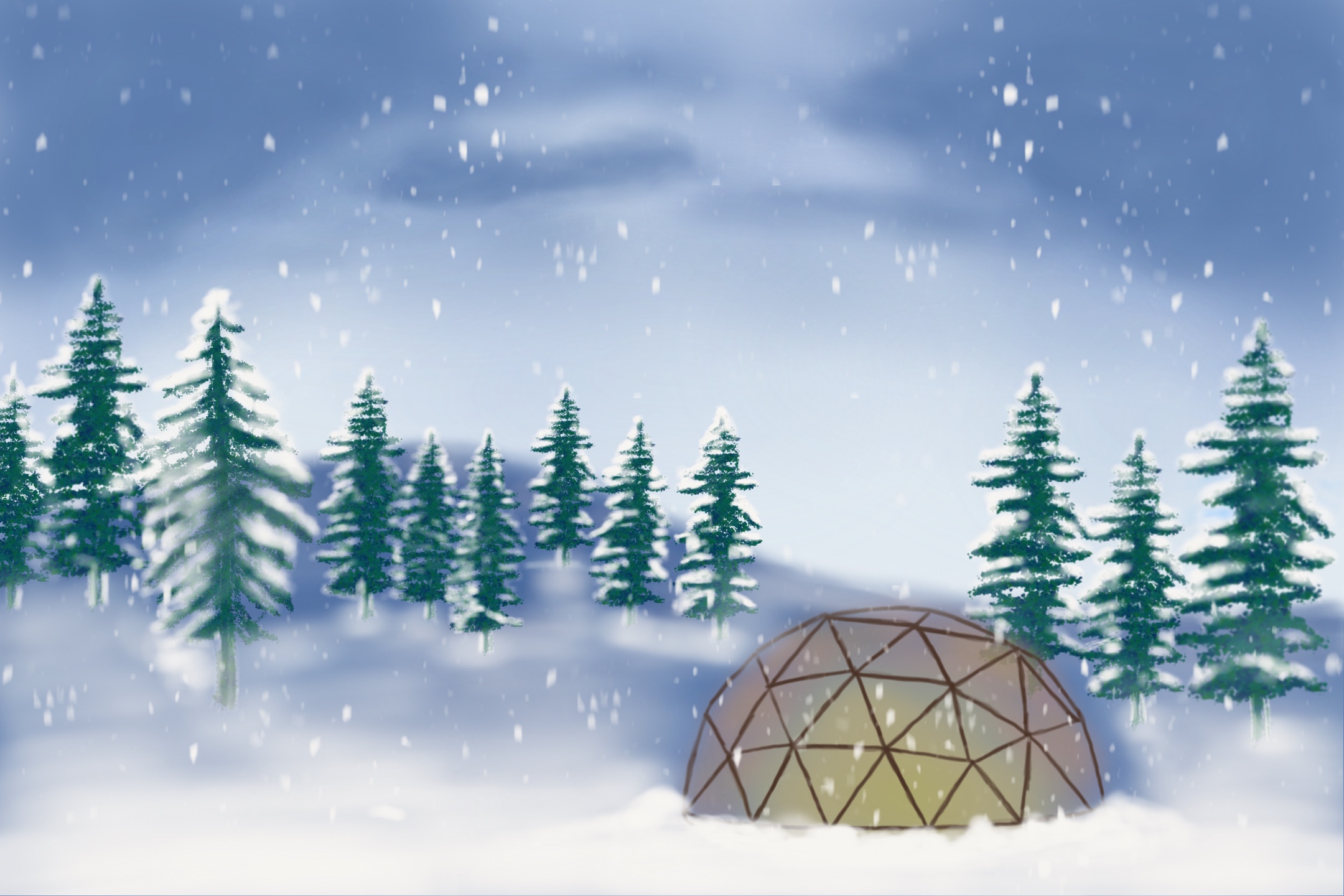
Redbird Circle has now expanded their partnership to UTSC, with the construction of four Indigenous Greenhouse Geodesic Domes beside the tennis courts and near Highland Creek Valley. These domes are hemispherical, self-supporting structures that are each 24 feet tall, connected by accessible gravel paths, and entirely powered by solar panels.
All of the construction is meant to be temporary — the domes will remain at UTSC for one to five years, according to UTSC’s website about this project. However, extensions are possible based on the program’s success, especially with an expansion to the UTSG campus.
Hands-on learning based on Indigenous knowledge
The four domes will function as hubs for experiential, hands-on learning for people in the virtual Indigenous Entrepreneurship Program.
Redbird wants to use the domes to teach Indigenous youth “how to grow produce from the land and how we can learn entrepreneurship through that process.” Each dome has a distinct function contributing to the goal of fostering collaboration, employment opportunities, food security, sustainability, and Indigenous identity.
The “Innovation Dome” is the first dome where students can try new agricultural technologies, using innovative farming strategies to promote sustainable food security.
In the second dome, students will work with “Just Vertical,” a hydroponics technology business that uses mineral nutrient solutions in water rather than traditional soil. Just Vertical is a U of T start-up that maximizes growing space by growing plants vertically on levels one on top of each other.
The “Medicine Dome” is third, and it is centred around traditional Indigenous teachings. Specifically, students can learn from elders to plant traditional Indigenous plants for healing, focusing on both spiritual and physical remedies. This dome was designed with the Anishinaabe Medicine Wheel in mind, promoting physical, mental, emotional, and spiritual health by growing specific crops.
Finally, the fourth dome offers hands-on training on cultivating high-yield crops for sale at farmers’ markets or to leverage for agricultural entrepreneurial pursuits by Indigenous communities.
Putting the power into their own hands
The continued partnership between Redbird Circle and U of T holds immense potential for promoting empowerment through entrepreneurship.
There is a long way to go to increase Indigenous agricultural participation, but initiatives like UTSC’s Greenhouse Geodesic Domes are a good start.
The most important insight from this project is simple: real change that creates an impact only happens when Indigenous knowledge and decision-making are in communities’ own hands.

No comments to display.