
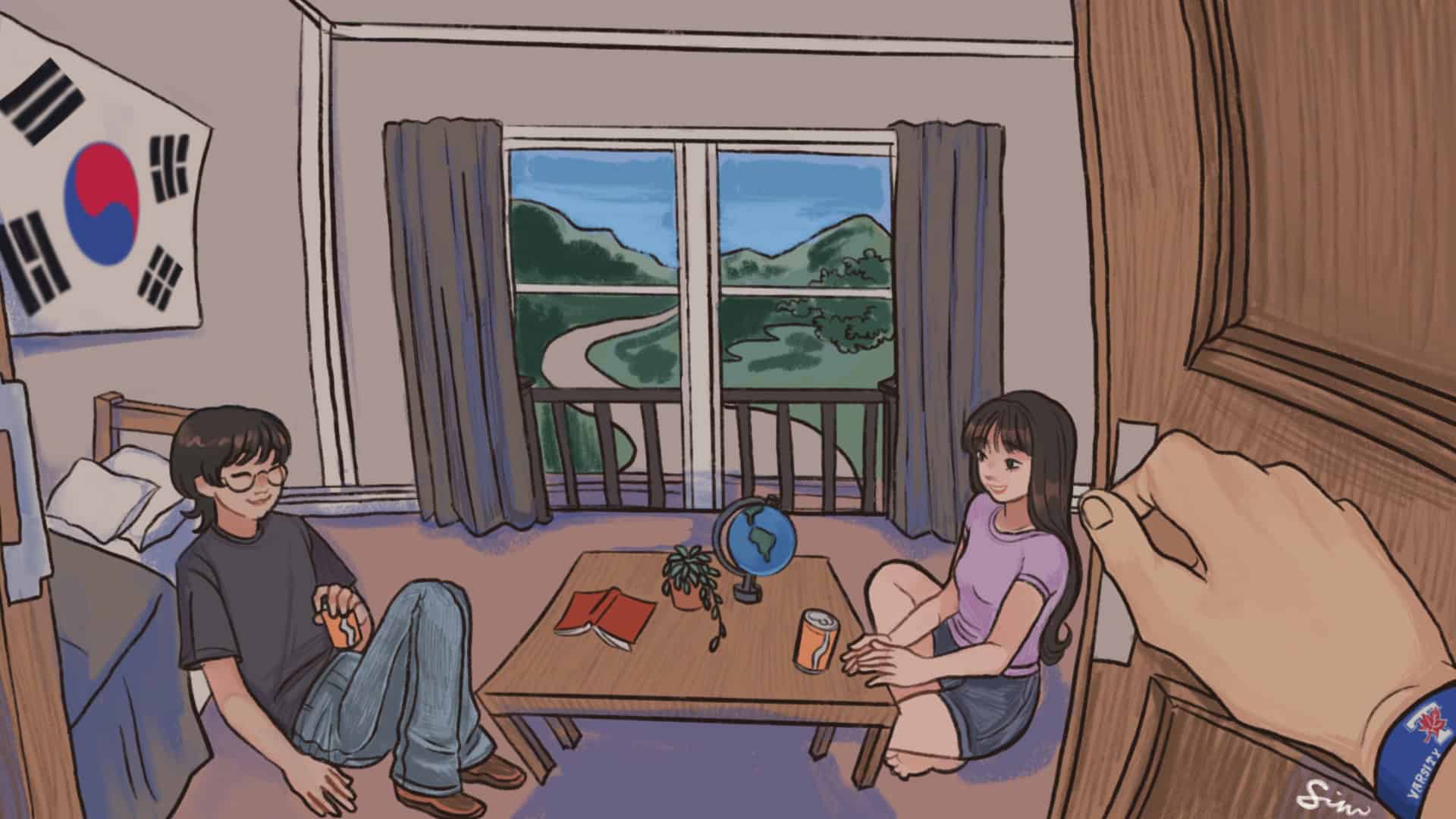
I recently travelled to South Korea, where I spent three weeks reconnecting with relatives and exploring the country. Being a Korean-Canadian, the trip was also a way for me to connect with my heritage. Between eating at popular restaurants and watching musicals, I also visited two well-known universities in the country’s capital of Seoul: Yonsei University and Sogang University. I visited these universities mostly out of curiosity, but also because I wanted to understand what student life might feel like in South Korea in comparison to my experience at U of T.
Upon first glance, each school had its own unique vibe: Yonsei seemed more structured and fast-paced, while Sogang felt quieter, more relaxed, and comfortable. After reflecting on my observations of each school, I realized that the physical size and layouts of the campuses and their surrounding areas were the biggest factors in how the atmosphere and overarching student life are shaped at these schools.
Comparing campus rhythms and social spaces
Both campuses are built on hilly terrains, with buildings layered at different levels connected with steep paths. I still remember feeling exhausted walking up and down those hills and slopes while visiting the campuses, my legs getting sore, and stopping to catch my breath during the climbs.
As exhausting as trekking the terrain was, it strangely seemed to bring the students of Yonsei and Sogang together. I found that seeing other students venturing the same slopes and enjoying meals at the same quiet campus cafés created an unspoken rhythm that was formed by everyone on campus going through the same motions each day.
Sogang students are “more into ‘blending’ rather than ‘settling’.” Yoo Ho Jeong, a second-year student studying European languages and cultures, wrote, “The size of our campus, physically and mentally, is quite small compared to other universities such as Yonsei University or Geonguk University. So, we are used to blending with surrounding conditions since we are relatively advantageous in transport.” In other words, Sogang students tend to see their university life as deeply entwined with the cityscape around them.
Similar to UTSG’s location in downtown Toronto, Sogang is located near downtown Seoul, making things like public transportation and food options easily accessible. Rather than limiting themselves to stay within the official parameters of campus, students can experience the city as an extension of their campus.
Yoo’s experience reminded me of the first thing I noticed when I came to U of T: how the downtown campus blended in with the city. At UTSG, the campus isn’t isolated from the city like at a school like York or UBC; you’ll find busy streets outside of lecture halls, and shops and cafes across from residences and libraries. When I started at UTSG, this city-campus integration made me think it would be hard to find one specific spot that feels like the ‘centre’ of the campus or a true home base.
Eventually, I realized that UTSG has not one but many meeting places — for studying, meeting friends, or taking quiet breaks — but it took time for me to find them. In order to turn what seems like an array of large buildings into welcoming community spaces, you really have to get to know the campus and meet the people.
While visiting Yonsei and Sogang, I also noticed how their social spaces influence how students connect with one another. At Sogang, the smaller campus size and student body seemed to elicit more intimate socialization and a calmer pace. Cafés like Arete at Sogang, with its seclusion from bustling academic areas, as though it were a feel warm restaurant.
Contrastingly, UTSG’s larger, more dispersed campus and population forces students to constantly move to and from different buildings across different areas. If you constantly have classes at opposite ends of campus, say a political science lecture at OISE and a computer science lab at Bahen right after, you don’t really get time to stop and chat with friends, explore food and drink places, or discover new libraries and other study spots. There’s a perpetual sense of rush and urgency.
Campus size therefore inevitably affects students’ day-to-day university experience . Large campuses — such as those at Yonsei and UTSG — seem to make campus rhythms more fragmented and rushed, whereas smaller campuses like Sogang invite more inviting social scenes. It was interesting to learn how campus size was a major factor in determining these rhythms.
Traditions and school spirit
At Yonsei, one of the biggest community events is the Yonsei-Korea Games, or Yon-Ko, a major sports showdown between Yonsei and Korea University. “The energy and unity felt during this time are truly unforgettable and exciting,” Moon Jio, a second-year business student, recounted. During games and events, students at both schools are encouraged to wear matching outfits, shout school chants, and fully lean into their team spirit.
At Sogang, school spirit looks a little different. Yoo told me about Daedongje, a campus festival that always ends with “one specific moment that everyone chimes in, and that is when we play [the song] ‘To You’ by Shin Hae Chul… that is when we can feel the school spirit by putting [our] arms around each other’s shoulders, even when [we] barely know each other.”
At U of T, school spirit is sparked at Varsity Blues games, especially hockey and basketball. Additionally, there’s frosh week, which happens during the first few weeks of fall semester, where first-year students are encouraged to get to know campus and one another by taking part in activities organized for them by upper-year students. Unlike the big, cross-year events at Yonsei and Sogang, U of T’s school spirit seems to grow from many smaller experiences that happen throughout the year.
One of these big events at Yonsei and Sogang is a dorm tradition called Membership Training (MT), which happens at many universities in South Korea. MT usually entails a weekend trip where students go away — often to more rural places — with their classmates or club members for a few days. They eat, drink, play games, and stay up late talking together, allowing younger and older students to get to know each other before the semester starts.
Professors also often take part in MT –– friends in South Korea have recounted stories of seeing professors laughing over silly board games or talking casually with students over dinner like any other student, removing strict everyday barriers of teacher-student distance.
When I first heard that students in South Korea eat, play games, and even get drunk with their professors at MT, I was surprised. It felt unfamiliar compared to U of T, where most interactions with professors happen rushedly after lectures or during office hours. Here, there are stronger boundaries between personal and professional lives.
Part of me wonders about the missed opportunities that might come from having more chances to build these teacher-student connections beyond the classroom. Not necessarily breaking professionalism, but instead building community and connection. Indulging in an irresponsible night of drinking or gaming with our professors might ease the otherwise cold or distanced atmosphere of U of T’s infamously large lecture halls.
Expectations versus reality
Before travelling to South Korea, I had a certain picture of what student life there looked like. I grew up watching K-dramas and YouTube vlogs of South Korean students studying in aesthetic cafes, walking through campuses surrounded by cherry blossoms, and laughing with friends late into the night. It all seemed warm and cinematic.
Sure, some of that is accurate — the campuses are beautiful, and there’s something special about the way students come together during festivals and events like MT. But after talking to students at Sogang and Yonsei, I realized those snapshots only told part of the story.
“The portrayal of university friendships and romantic relationships might seem romantic, but in reality, university life [in South Korea] is also filled with stress similar to other universities and challenged by academic pressure, and the struggles of balancing personal and professional growth,” Moon told me.
At Sogang, Yoo helped me understand how that overly romanticized image of university life in South Korea came to exist in the first place. In an email to The Varsity, Yoo mentioned the western fascination with knowing K-culture through media. “Some parts are true, and some parts are just a glimpse of reality.” Her thoughts reminded me that much of what we see of different places are merely curated moments meant to look good.
Yoo also said, “I believe having a debate or an open discussion is one of the crucial forms of expanding your view of the world and I’m still craving those opportunities.” This reflects the current political climate in South Korea, which is embroiled in contentious political debates about free speech. While a small school like Sogang offers many opportunities and spaces for community building and socialization, that openness isn’t reflected in bigger issues of dialogue and debate because of the political landscape. In the same way the campuses of Sogang and UTSG are enmeshed in downtown hubs, politics evidently shape their academic and social spheres.
Finding spaces and senses of belonging
Visiting South Korea as a Korean-Canadian also helped me reconnect with the country on a personal level — spending time with relatives and exploring the country helped me feel closer to my culture. It also shed light on the differences and similarities between student experiences reflected by both halves of my cultural identity.
Looking back, my biggest takeaway isn’t just the differences in campus space and design between the two countries, but the ways in which these differences determined how students connected with each other and their campuses.
Although U of T has spaces for socialization, they’re often integrated within bustling academic hotspots, which might make it harder for students to build connections beyond the typical lecture-hall smalltalk and “Did you do the homework?” In comparison, the interactions that may arise from a school like Sogang, due to its smaller size and centralized social spots, create natural places where students can gather informally and stay together longer. Comparatively, I think UTSG students have to be intentional about finding people they relate to and spaces where they feel comfortable.
I’ve learned that the way a campus is designed not only influences how and where people meet, but also how easily they open up to one another, especially when it comes to deeper connections built on mutual trust and understanding. The spaces we move through as students every day quietly shape our connections, whether in the ever-moving heart of downtown Toronto or the beautifully vibrant grassy hills of Seoul.

No comments to display.