
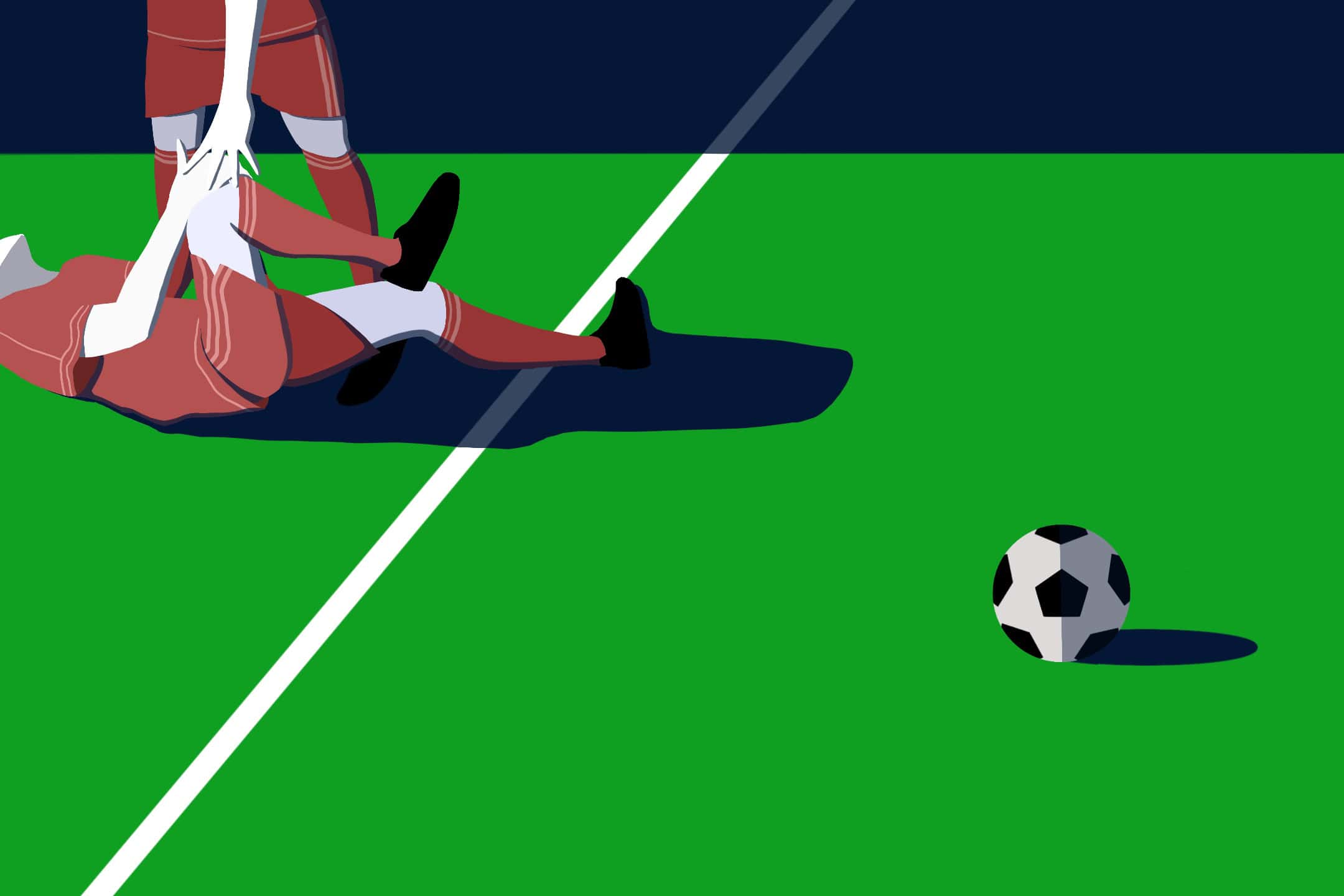
Earlier this year, Real Madrid and England national football team star Jude Bellingham turned 22. At an age when he can still barely drink in the US, he will have played 277 career club games and made 44 international appearances for England.
Since the age of 16, Bellingham has been playing week in and week out at the highest level of football. His case is one of many that demonstrates the increasing level of physical exertion that players have undergone. For context, at the same age, Cristiano Ronaldo had played 242 games for club and country and Lionel Messi 200 games, while David Beckham, a player known for his work ethic, had played just 100 games, or five times less minutes of playtime than Bellingham.
Repercussions of heavier minutes
All this is to say that soccer players are playing more minutes and more games than ever before, and they are doing so from a much younger age. While even the greats of the game, like Messi or Ronaldo, didn’t experience heavy minutes before their mid-20s, it’s now commonplace for wonderkids to be shoved straight into starting lineups and told to deal with it.
Barcelona midfielder Pedri made his debut for the club at just 18 years old before playing 52 games that season. With appearances for Spain during and after the season, he played 73 total games in just one season, all while missing any chance of recuperating for the new season over the summer break. It was therefore unsurprising when Pedri missed much of the next season due to injury.
For all the money footballers are paid, they are human and they need rest. A recent study by FIFPRO, the FIFA players’ union, stated that players need a minimum of a four-week break during the offseason to recharge, before then easing back into preseason so that they are physically and mentally ready for a new season. Otherwise, they risk fatigue, burnout and injuries that not only wreck careers, but weaken the quality of the football played.
Players find themselves unable to keep up with the frantic pace demanded of them, particularly in an age where almost every manager demands offensive, possession-based soccer that requires constant sprinting.
Club World Cup and player fatigue
Typically, this kind of summer, where no major international tournaments fill up the schedule, would be the perfect time for the likes of Bellingham to recharge, with one eye on next summer’s World Cup with some games in Toronto. And yet, he and his Real Madrid teammates find themselves competing in the inaugural FIFA Club World Cup.
The Club World Cup, despite the best efforts of FIFA president Gianni Infantino, is a tournament largely muted in terms of fanfare. Fan attendance has been low to the point of tickets being given away in buy-one-get-four free deals in the opening days of the tournament. The hype around the tournament has been cringe-inducing at best; one of the tournament’s opening games descended into farce as Bundesliga champions Bayern Munich demolished semi-pro New Zealand team Auckland City FC 10–0.
When a tournament that bills itself as containing the best teams in the world has a result like this, it’s a sign that the tournament is not fit for purpose. But ultimately, the competition is unnecessary, or even dangerous, for the added burden it will place on footballers going forward.
The Club World Cup ended in mid-July, and the La Liga season started on August 17, while pre-season started on August 3. This gives players little rest before being thrown back into the fire of constant games, and with a World Cup next summer, many won’t get a proper rest until the summer of 2027.
Bellingham makes an especially strong case study for the importance of rest, given that following the conclusion of the tournament, he will be undergoing shoulder surgery that will see him miss the first six weeks of next season. Had it not been for this tournament, he could’ve had this surgery at the start of June, giving him more time to recover before the regular season. Instead, he’ll miss a sizable chunk of the season, while risking even more serious injury by playing through the recovery process.
Athlete burnout
The Club World Cup is ultimately indicative of a footballing calendar that has pushed player workload to the limits. The Champions League and Europa League added two more games to their group stage format last season, bringing little sporting benefit with it.
However, top players continue to play 50-plus games a season, and such a volume of games has come at a cost. In the 2023–2024 Premier League season, there was a 15 per cent increase in injuries from the previous season, while there was a 187 per cent injury increase amongst players under the age of 21 in 2023–2024 compared with the 2020–2021 season.
On top of these injuries, anyone watching the games can see burnout start to affect top players. Manchester City midfielder Phil Foden admitted to feeling “burnout” and suffering from injury throughout the 2024–2025 season.
This was after two gruelling campaigns in which he was at the forefront of a Manchester City team, being pushed to the line in the Premier League title race, while also making deep cup runs in the Champions League and FA Cup, which takes an inevitable physical and mental toll that is not easy to recover from, even if you do win. On top of this, the summer of 2024 saw him experience the heartbreak of losing the Euros final with England, a run that once more robbed him of a proper offseason break. When the 2024–2025 season saw him score his lowest number of goals in 5 seasons, it was plain to see why.
With the Club World Cup adding unnecessary wear and tear to footballers, the 2025–2026 season is a step into the unknown for teams competing in this tournament. Already, many have suggested that the Premier League teams in the tournament, Chelsea and Manchester City, will be at a disadvantage to their better-rested rivals. For players like Bellingham, further injuries await.

No comments to display.