
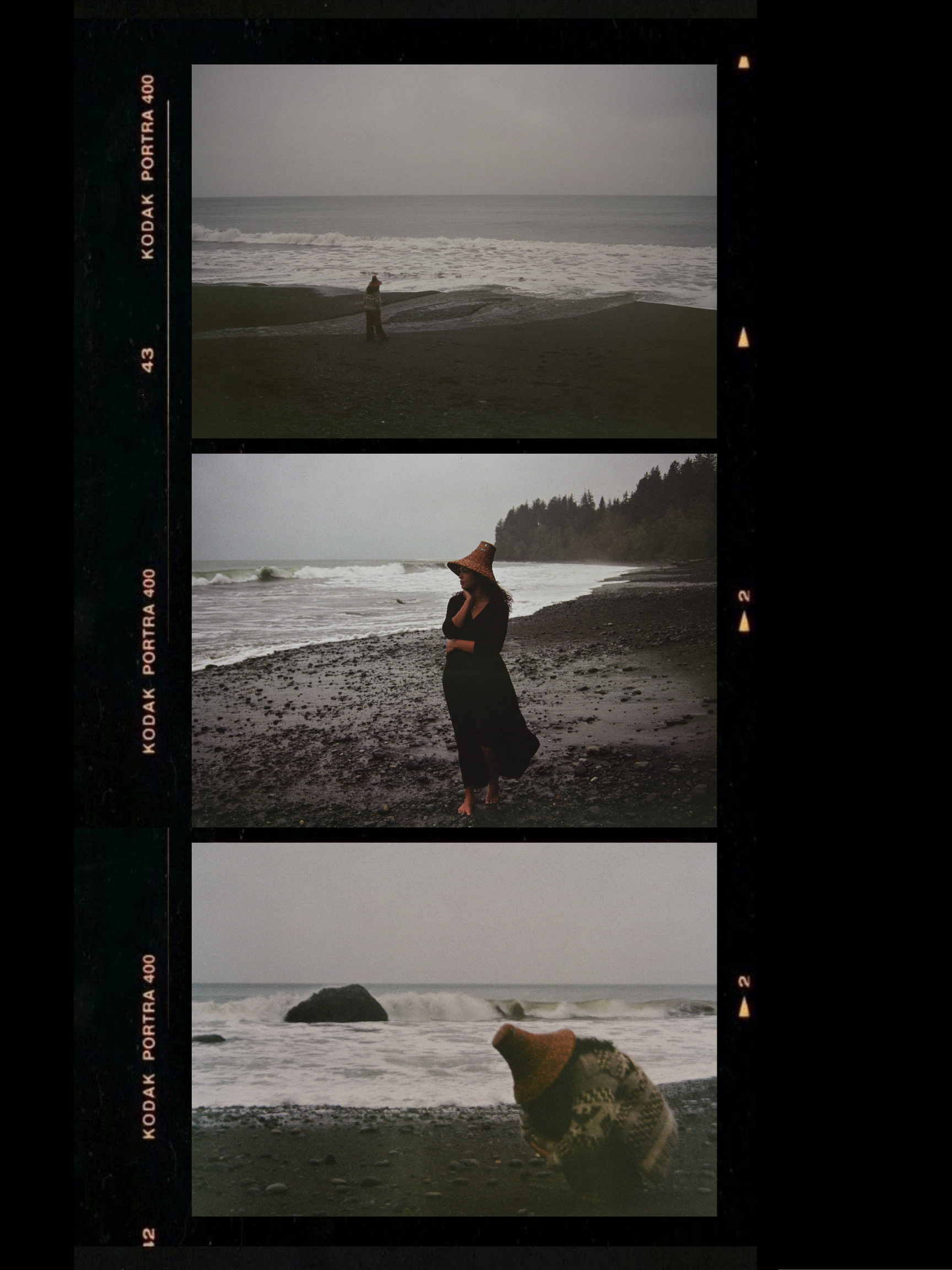
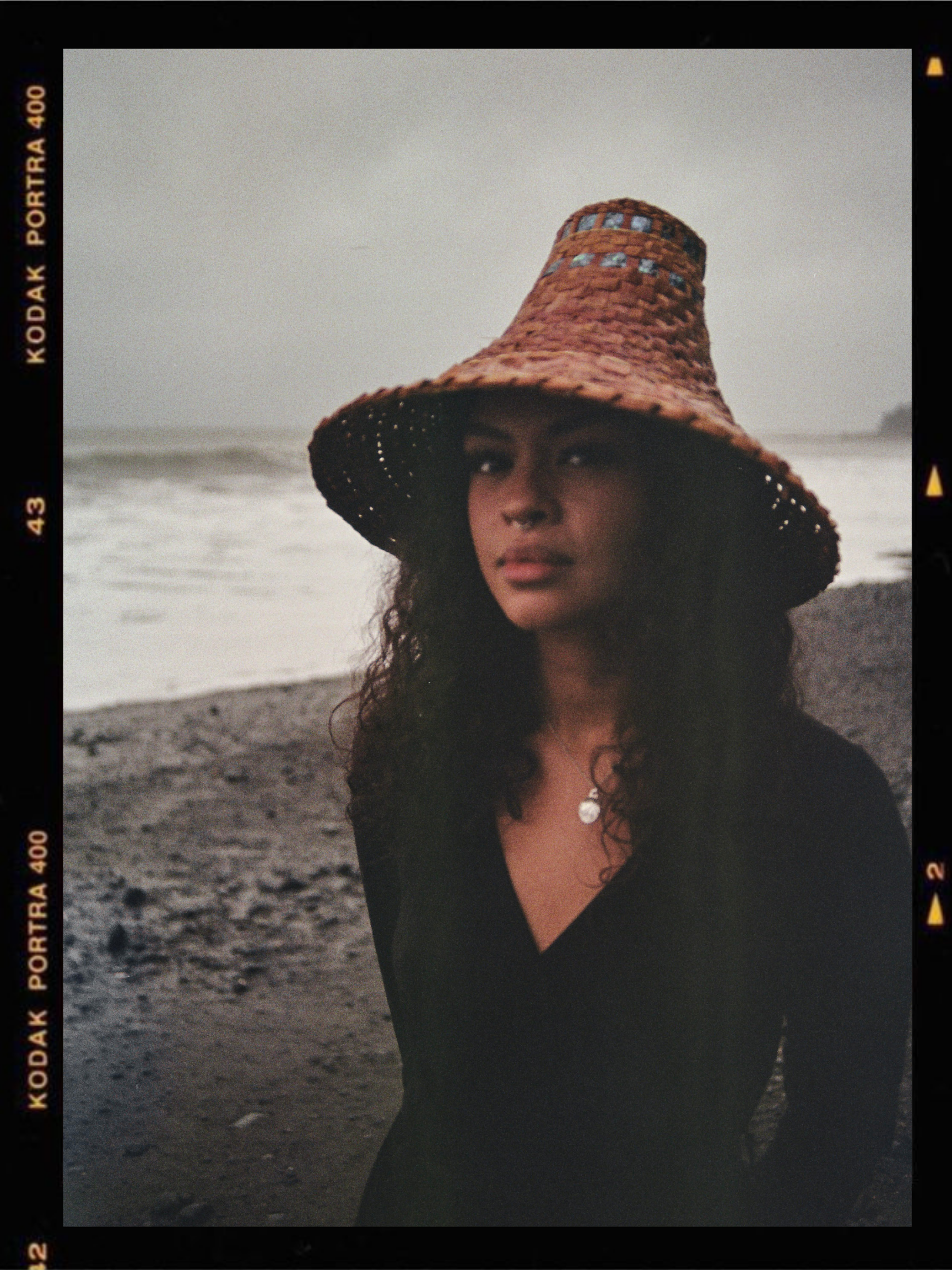
Film photography: Tahirih Nasseri
Writing and modelling: Aya Djama Clappis
The Nuu-chah-nulth people have always relied on the natural world. From the waters of the Pacific to the interior mountain range that boundaries northern and eastern Island nations, a sacred relationship lives on. Bound to natural limits, our relationship to all beings has always hinged upon respect, reciprocity, and connectedness. Intergenerational knowledge of wellness practices has carried our peoples through every era, including the colonial present.
At the core of Nuu-chah-nulth worldviews is the call for balance. Physically, emotionally, spiritually and relationally. This stems directly from bearing intimate witness to the changes across seasons, migration patterns, and other natural phenomena. These observations inform our routines throughout the 13 moon cycle, whether that is harvesting devil’s club, partaking in seal hunting, or knowing when it is time for rest.
In a world that demands a constant state of both attention and motion, true rest is often relegated to an ideal. Our minds, bodies, and spirits yearn for a calmness that is not only elusive but often shamed. A focus on productivity removes us from moving with the seasons, and our needs can fall to the wayside.
Where do we find time to honour ancient relationships that seemingly have no space in society today? How do we navigate meeting our needs outside of consumption tied to the wellness industry?
Traditional healing, ceremony, and connection can offer us a vital pathway to wellness. Attuning to our changing needs honours a rhythm intrinsic to the world around us.
Our songs, stories, and rituals remind us that many have overcome deep tribulations before us and that we are not meant to remain in our suffering. The lapping of waves after a cold water dip to cleanse reveals to us that we are not meant to carry the world; rather, we are a part of it.
Our belief system emphasizes transformation, an integral aspect of living and not merely surviving. When we prioritize old ways in a modern time, we open a portal to truly understanding what it means to be human — to be quu-as. We can forgive ourselves and transform deeply ingrained ways of thinking and being.
As we transition into the winter season, we begin a period of rest. It is also a time of sociocultural and ceremonial activities like potlatch. Potlaching, meaning to give, brings families and communities together, reviving spirits, sharing wealth, feasting, dancing, and witnessing important teachings. Ceremony calls us to arrive with an open heart and mind, ready to learn, and a willingness to nourish aspects of ourselves that need healing.
Our first sacred principle, hishuk ma tsawalk, or everything is connected, reminds us that we thrive with an abundance of relationships and connection to worlds outside colonialism. As our oldest relatives, the land and waters have long provided for us — we must remember to take care of each other through the medicines we have always known.

No comments to display.