
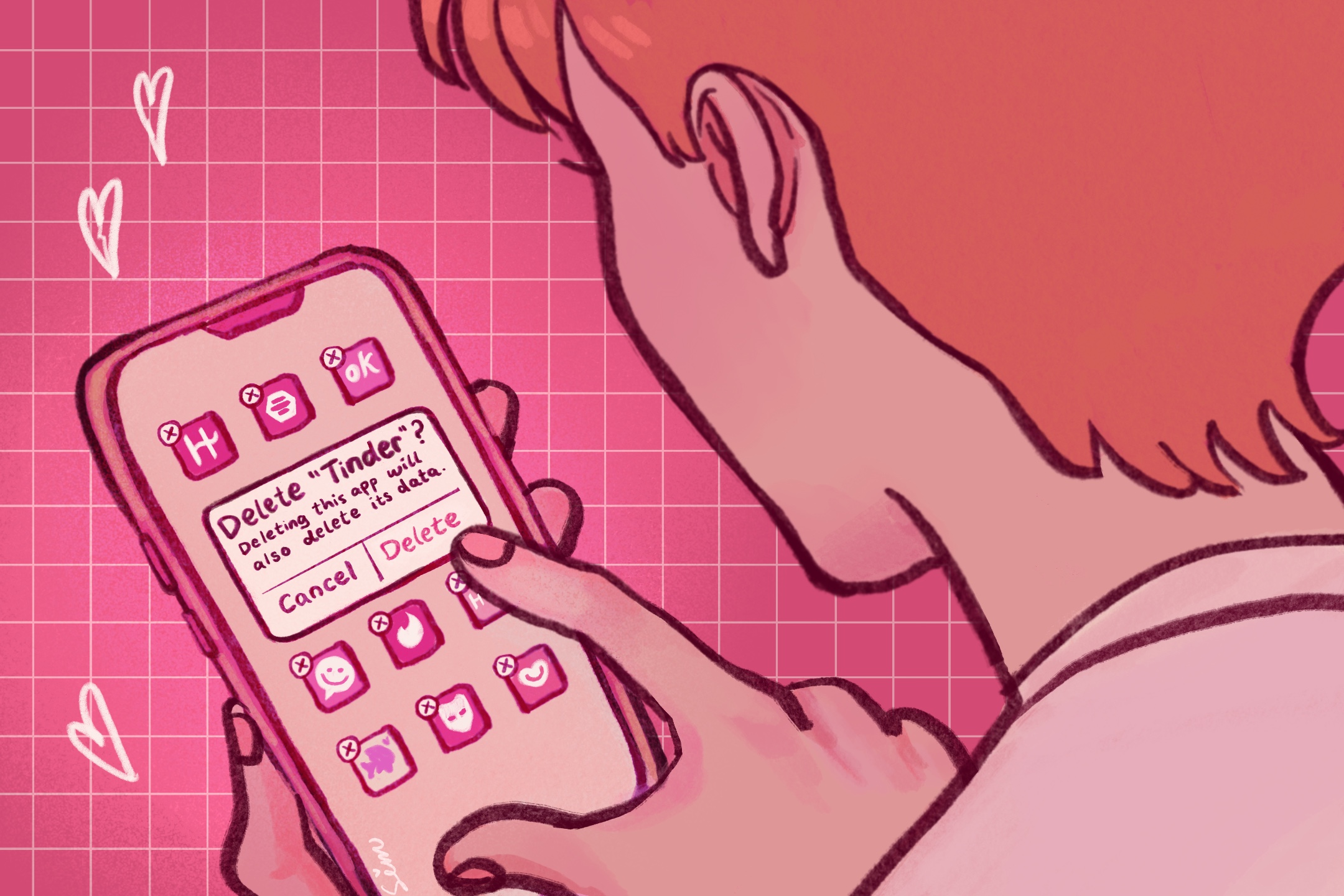
Love and dating are becoming more and more digital. What do you think of dating apps? Have dating apps streamlined the process of meeting a significant other, or is it just another example of the loss of whimsy in the modern world? The Varsity asked two U of T students for their thoughts.
Dating apps aren’t all that bad
Dating apps. Whether you love or hate them, they have become unavoidable in the modern dating landscape. The outlook on the current dating environment for young people is — to put it gently — bleak.
A 2024 study commissioned by Tinder found that 91 per cent of men and 94 per cent of women between the ages of 18–24 said that the current dating environment is ‘worse than ever before.’ So why not make it easier through dating apps? Findings from a 2023 Pew Research Center study indicate that 42 per cent of US adults believe that dating apps have made the search for a long-term partner easier.
In real life, asking someone out can feel like a gamble. What if they’re already in a relationship? What if they’re not looking for the same thing I am? What if they reject me? If these kinds of questions stop you from making the first move, you’re not alone. 63 per cent of singles who were a part of the 2025 “Singles in America” survey believed that people have become less confident in making the first move.
Why? Because of ambiguous romantic dynamics, of course. People are simply unsure of what the other person wants, specifically regarding gender roles and relationship dynamics. Dating apps help mitigate this issue through features that allow users to indicate their preferences in a relationship and a future partner. They can help reduce the anxieties of not knowing what other people are ‘looking for,’ that prevent young people from seeking out romance in the real world.
In the era of online learning and remote working, where young people are living at home longer and socializing in smaller circles, opportunities to meet people organically are limited. Dating apps expand this limited pool of potential dates to people you may not have otherwise encountered in your day-to-day life. For those of us who feel stuck in the same social environments time and time again, dating apps can serve as a bridge rather than a replacement for real-world connections, making finding real and authentic love possible.
So are dating apps really so bad? Although they might suck some of the joy and spontaneity from finding love, they remain a useful tool in lessening the social and societal barriers that help in finding love.
Anna-Maria Roszuk is a first-year student at UTSG studying English and history.
Dating apps have ruined dating
As a generation that grew up watching romcoms like How to Lose a Guy in 10 Days and 13 Going on 30, it is safe to say that our expectations for dating are quite different from our reality. Dating apps like Hinge and Tinder have become alternatives to third spaces for people to meet, and now more than ever, it is harder to connect with others.
This raises some questions: what problems are dating apps trying to solve? Are they really fixing the issue, or are they creating more problems in the dating world? I believe that dating apps have skewed our perception of dating, turning genuine human connection and interest into a zero-sum game.
One of the biggest and most prominent flaws in dating apps is their ability to set unrealistic expectations. Users scroll through a selection of candidates like a fashion magazine, picking and choosing very particular traits that they like or dislike. The minuscule details that are magnified on the app are unnoticeable in person — or at the very least, not significant.
Dating apps are unrealistic by design. Users curate their profile, selecting particular pictures and prompts to ‘bait’ people into liking their profile to form a match. This produces a similar conversation regarding the superficial nature of dating apps. Monotonous conversations of “who’s your favourite artist” and “what do you study/do for work” are standard procedure and feel like interviews rather than authentic conversation.
The desire to know more about the person you are talking to vanishes, and the priority becomes whether or not the person is eligible for a date. Users are speedrunning through profiles trying to match with the next best thing.
Another major issue is the digitalization of human experience. Convenience is favoured over pursuit, and personal life transforms into a ‘digital trading card’ that is passed around. People are commodified, turned into a product, and their worth is determined by how many likes they receive. Investing time and effort is no longer necessary because someone more attractive, more interesting, and who might like you more is only a swipe away.
This is not to say that dating apps are evil and genuine connections cannot be made; however, the vast majority of users are not satisfied with their experience, and it is important to critically address the negative impact the apps have on our society and the modern dating world.
Jana Hilal is a fourth-year undergraduate student, double-majoring in political science and Near and Middle Eastern studies.

No comments to display.