
Based on a non-fiction book of the same name, the rom-com He’s Just Not That Into You (HJNTIY) came out in theatres in 2009 to preach one simple, seductive lesson: if someone isn’t obvious about their feelings for you, they’re just not that into you.
In theory, this lesson should protect us from rejection, and wasting time on people who aren’t interested in us the way we are. But in practice, it encourages us to treat human connection as a transaction.
On its opening weekend, HJNTIY topped the box office, despite being panned by critics. I believe that the film’s popularity is a result of its exploration of the universal experience of misinterpreting romantic signals.
Sometimes, it’s hard to know whether someone likes you or not. Like, really hard. I’ve spent most of my life figuring it out, and I am none the wiser than my insecure, naive, 14-year-old self.
HJNTIY teaches us that if you have even the slightest doubt about someone’s interest, then they don’t like you as much as you wish they did. If someone likes you, they will show you; they will go out of their way to make it obvious. Don’t pursue people who are unwilling to put in the effort to woo you.
But all this considered, here’s my question: so what happens next, if he’s just not that into you? In our technological age, does this mean you must immediately block, delete, unfollow, and ignore every single individual who doesn’t like you as much as you want them to?
In a world where efficiency, productivity, and quick and constant results are the priority in every aspect of our lives, dating too has been infected by this ‘optimization culture,’ where people are reduced to investments that need to pay dividends. However, I argue that you’re allowed to like someone even when they don’t like you back, and that enjoying someone’s company without expecting a romantic return isn’t delusion; it’s human.
Obviously, this mentality has its limits. I’m not saying you should stalk people, or annoy them with constant affection, or make your life revolve around theirs. Don’t show up at their house unexpectedly or message their mom on Facebook. However, YOU ARE ALLOWED TO LIKE SOMEONE –– even when they don’t like you back. Those feelings are valid, and I believe they are worth exploring.
I know this firsthand. I have, for a while now, had a crush on someone who probably doesn’t like me back. I had to confront this reality when S.J. (my romantic interest) took days to respond to my Instagram messages. At first, I thought maybe he was just a slow texter or busy with finals, but eventually I had to accept that he’s just not that into me.
My Instagram algorithm conveyed this to me very clearly, endlessly proffering reels with the same essential message: he’s just not that into you. Some posts took on a tone of empowerment –– you don’t need a man! Some made fun of how ‘delulu’ the enamoured are, and others suggested playing the field, extending the roster, and getting some more benchwarmers. Whatever the attitude, the message was always that unreciprocated interest is a waste of time.
This advice resonates because Gen Z is deeply averse to rejection. The influencers on social media are unanimous: blame your anxious attachment style and get therapy, not a man — you’ll cringe at this later. Embedded in this is a teleological worldview: in order to become your optimized self, anyone slowing you down should be dropped immediately.
But can you not be attracted to a person, get to know a person, without an obvious objective? In our age of neoliberalism, we pursue net benefits, tidy conclusions, and the highest value in anything we do. Things can’t just be — they must be going somewhere, and they must have a destination.
For love, this tends to be marriage. Although people are getting married less than they once did and later in life, marriage is still a social norm in most cultures. When dating a person, many are gauging whether they’d make a suitable long-term partner, whether they’re a worthy investment.
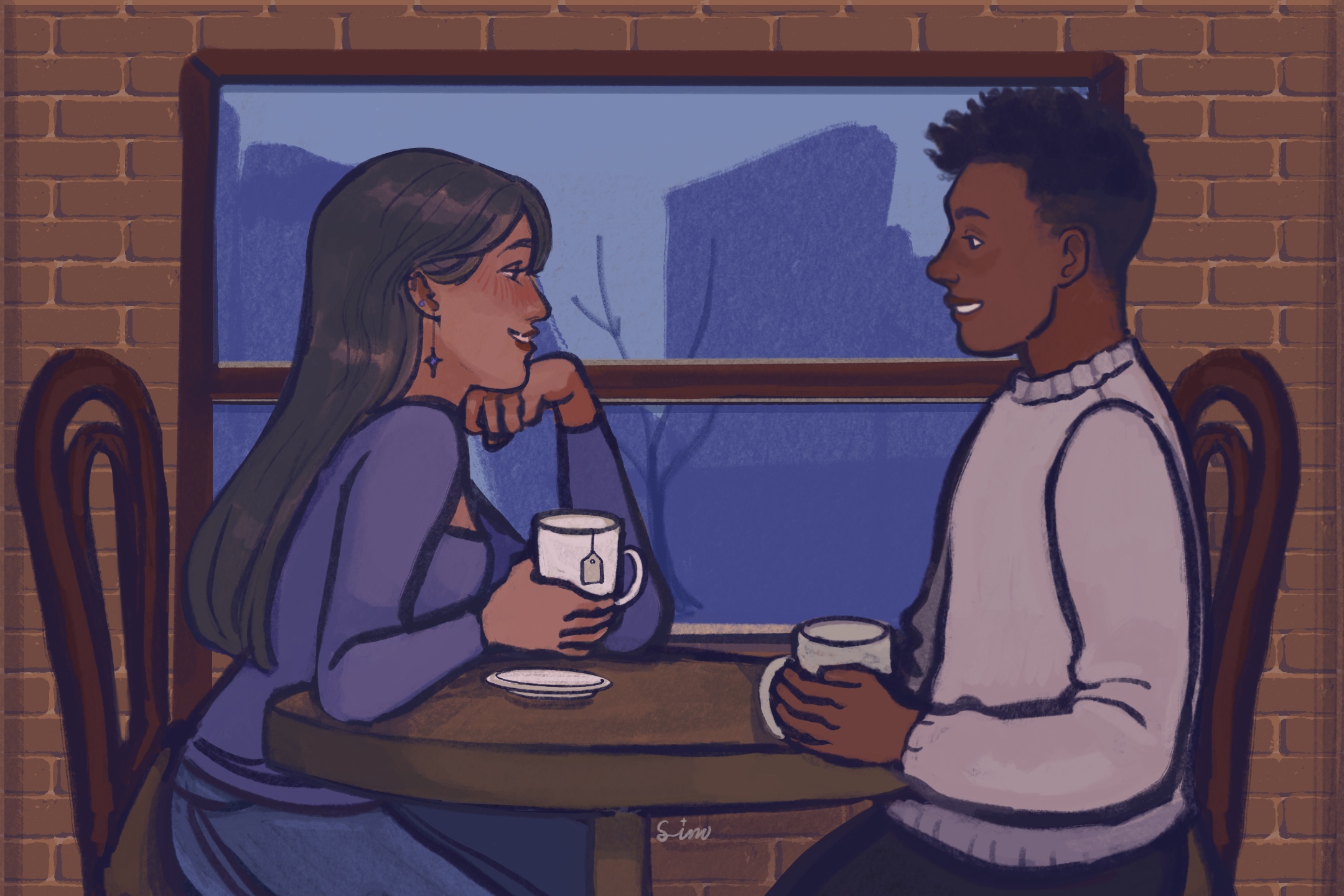
Suddenly, that cute boy across the table is not a confused, awkward, sometimes-kinda-funny biology major; he’s a calculation. Will he make good money? Would he be a good father? How would he fit into my life, what value would he bring to my future, how would others perceive us as a couple? By measuring the value of the person we love in terms of their ability to get you something or somewhere, strip them of their humanity.
When you’re swiping on Tinder, Bumble, Hinge, Christian Mingle, Muzz or whatever dating app floats your boat, you are gamifying love. It’s no longer about compatibility; there’s no will-they-won’t-they tension, but only pixels. We are looking at pieces of a person, and from these fragments, we decide whether or not they’re worthy of being in our lives.
Never before in human history have people been able to consider dating such a large pool of people. It sometimes seems the options are endless, as you can always extend your range if you run out of potential matches.
With so many options, we try to optimize. We want the biggest bang for our buck. We want the best possible partner: the one who will always cheer us on, who spoils us, who is hot but sensitive, who is well-versed in Nietzschean philosophy as well as able to recite Saturday Night Live skits word-for-word. This optimization mindset is exactly why we can’t accept unreciprocated feelings; if someone’s not maximizing our demands, why keep them around?
The truth is, people are not problems for you to solve. They don’t follow a predictable equation or act in the most rational manner. You can’t know if you’ll like a person by adding their qualities and subtracting their defects. You and everyone around you are changing every second. Some relationships follow patterns, but most of it is far beyond our comprehension.
Love is messy. Sometimes things seem clear, but new information muddles everything up. Sometimes you believe one thing only to realize you were completely off-base. There is a level of ambiguity, of endless potential, in every moment. By dismissing any person who doesn’t reciprocate your interest, you are overlooking the ever-in-flux nature of our existence.
Here’s the thing: I don’t want to like someone else. S.J. is funny and smart, and I enjoy talking to him. He’s curious and kind, asks good questions, and he’s polite and respectful. Am I meant to hate him just because he doesn’t feel the same way about me as I do about him? There is nothing wrong with him not reciprocating my feelings, just like there’s nothing wrong with me having them.
Life is enriched by being around people you enjoy. Find people who are kind and caring, who you can talk to about the stuff that interests you. Don’t expect someone to fall in love with you; that is so incredibly out of your control.
Enjoy people for who they are, without expecting an outcome. Be curious and encouraging, without ulterior motives. It’s not refusing to accept reality, it’s refusing to treat every human connection as a transaction that needs to go somewhere, that needs a clear outcome.
Here’s a spoiler alert of HJNTIY: the guy whose entire role is to tell women “he’s just not that into you” ends up being very into the woman he’s advising, and, you guessed it, everyone ends up happy and in love at the end.
That’s not my ending. The truth is, I will almost certainly run into S.J. again, since we have mutual friends. I know I’m going to tease him for taking so long to reply, pretending it didn’t hurt me. I know I’m still going to overthink our interactions, and the potential hidden messages beneath everything he does in my presence.
A part of me will still hope he suddenly realizes he’s desperately, insanely in love with me. But above all, I will enjoy his presence. I will be grateful to know someone like him, and I will continue to want to hear more about his hopes and dreams, about the things he loves and the things he hates. Even if he’s just not that into you, you can be into him.
Zoë Nicoladis is a first-year graduate student in the Department of Geography & Planning, and a self-proclaimed expert on the state of limerence.
