
Meet the roster
For the first time in more than a decade, Canada’s top NHL players will represent their country on international hockey’s biggest stage. The 2026 Winter Olympics in Milan mark the long-awaited return of NHL participation. For Team Canada, it is a golden opportunity to reclaim the top spot after their last triumph at the 2014 Sochi Olympics.
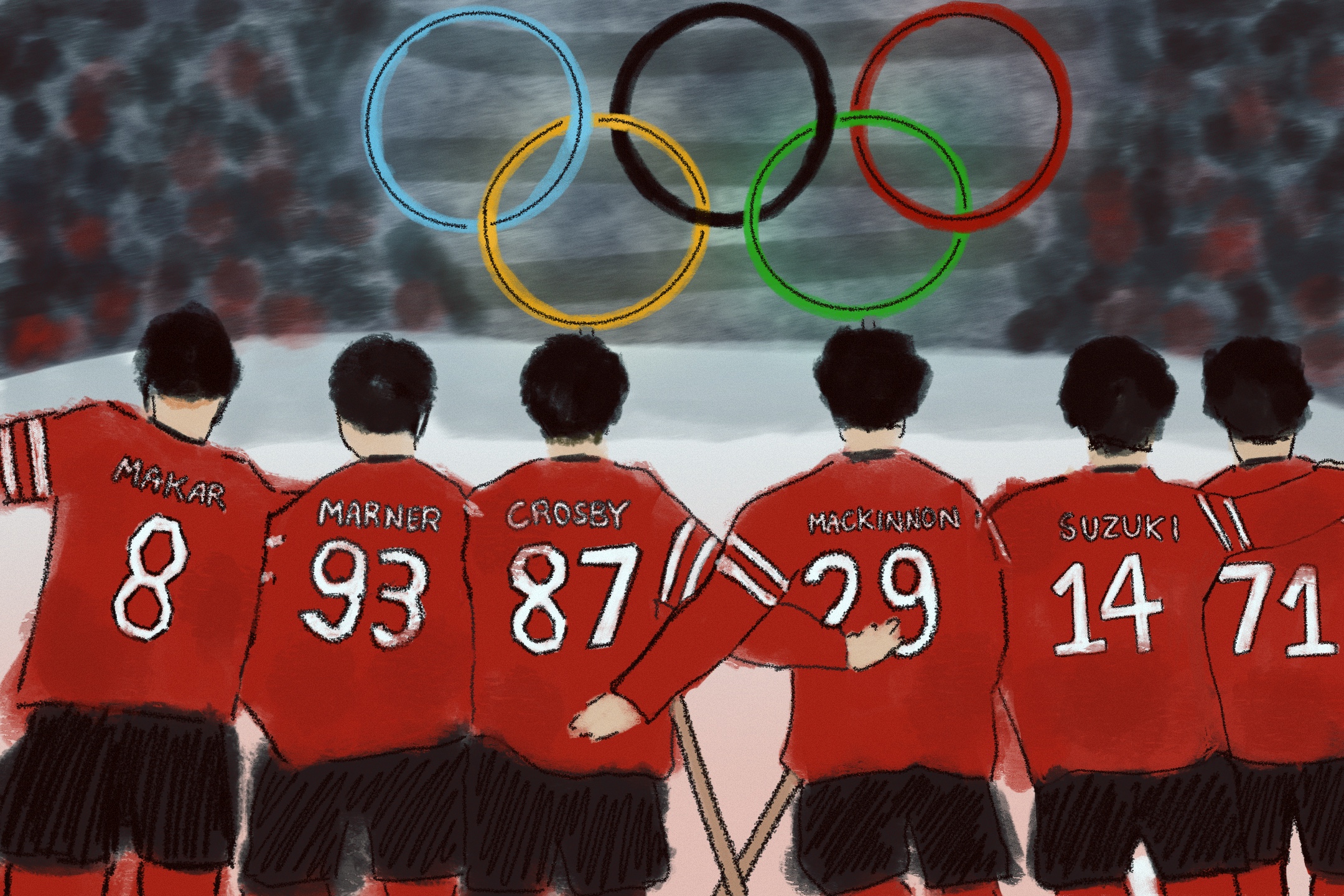
General Manager Doug Armstrong and Head Coach Jon Cooper unveiled the 25-man roster at a highly anticipated press conference in Toronto on December 31, 2025. The first six players announced were Connor McDavid, Nathan MacKinnon, Cale Makar, Brayden Point, Sam Reinhart, and team captain Sidney Crosby.
Armstrong and Cooper stuck largely with the formula that brought Canada gold at the 2025 4 Nations Face-Off, favouring chemistry, defensive responsibility, and experience over sheer star power. From McDavid’s long-awaited Olympic debut to the surprise exclusion of Sam Bennet and Jakob Chychrun, this is a roster built to play the long game.
Goaltending: Has the narrative shifted?
If there was one area under the microscope heading into the selection, it was Canada’s goaltending. For years, the position seemed to lag behind the nation’s offensive and defensive depth. But in 2026, that narrative shifted.
Jordan Binnington, Darcy Kuemper, and Logan Thompson form a trio that combines playoff pedigree and international experience. Binnington, who backstopped Canada to victory at the 4 Nations Face-Off and owns a Stanley Cup ring from 2019, has sparked debate among observers. Critics point to his inconsistent play and .870 save percentage this season, but the national team staff seems to value his confidence and ability to stay grounded at important moments.
Kuemper offers steadiness as a 2022 Stanley Cup Champion and finalist for the NHL’s top goaltending award, the Vezina Trophy. The 35-year-old is one of the NHL’s most reliable veterans.
Last but definitely not least, we have Thompson. The Calgary native’s emergence as a legitimate Vezina contender and his silver medal at the 2022 World Championship will start the job well. A former U SPORTS goalie who played for the Brock Badgers in the 2018–2019 season, Thompson is one of the few athletes out of the OUA to play hockey at the highest level.
Defence: A blue line built to shut it down
Canada’s blue line is where the most debate has landed. While the group brings a balance of mobility, experience, and size, several choices –– and omissions –– have raised eyebrows.
Veteran Drew Doughty, a two-time Olympic gold medalist, returns as the group’s elder statesman. Alongside him, Makar headlines the defensive core as a two-time Norris Trophy winner and one of the most dynamic blueliners in the world. Josh Morrissey, Devon Toews, and Shea Theodore return from the 4 Nations Face-Off, forming the backbone of a unit that values familiarity as much as talent.
But continuity came at a cost. Leaving out Chychrun, Evan Bouchard, and young standout Matthew Schaefer sparked widespread criticism. While Armstrong and Cooper lean on rangy defenders like Travis Sanheim and Colton Parayko to protect the net, some analysts have questioned this approach.
Parayko, for example, was statistically Canada’s weakest defenseman at the 4 Nations, with a 38.6 per cent scoring chance share at even strength. Yet the staff clearly values his reach, physicality, and penalty-killing ability. “Parayko and Sanheim, we call it going through a carwash,” Armstrong said in an interview with Sportsnet. “They’re all arms and legs. It’s hard to get to the net.”
The decision to “run it back” with nearly the same defence corps that won gold at the 4 Nations may provide stability. But if Canada falters, this will be the first area under the microscope.
Forwards: Elite talent in every line
If there’s one area where Canada remains unmatched, it’s up front. The forward group combines generational talent with dependable versatility.
McDavid, MacKinnon, and Crosby headline an offensive core that’s fast, intelligent, and proven to thrive under pressure. McDavid finally makes his Olympic debut after bringing Canada to 4 Nations gold, while Mackinnon’s MVP-level play continues to elevate him as one of the world’s most complete centers.
Armstrong’s forward decisions also reflect a focus on balance and versatility. Bo Horvat and Anthony Cirelli offer defensive depth and penalty kill ability, while tournament veterans like Crosby and Brad Marchand bring invaluable leadership and tournament experience. Young phenom Macklin Celebrini adds a touch of youthful creativity, already surpassing 120 career points as a teenager.
But it wouldn’t be Team Canada without controversy. Connor Bedard’s omission –– despite being on pace for a 100-point NHL season before injury –– raised eyebrows across the country. Armstrong’s explanation centred on defensive responsibility and big-game readiness, suggesting Bedard’s time will come. Bennet, a playoff warrior with back-to-back Stanley Cups, also missed out despite a strong resume.
On the other hand, perhaps the most surprising inclusion was Tom Wilson, whose physical edge and current scoring touch edged out Bennett for the “power forward” slot. “We’re not building this team to beat any one opponent,” Armstrong said. “We want a roster that can compete against anybody.”
The path ahead
Team Canada looks every bit the favourite heading into Milan, but not without its question marks. The forward depth is unparalleled, and the goaltending is steadier than expected, but the blue line could make or break this tournament.
This roster was built with intention, but as always, only time will tell whether this mix of talent and trust can deliver gold once again.

No comments to display.