
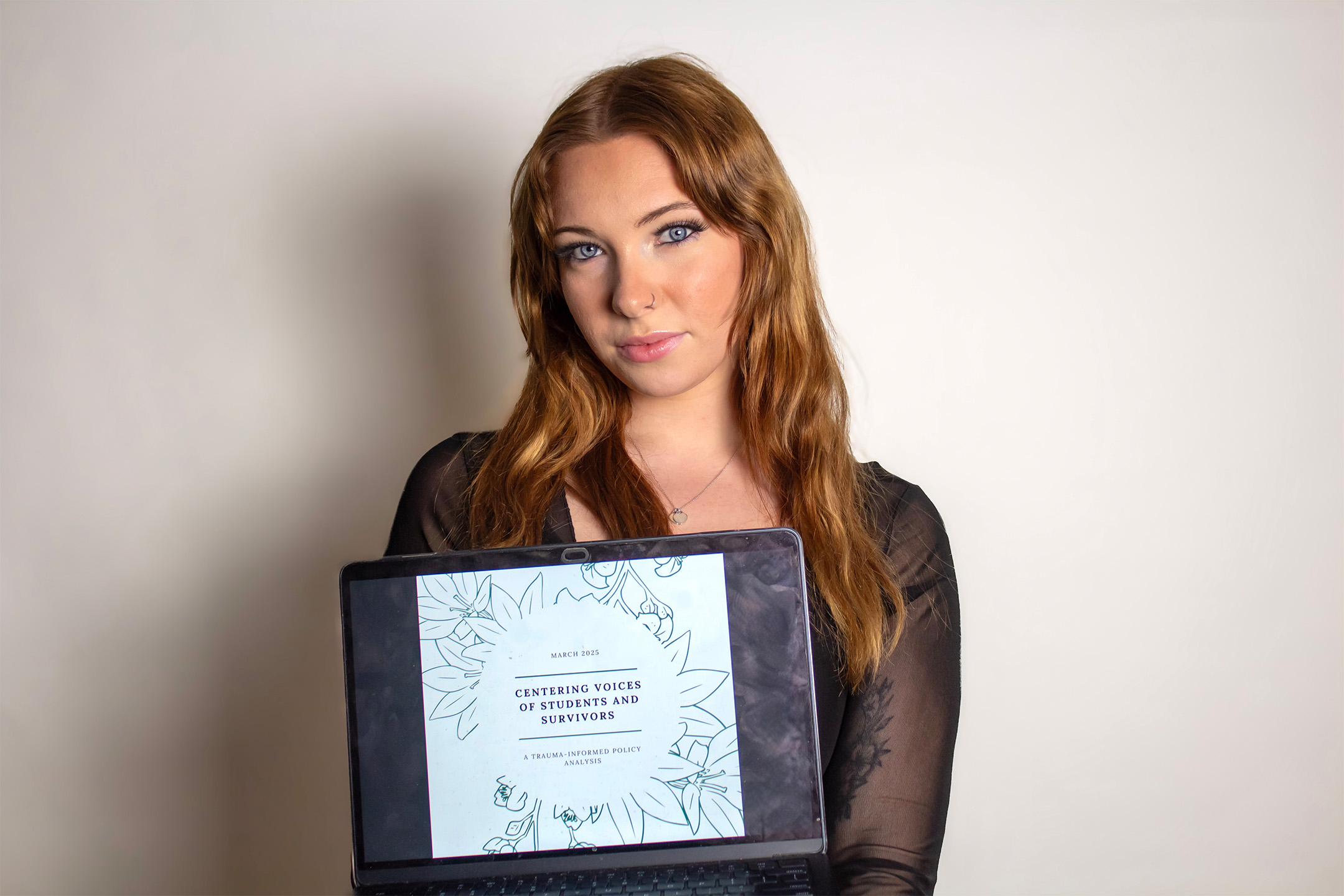
Following the release of U of T’s updated Sexual Violence & Harassment Policy, the Prevention, Empowerment, Advocacy, Response, for Survivors (PEARS) Project have raised concerns regarding the policy’s non-binding language. PEARS also claims they were barred from speaking about the 2025 Policy Review at Governing Council (GC) meetings.
In their analysis of the 2022 Policy Review, PEARS demanded that U of T consult an external gender-based violence analyst during the review to reduce the risk of institutional bias. U of T has since appointed legal expert Gillian Hnatiw to conduct an independent policy review, which was summarized at governance meetings throughout the fall of 2025.
In March 2025, PEARS asked whether Hnatiw’s review would be released and the university responded that there was “no answer at this time.”
In October 2025, the university released Hnatiw’s report in full.
2024 Governing Council meeting
In an email to The Varsity, PEARS said they were denied the opportunity to speak about the 2025 Policy review at a December 19, 2024, Governing Council (GC) meeting. A spokesperson from the university confirmed that PEARS’ speaking request was declined “[a]s the matter was not on the agenda and the request was not from a recognized student group under the Policy on the Recognition of Student Groups.”
During the 2022 Policy review, PEARS spoke at various governance meetings despite not being a recognized student group at the time.
Up to 15 minutes of each GC meeting may be devoted to speakers addressing items not on the agenda, but speaking privileges are not guaranteed as the Executive Committee can “vary this procedure in cases where its application is uncertain.”
Enforceable timelines
In a statement to The Varsity, PEARS noted that while the updated policy indicates progress on language and clarity, “key structural demands remain unmet, especially those related to power, oversight, and accountability.”
PEARS demanded that case resolution timelines be made enforceable and that written justifications be provided when timelines are exceeded. Although the updated policy recommended timeframes for case resolution, these timeframes are subject to “the circumstances of the particular matter including its complexity and the requirements of Procedural Fairness.”
The policy’s 2024–2025 Report on Activity, which provides anonymous information about sexual violence at the university, confirms that most closed cases lasted more than 12 months from report intake to case closure. The report does not specify the reasons behind the case length to protect the privacy of those involved.
Additionally, PEARS demanded that the university record delayed cases as institutional failures rather than the product of “unfortunate circumstances.” The Annual Report notes that case length may be influenced by factors such as a high volume of cases, complex allegations, incomplete information, participant availability, and coordination across departments. Parallel criminal investigations may also extend timelines.
Accounting for student-faculty relationships
PEARS also demanded that the university formally recognize power imbalances in student-faculty relationships as a risk factor. They added that the policy should prohibit or strictly regulate sexual or romantic student-faculty relationships that involve supervision or evaluation.
According to the university’s Guideline for Faculty Members and Librarians Regarding Conflicts of Interest and Sexual, Intimate, or Familial Relationships, “faculty members and librarians are prohibited from, and must avoid, engaging in a sexual or intimate relationship with students that amount to a Conflict of Interest or Perceived Conflict of Interest.”
The guideline defines a conflict of interest as an action that may affect student interests, such as supervision/mentorship, grading of work, providing a reference letter, and funding, admissions, and awards decisions.
The updated policy now explicitly addresses power dynamics in student-faculty relationships, noting that “the University recognizes that power dynamics are inherent in institutions of higher learning. […] The University is committed to appropriately accounting for these dynamics in the processes set out in this Policy.”
When asked how the policy will account for these dynamics in practice, a spokesperson for the university said that power dynamics would be considered in the application of interim conditions or decisions about appropriate sanctions.
In 2024–2025, nearly a quarter of respondents in reports of sexual violence or harassment were employees of the university. Of all cases involving an employee respondent, less than half resulted in termination, and most did not result in any outcome (i.e., if a report was determined to be unsubstantiated).
PEARS is currently drafting its formal analysis for the updated policy and plans to publish it this semester.
Correction: This article has been corrected to reflect that the university published Gillian Hnatiw’s external review in October 2025.

No comments to display.