
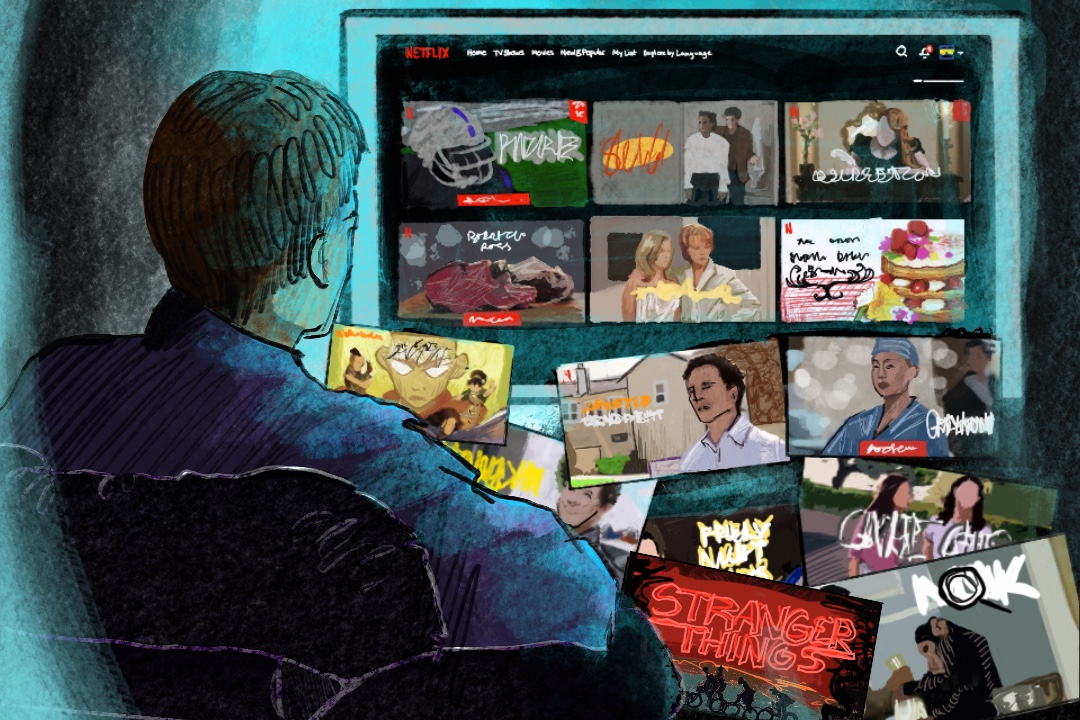
Over its nearly nine-year run, Stranger Things has secured its place as one of the most beloved shows in Netflix history. Its impact on entertainment culture is undeniable. With multiple spin-offs, sequels, branded consumer products, and live events, it has become a prime example of how a TV franchise can be monetized, engineered for fan engagement on social media, and transformed into a lifestyle brand.
The explosive success of shows like Stranger Things highlights how streaming platforms use anchor series to drive new subscriptions and retain existing ones. Anchor series are popular TV shows or films that platforms rely on to attract subscribers, sustain audience engagement, and support long-term franchise expansion. These titles present opportunities for streaming services to expand an original story into a franchise and build a highly lucrative brand capable of generating billions long after the finale.
However, the decision to renew a show is never simple. It involves a patchwork of strategically calculated choices, all aimed at ensuring long-term profitability.
A return on investment
To fund a single production, platforms must first ask a simple question: will this show earn back its production costs? An exclusive 2021 Bloomberg report revealed that services like Netflix rely on proprietary metrics to make these decisions.
The first metric is “adjusted view share,” which captures not only the size of a show’s audience but also the perceived value of those viewers to Netflix. For instance, viewership from new or infrequent subscribers — whose engagement can be more directly attributed to a specific title — is weighted more heavily.
The second metric is a show’s “efficiency score,” which evaluates how much value a title generates relative to its production cost. Finally, a show’s “impact value” estimates the overall dollar value a program contributes to the platform, primarily through subscriber acquisition and retention.
For context, Dave Chappelle’s Netflix special generated an impact value of $19.4 million with an efficiency score of 0.8x and an adjusted view share of 12, while Bo Burnham’s Inside achieved a higher efficiency score of 2.8x alongside an adjusted view share of 10. Squid Game dramatically outperformed both, recording an adjusted view share of 353 and an efficiency score of 41.7x. Despite costing only $21.4 million to produce, it generated nearly $900 million in impact value.
This approach marks a departure from the ratings logic of legacy media, where success was often measured primarily by viewership supported through advertisements. In contrast, streaming platforms emphasize attracting and retaining subscribers as the central measure of a show’s value.
Supply and demand
Every platform has its own priorities when it comes to the type of programming it hosts and curates. Yet, for renewal decisions, audience engagement on social networks is almost always used to gauge viewer interest, cultural impact, and growth potential.
Parrot Analytics, an entertainment analytics company, studied 1,400 shows across networks and streaming platforms to create benchmarks for predicting the renewal probability. According to the firm, the first 60 days after a show’s release are critical for measuring impact.
In their analysis, category averages –– the typical level of audience demand across all shows within the same genre –– serve as the standard for measuring performance. Along with this, the demand multiplier, or how many times a show’s audience demand exceeds the category average, is also considered.
Shows with demand below nine times the genre average are unlikely to be renewed. When demand is 10 times the average, renewal chances rise to 53 per cent. Shows performing 30–50 times above the category average are almost guaranteed a second season.
Renewal rates vary by platform. For example, when a show has 20 times the demand of its genre’s average, Apple TV+ leads with a 90.7 per cent renewal rate, followed by Hulu at 84 per cent, HBO/Max and Netflix at 80.8 per cent, and Disney+ and Amazon Prime at around 67 per cent. These differences illustrate how early demand, combined with platform strategy, shapes renewal decisions.
Betting big: Building a franchise
Squid Game, Stranger Things, Wednesday, Bridgerton, One Piece, and K-Pop Demon Hunters show how Netflix productions are increasingly built with franchise potential rather than one-hit wonders. These titles have already produced, or are positioned to produce, sequels and spin-offs.
Stranger Things remains the clearest example. What began as a TV series has expanded into an animated spin-off, a Broadway stage production, pop-up retail stores, and live immersive experiences.
This shift reflects that successful shows are no longer treated as isolated media properties. Instead, they function as expandable media universes with consistent branding that can be monetized across platforms.
In essence, it is clear that Netflix has effectively created its own version of a long-running media universe, similar to the Marvel Cinematic Universe, designed for longevity and maximum profitability. Programming in the new age is no longer just about winning audiences — it’s about creating shows that can endure as brands indefinitely.

No comments to display.