
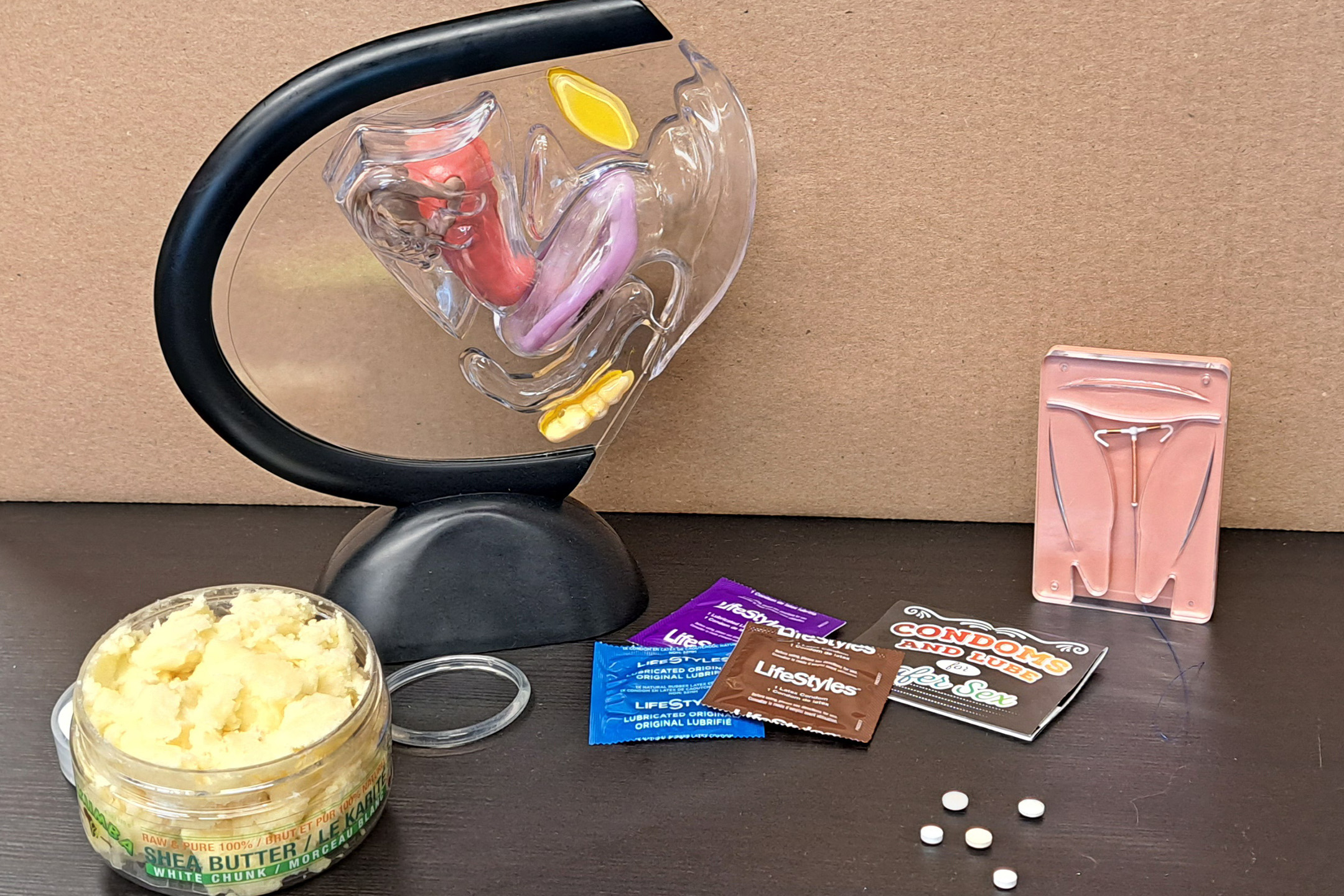
Have you ever put your prayers into the ‘pull-out’ method? Known as coitus interruptus, it’s one of the earliest forms of birth control. But ‘praying’ for the pull-out method to prevent pregnancy is only effective around 80 per cent of the time. Additionally, this form of birth control offers no protection against sexually transmitted infections (STIs). Thankfully, many other methods of birth control exist on the market today — but this wasn’t always the case.
A history of barrier methods in the US and Canada
To understand how modern contraception developed, it helps to look at how ideas about reproduction evolved over time. Long before modern condoms, ancient societies like the Egyptians and Romans used linen or animal-based sheaths made from sheep and goat intestines or bladders as protection.
Reproduction was poorly understood for much of history, but that began to change in 1827, when a key discovery took place: Scientist Karl Ernst von Baer first identified the mammalian ovum, the mature egg cell that can give rise to offspring.
As scientific understanding advanced, technological innovations also began reshaping contraception. In 1839, Charles Goodyear developed the vulcanization of rubber, a process that made it more durable and resilient, revolutionizing the production of tires — and condoms — in the process. By 1860, condoms were manufactured on a large scale and bought at a cheaper price. Today, condoms remain one of the most widely used contraceptive methods.
Other barrier methods were also developed to prevent sperm from reaching the egg. In 1838, Friedrich Wilde, a German gynecologist, began offering cervical caps to patients, later referred to as diaphragms. Diaphragms are small cups placed inside the vagina, covering the cervix to obstruct sperm entry. By the 1870s, condoms and cervical caps hit shelves at pharmacies, dry-goods stores, and rubber vendors, becoming easily accessible to consumers. Despite these growing options, a greater scientific mystery remained: how do eggs get fertilized?
Fertilization, cacao butter, and hormones
In 1876, researchers Oscar Hertwig and Hermann Fol observed fertilization in sea urchins and starfish, discovering that pregnancy begins when a single sperm penetrates an egg and the two cells fuse together. Because this process is fundamentally the same in humans, their findings helped scientists identify precise stages in reproduction where pregnancy could be prevented, paving the way for modern birth control methods.
In 1886, chemist W. J. Rendell manufactured the first birth control suppository. It contained a cocoa butter shell for suppositories that melted in the body to release the medication quinine, a drug historically, and occasionally still used today, to treat malaria.
Around the same time, scientists uncovered another crucial piece of the reproductive puzzle: hormones. In 1928 and 1929, the hormones progesterone and estrogen were identified as key regulators of the female reproductive system and the menstrual cycle. Across the menstrual cycle, estrogen stimulates the growth of the uterine lining and progesterone supports and maintains it, in case pregnancy occurs.
To understand the role of progesterone and estrogen in the menstrual cycle, initial clinical investigation of the birth control pill was led by Dr. John Rock and women’s health advocate Margaret Sanger in 1954. However, scientific progress in reproductive health did not immediately translate into access to birth control.
While science was advancing sexual health knowledge, public discussion about contraceptives encountered significant barriers. In 1892, the Criminal Code of Canada prohibited the sale and distribution of contraceptives and restricted the dissemination of information about their use. This criminalization reinforced stigma surrounding sexuality and reproductive autonomy, and limited public discussion regarding birth control.
Throughout the twentieth century, restrictions on birth control gradually eased, allowing for its use to regulate the menstrual cycle. Still, it wasn’t until 1967 that former Prime Minister Pierre Elliott Trudeau introduced Bill C-150, which passed in 1969 and allowed for the sale and use of birth control to ordinary people, not just specific groups like married couples, doctors, or hospitals, across Canada. With legal barriers lifted, hormonal birth control quickly became more visible and widely used.
Before the twentieth-century, there was no clear evidence of the insertion of foreign objects into the human uterus to act as contraception; in other words, the intrauterine devices (IUDs) we have today were inconceivable. That is, until 1969, when variations on the IUD culminated in a form we know today: a copper or progestin-containing device inserted into the uterus to prevent pregnancy.
Dr. Howard Tatum is responsible for creating the IUDs’ distinctive T-shape, while Dr. Jaime Zipper’s research led to the discovery that copper wire reduced the risk of pregnancy. Hormonal IUDs, the first of which was approved for use in the US in 2000, expanded on earlier designs by releasing small amounts of progestin inside the uterus.
Birth control: Still evolving
Most existing hormonal contraceptives are focused solely on preventing pregnancy in people who ovulate, leaving limited options for those who produce sperm. To address this gap, Gunda Georg and her team at the University of Minnesota are developing the first non-hormonal birth control pill to target sperm production, YCT-529, currently undergoing human trials.
This pill targets retinoic acid signalling pathways essential for sperm production. In animal studies, it reduced sperm count in primates within two weeks and was 99 per cent effective in preventing pregnancy in mice after four weeks. However, further research is necessary before it can be made accessible for public use.
Together, these developments show how contraception continues to evolve. From early barriers like condoms and sponges to hormonal devices and emerging male contraceptives, birth control has come a long way. While no method is perfect, ongoing research promises safer and more inclusive options, offering individuals greater control over their reproductive futures.
