
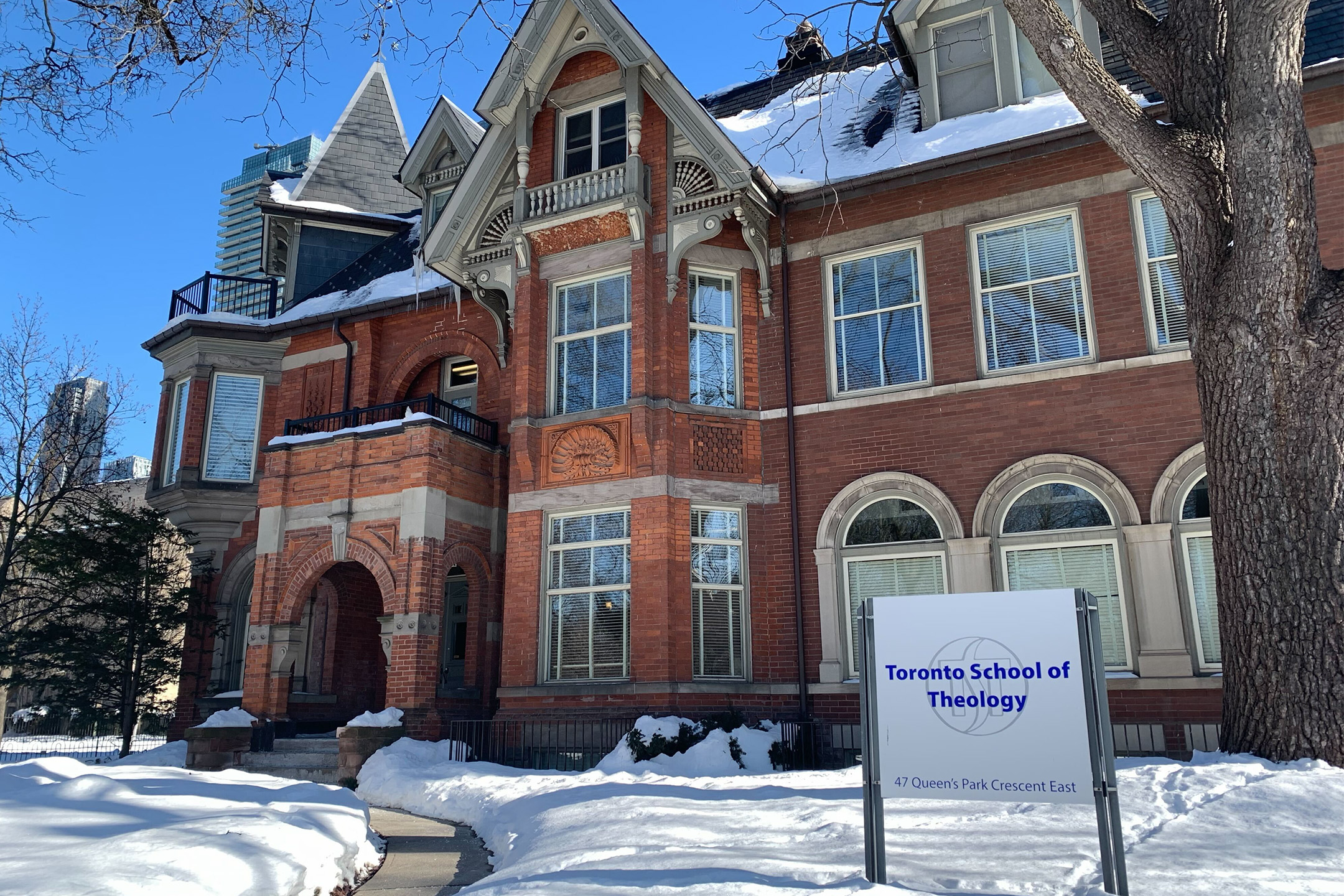
A pregnancy centre that operates out of the same building as the Toronto School of Theology (TST) is offering abortion information and post-abortion care despite being a non-licensed and non-medical organization.
Nestled on the east end of campus, at 47 Queen’s Park Crescent East, the Pregnancy Care Centre Toronto (PCC) advertises free pregnancy tests, “a safe place” to discuss pregnancy options, and information regarding parenting, adoption, and abortion.
However, the PCC does not provide or assist in arranging for abortions, according to a disclaimer on their website.
The PCC is a crisis pregnancy centre (CPC). In 2024, the Canadian government warned that CPCs “often look like clinics or support centres, but […] are designed to discourage people from getting an abortion.” All of the PCC’s locations (excluding the newest Brampton location) are listed on the Abortion Rights Coalition of Canada anti-choice directory.
A spokesperson for the university confirmed that although the TST is academically affiliated with U of T, it “is institutionally independent of the university” and that “St. Mike’s licenses the use of the building to the Toronto School of Theology.” The Toronto School of Theology Memorandum Agreement also states that the TST is “independently responsible for its own buildings and space.”
It is unclear how long the PCC has been operating in the building, although Google reviews of the centre stretch back at least five years. The TST declined to share the exact date, but affirmed that the PCC has “no connection to the TST. It is a completely independent organization.”
Concerns for U of T students
In a statement to The Varsity, Nithya Gopalakrishnan, Co-Executive Director of the U of T Sexual Education Centre (SEC), said that having a CPC on campus is “worrisome” due to the extra stress students already face, making “the decision-making that comes with accessing reproductive care” more difficult.
Gopalakrishnan also noted that the online listing for the centre on campus includes “UofT” in its location name, which she said “seems to be an attempt to lend credibility to this centre, which again, is not a medical clinic and cannot offer any sort of healthcare.”
CPCs on campus also raise privacy concerns. As non-licenced and non-medical organizations, CPCs are not required to follow laws relating to collecting and protecting personal health information, such as the Personal Health Information Protection Act (PHIPA).
Additionally, international students who may not be fully aware of what resources are available to them from the Ontario health care system are particularly at risk of being misinformed by CPCs.
Experiences inside the PCC
Although Google reviews of the PCC are overwhelmingly five stars, one reviewer claims to have been provided with false information later refuted by a doctor.
The Varsity also spoke with an anonymous source who claimed to have received an intake form disclosing that the PCC was not a medical centre, which the centre emphasized was legally binding.
According to a 2024 news release, CPCs that are registered as charities are federally mandated to “explicitly disclose if they do not provide abortions, birth control, or referrals to these services.” CPCs that fail to do so risk losing their charitable status, which means they would no longer qualify for income tax exemptions or donations.
The Varsity confirmed that this form exists. It asks for marital status and church affiliation, and states that any attempt to obtain their services or resources under false pretences is prohibited.
Although the form states that the PCC will provide you with “accurate information about abortion and its alternatives,” it also discloses that the centre does “not perform or refer for abortion.” The form states that the goal of the PCC is “to help you consider alternatives to abortion, and to offer support” to those who have chosen to carry their pregnancy to term.
In an email to the PCC, The Varsity asked how the centre ensures that visitors receive accurate information. The PCC did not respond.
It is unclear what form of training staff receive at the PCC. As stated on the intake form, staff and volunteers receive training in “crisis advisement and assistance,” but there does not seem to be training provided in matters relating to reproductive health.
