
Content warning: This article contains mentions of racism, discrimination, and inequity.
In 2018, a 100-year-old ban denying Black students admission to Queen’s University medical school was repealed. Although Black students were admitted to the school again after 1965, the policy still proved harmful to the careers of promising Black medical students. One initiative brought forth to address this injustice was a new medical program curriculum that emphasizes inclusivity and diversity.
Nearly all Canadian medical schools have pledged to address anti-Black racism through various mechanisms, such as the implementation of equitable admission pathways and reforming curricula to be more inclusive. But have these changes proven effective?
While implicit barriers once stood between Black students studying medicine, today, visible representation is still missing. Black students represent only 1.7 per cent of Canadian medical students despite the fact that Black Canadians make up 6.4 per cent of the population.
The discrepancy between the proportion of Black medical students and the overall Black population of Canada leads to significant health disparities. Black patients experience higher rates of diabetes and hypertension, and are almost twice as likely to report being treated with less courtesy or respect than others in healthcare settings.
When it comes to equity, diversity, and inclusion (EDI) solutions, with respect to students’ knowledge of Black health and on Black medical students’ learning experiences, there is insufficient research evaluating their impact.
EDI solutions are crucial for future students and for their patients; a diverse medical workforce has been shown to improve patient care and outcomes. Training physicians to understand the needs of diverse populations better equips them to serve the diverse communities that exist across Canada.
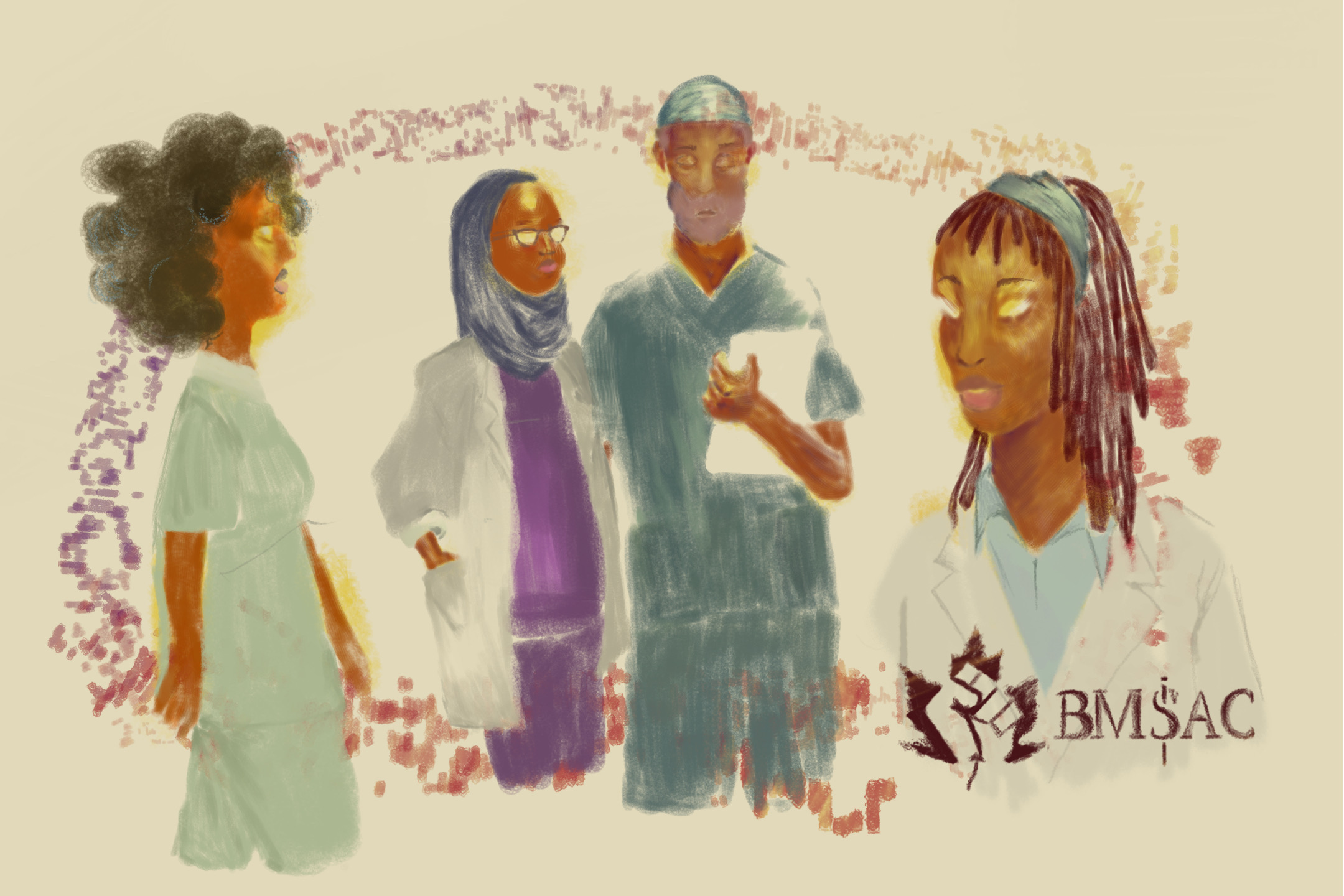
To address this information gap, the Black Medical Students’ Association of Canada (BMSAC), in collaboration with the Black Physicians of Canada (BPC), has designed a survey to record Black medical students’ experiences with admissions, curriculum, learner mistreatment, and wellness.
Never the student; ever the teacher
The BMSAC survey assesses where and how content about Black health appears in medical students’ training, and whether it meaningfully prepares them to care for Black patients.
Historically, medical education has taught content that harms Black patients. For instance, the false belief that Black people are more tolerant of pain led to 1.48 times more white patients being given analgesics than Black patients, in one emergency department of an Atlanta area hospital.
More recently, many schools, including U of T, have pledged to improve Black health education, adopt anti-racist frameworks that acknowledge the social determinants of health, and prioritize trauma-informed care. Without Black health education, healthcare trainees graduate less prepared to care for an increasingly diverse population due to limitations in clinical knowledge, cultural competence, and the ability to recognize and address health disparities.
Unfortunately, student accounts suggest that these efforts are often fragmented or positioned as optional components of training. This can reinforce feelings of marginalization among Black students by signalling that Black health is not essential to medical education.
By extension, it may contribute to learning environments where Black students must navigate harmful conversations and correct misinformation about race in medicine. This places an unfair burden on Black students, who must repeatedly educate their peers and faculty on issues of race rather than focusing on their own education.
In a 2022 study published in the Canadian Medical Association Journal (CMAJ), researchers framed this unique challenge that Black health professionals face as “never the student; ever the teacher.” This ‘minority tax,’ a term that describes the extra responsibilities placed on minority faculty to achieve diversity, diverts precious time away from career-advancing activities and personal growth, with social, psychological, and monetary ramifications.
Racism in medical settings
In 2021, U of T’s Temerty Faculty of Medicine Voices survey results revealed that 56 per cent of Black medical students have reported experiencing discrimination at least once in the past academic year. A 2024 CMAJ study discusses the experiences of Black medical students facing racism from their superiors, among them an instance of a practitioner repeatedly defending her use of the N-word. Mistreatment of students often goes unreported, for fear that it will result in retaliation, negative evaluations, or damage to their professional reputation.
Even so, experiences of racism can worsen progress and academic achievements. The learner mistreatment section of the BMSAC survey seeks to understand the sources of mistreatment and settings in which they occur.
By documenting how mistreatment manifests and how reporting systems function, the BMSAC research team hopes to put forth suggestions to improve reporting systems, support safer learning environments, and keep institutions accountable for their learners’ safety. For example, they may use the data to support a call for better protection of individuals who report instances of bias and discrimination.
Black student wellness
For Black medical students, the pressures associated with medical school are intensified by experiences of racism and isolation, which can lead to depression-like symptoms. Medical students who experienced racial microaggressions on a weekly basis were significantly more likely to screen positive for depression.
But how can students feel supported by their schools while facing racism? The wellness section of the BMSAC survey examines perceived institutional support, access to culturally responsive resources, and overall wellbeing, helping identify which supports are most effective and where gaps remain.
Progress is underway
By collecting data across provinces and medical schools, the BMSAC research team aims to move toward evidence-based advocacy. The BMSAC survey will be offered online.
With this information, BMSAC hopes to make informed recommendations for the improvement of EDI initiatives in medical schools across Canada. The findings from this survey have the potential to make change in harmful institutional cultures and policies.

No comments to display.