
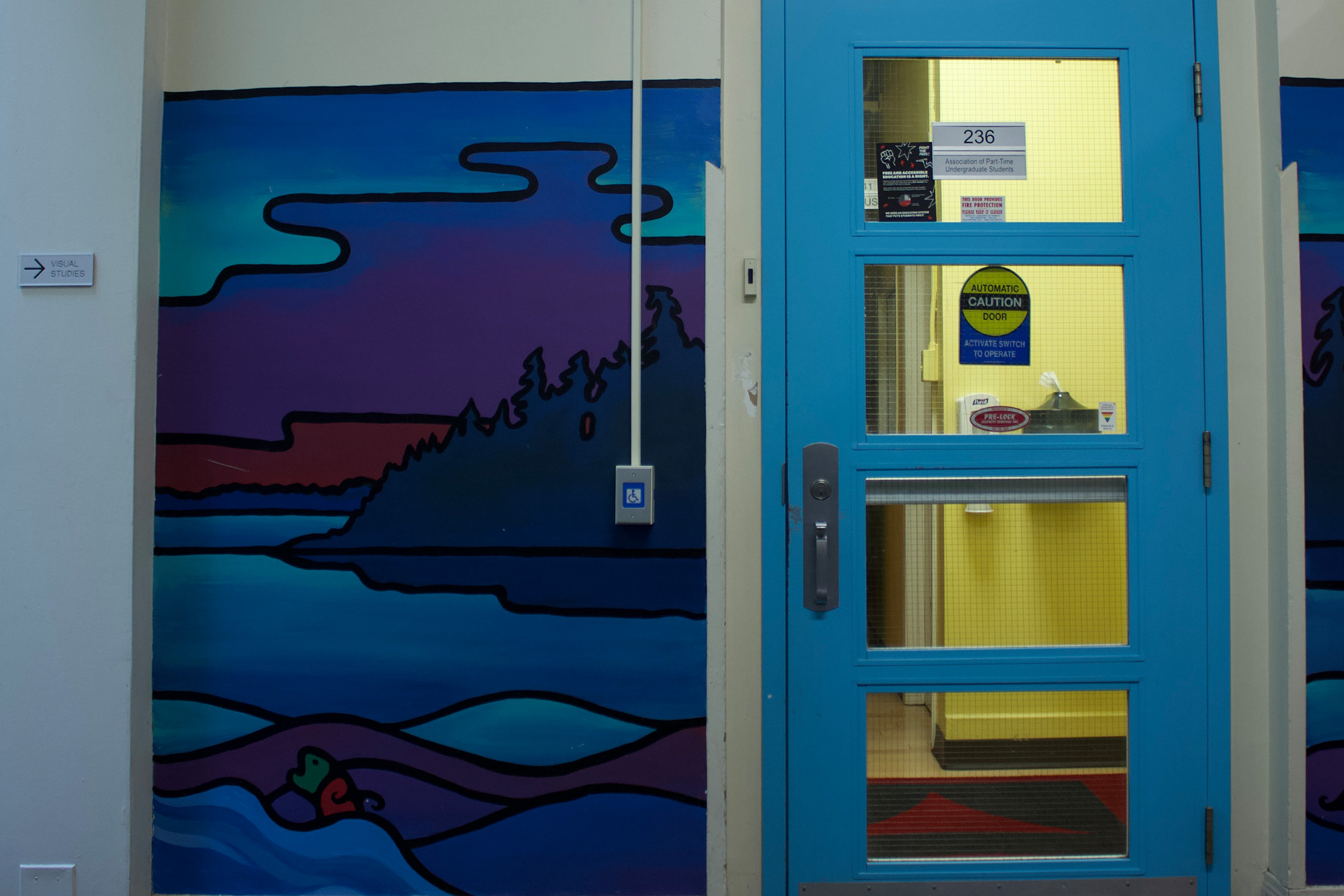
The Association of Part-time Undergraduate Students (APUS) has reduced its staff to two employees, executives confirmed at its Fall General Meeting on February 9.
Vice-President Internal Dianne Acuna said, “At our last general meeting, the organization did have to make a difficult decision to conduct layoffs based off decisions made by the finance committee to maintain programming.”
In the previous academic year, the association’s preliminary budget projected a $120,650 deficit, and it ended the year with a final deficit of $94,570. After major decreases in spending — particularly salaries — APUS is now projected to end this year with a budget surplus of $120,500.
Third Fall General Meeting
This was APUS’s third attempt at scheduling the Fall General Meeting.
The first meeting was scheduled on December 5, with a registration link sent out six days prior. The meeting failed to reach quorum, which requires 25 members, and was rescheduled for January 14. On the day of the January meeting, the association postponed it again to February 9.
Per APUS bylaws, the scheduled meeting had no requirement for quorum.
Vice-President Internal Dianne Acuna, Vice-President External Shanti Dhoré, and Directors Dani McOuat and Humberto were in attendance. Chair Alice Wu facilitated the meeting, alongside chair support Kayla Weiler, who also serves as the government relations and policy coordinator for the Canadian Federation of Students (CFS). President Jaime Kearns was absent.
There were five other members on the call, including Andrew Park, UTMSU president, and Susan Froom, APUS executive alum and part-time student representative on the Governing Council.
Park ran for one of the five open director positions and was the only candidate. In his speech, he highlighted UTMSU’s ongoing difficulty filling its part-time student representative role, which remains vacant.
Park said, “I think there is a need for part-time students to be represented. Since APUS is that body, and I am pretty familiar with UTMSU, I’m hoping to serve as sort of a bridge between the two organizations through my role on the board here at APUS.”
He was unanimously ratified to the board.
APUS’s new budget
Since the last academic year, APUS’s salary budget has decreased from $280,031 to $85,000. Salaries now only make up 29.8 per cent of the budget outside of restricted funds, down from 50.7 per cent the previous year.
APUS’s staff reductions span multiple departments: administration funding fell from $77,181 to $13,000; campaigns from $52,256 to $12,000; programming from $32,356 to $1,000; and student services from $118,238 to $59,000.
The layoffs confirm an Excel spreadsheet titled “2025.09.20-Layoff Pa…” that was visible, but inaccessible, in APUS’ Winter 2025 general meeting folder. The spreadsheet has since been removed from the folder.
When asked about the spreadsheet and if layoffs occurred, APUS wrote to The Varsity in December that the spreadsheet was not in the Summer 2025 Special General Meeting folder and that “HR matters are private and confidential matters that are protected — and unauthorized individuals cannot and should not be trying to gain access to confidential materials.”
Beyond staffing, the association’s programming budgets have largely remained steady. The only exception is the printing centre budget, which decreased from $34,000 to $5,000.
The general programming budget decreased from $6,000 to $4,000 after only $1,843 in spending last year. The campaign programming and materials budget was reduced from $5,000 to $3,000; just $1,561 of last year’s allocation was used. The laptop loan program, which saw no spending last year, was halved to $1,000.
The CFS National Meetings budget also decreased from $4,000 to $1,000.
After reading the budget, which detailed office expenses, one part-time student asked why APUS had two offices.
“Due to the staff reduction, we haven’t been able to get into that [Sidney Smith office] right now; however, that is something we are looking to utilize. It is supposed to be a space where it’s not just staff, it’s more for students and outreach,” Acuna said. “It’s perhaps something that we can look into how to restructure if we do some restructuring. At this time, we are planning to try to open that up for this semester to give students that space again.”
Froom added that full-time students are represented by both the UTSU and the Arts & Science Student Union, neither of which represents part-time students. So “APUS wears two hats. It wears a hat where it represents students within the Arts and Science Faculty, and it wears a hat where it represents students in any part-time division or faculty at all three campuses.”
Froom continued, “Because of those two hats, the university has agreed to give us two offices to mirror the services offered to full-time students. We’re not renting this space, but we are operating this space.”
Executive reports
In her executive report, Acuna said bursaries are “one of our biggest services to members. They are unique in that they are more than merit-based, like the many that you see. We’re trying to not only celebrate but acknowledge the many different student members that we have by offering identity-based services.” The association’s bursaries range from $300 to $600, and include bursaries for Black students, Indigenous students, and Two-Spirit, queer, trans students.
Acuna also highlighted the International Student Identity Card (ISIC), an internationally recognized proof of student status that offers discounts around the world. Acuna said the card “was only available to full-time students at one point. So this card, it’s provided by the CFS, but through advocating, it’s finally now available to part-time students.”
“It was only for full-time students, and they made a deliberate decision to offer it to part-time as well, recognizing the high cost of tuition and other expenses. The ISIC program has now expanded, and last year, CFS came on campus to hand out ISIC cards. We’ll be doing that again this semester, so stay tuned for those dates to come,” Dhoré added.

No comments to display.