
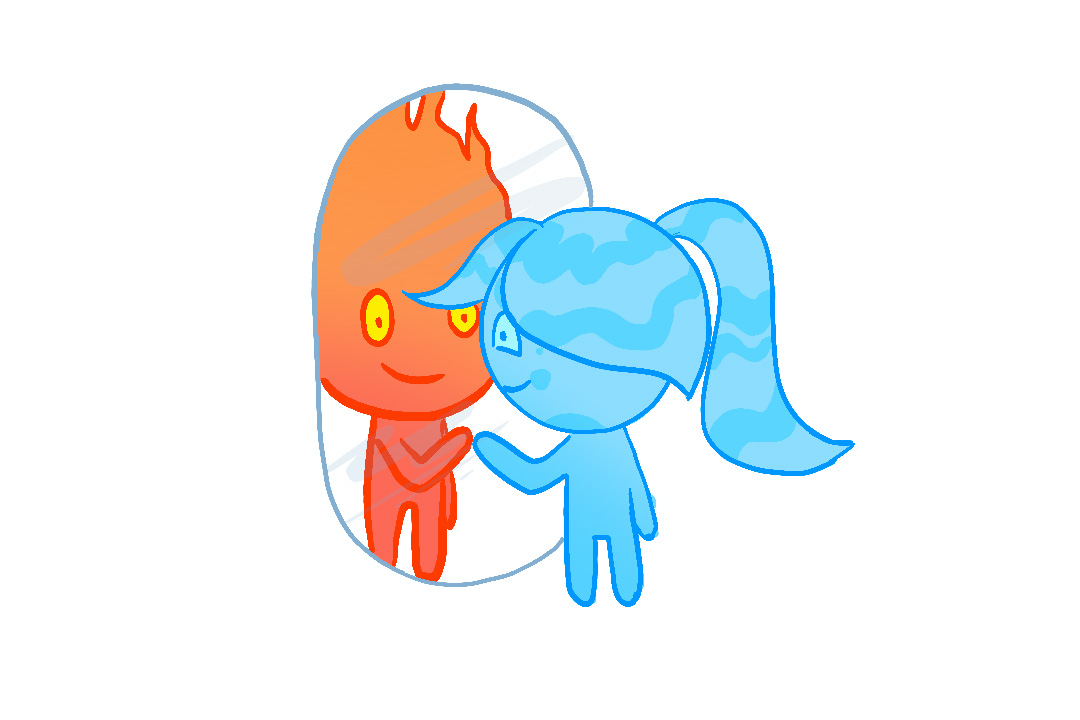
Lava: destructive, impossibly hot, and capable of scorching anything in its path. In many ways, water seems opposite to lava; its role is to support life, not destroy it. Despite their surface-level differences, the two are more similar than we think. The solution to the geochemistry “Is water lava?” debate might lie in answering the question: is ice a rock?
When looking at the discussion from a definitions-based perspective, some experts contend that if ice is a rock, then water can be classified as lava. Minerals are naturally occurring, solid and on a molecular level, they have a highly-ordered crystal lattice structure, all characteristics shared with ice. When one or more minerals are chemically bound together, they form a rock.
Most magma forms when rocks are pushed below Earth’s crust into the mantle — a hot layer of rock about 2,900 kilometres thick. Because magma is less dense than the surrounding rock, it rises through the mantle and crust until it erupts through volcanic vents at Earth’s surface. Once magma erupts, it is called lava.
Can ice be considered magma?
Peter Liberty, a UTM PhD student studying the evolution of reef systems, believes that ice is a mineral made from water. “When exposed to temperatures above its melting point (zero degrees Celsius),” Liberty told The Varsity, adding, “it melts and becomes molten rock.” In that case, water meets the definition of lava.
But the underlying assumption, that ice meets all of the criteria to be considered magma, isn’t entirely correct.
Paul Ashwell, volcanologist and earth science professor at UTM, has a different take. He argues that lava is more chemically complex than water, so equating the two is an unfair comparison. As Ashwell explains, the water on Earth “is fresh water, salt water or hypersaline or a mixture of the two of them, so all you’re seeing are differences in trace elements,” or components that make up 0.1 per cent or less of a mineral.
By comparison, magma comes in many forms, each with huge differences in major and trace elements — the components that they are made of. It’s because of varying chemical compositions that diverse types of rocks form. For example, lava containing about 45–50 per cent silica can form komatiite, an ultramafic volcanic rock known for its spinifex texture, produced by long skeletal olivine crystals. In contrast, lava containing about 70–75 per cent silica forms rhyolite, a light-coloured volcanic rock that commonly contains quartz and feldspar.
By contrast, Ashwell explains, water doesn’t incorporate trace elements into its crystal lattice when it forms ice. In other words, it doesn’t matter if you start with fresh water or salt water; your end result will always be ice. For this reason, Ashwell maintains that geologists generally don’t classify ice as a mineral.
Jade Umbsaar, a U of T PhD student studying the chemistry of hydrothermal vents on the ocean floor, disagrees with Ashwell’s argument. Although rare, ice can include trace elements within its crystal lattice. Therefore, the rarity of the phenomenon doesn’t negate the fact that ice can behave like a mineral.
Cryovolcanoes: Pluto’s water volcanoes
When it comes to the “Is water lava?” debate, Umbsaar looks beyond Earth for answers.
Much like how Earth has volcanoes, the dwarf planet Pluto has cryovolcanoes, a type of volcano that erupts water, which rapidly freezes in Pluto’s frigid environment. According to Umbsaar, the water erupting at these cryovolcanoes is functionally the same as lava. If water is considered lava on other planets, why shouldn’t it be considered lava on Earth?
As it turns out, the line between what is and isn’t a volcano gets blurry, especially when considering other planets. Ashwell explains that volcanism on Earth occurs due to changes in its mantle, but the mechanisms behind cryovolcanism aren’t well understood by researchers.
Ashwell considers cryovolcanoes to be parallel to Earth’s volcanoes, because although they share similarities, we can’t be sure they act exactly the same just yet. By that measure, water and lava may be more different, or just as possibly, more similar than we think.
Is water lava?
While water and lava have many differences, such as their physical appearance and chemical composition, one could argue that water and lava are one and the same. Partaking in spirited debate, just as Liberty, Ashwell, and Umbsaar have done, is essential to exploring new ideas and discovering new truths.
By challenging scientific dogma in the geology community, researchers are forced to think outside the realm of what is currently possible. Although the “Is water lava?” discussion is still ongoing, it’s the pursuit of weird and seemingly inane questions that drives scientific discovery forward.
Correction: This article was updated on March 8, 2026 to reflect that the Earth’s mantle is 2,900 kilometres deep, and to clarify that ice can behave like a mineral.
