
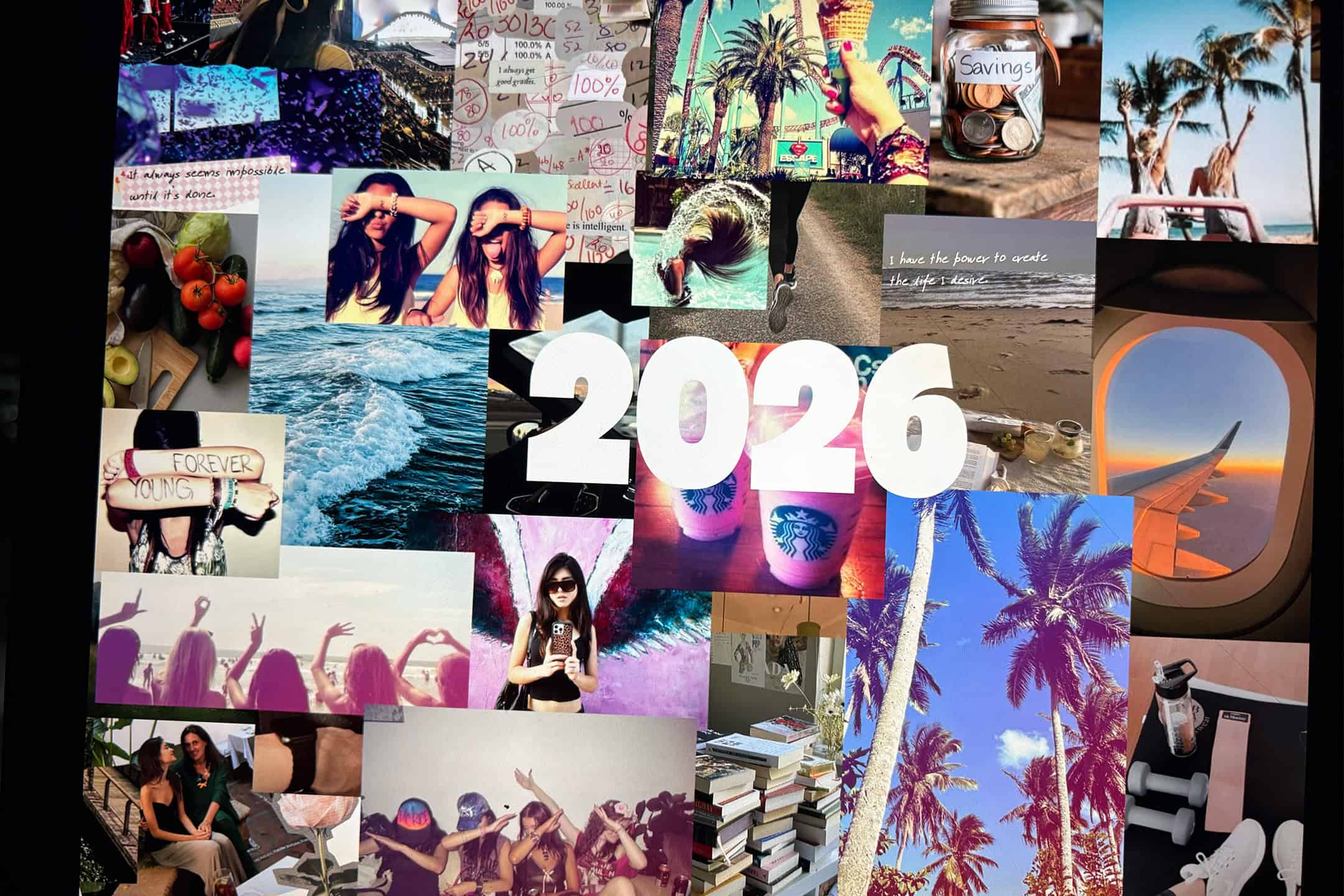
Trends are built to become a distant memory, but a decade later, 2016 seems to have withstood the test of time. Leading up to the new year, I thought of this wave of content reminiscent of 2016 as another fad on social media; however, the kinds of pictures people were sharing and the ones I found myself reminiscing about were all bound by the same, meaningful thread. Most of the posts seemed to be either a display of community or confident self-expression, both of which now seem to be foreign concepts.
Our longing for these aspects of society exposes a transformation in how we practice humanity.
As collectiveness and self-exploration decline, our ability to exercise empathy weakens, creating a ripple effect on global political and social division. So, I don’t think that we should be asking if 2026 is the new 2016. Instead, we should acknowledge that during a time when anger and hate are mistaken for rebellion, the most meaningful resistance lies in reclaiming the innately human qualities that we’ve set aside.
A fragmented society
The word “alive” is defined as a state of being alert, active, aware, responsive, full of emotion, and even animated, all of which exist through experiences. Therefore, we can infer that to be alive means a person must be actively experiencing.
Even though social media has become intertwined with our daily lives, it doesn’t meet these conditions. Experiences can be meaningful when lived through alone, but they are profoundly defined by and sustained through connections with other people. Social media, while created with positive intentions, is devoid of this companionship in the way that it reduces people and their lives down to a simulation.
In 2016, social media was still integral; however, since then, it has rapidly become excessive, which in turn strengthened its effects on our lives. Its ability to rob people of the chance to experience their own lives and to lead people towards social disengagement is also taking away moments when we can practice intrinsic traits like empathy. Thus, our ability to connect with others and form a strong community diminished as well.
This kind of disconnection often leads to negative self-perception, resentment towards other people’s lives, worse academic performance, and — if this becomes a reality for too many people — creates a society that is shaped by division.
As seclusion becomes increasingly prevalent, we lose meaningful encounters that allow us to enrich authenticity. If we continue to stray further from the qualities that can make us feel alive, the illusion of interconnectedness we have cultivated will no longer be sustainable.
Seeing ourselves through the eyes of others
To experience things to their fullest potential often means being able to fully express oneself, because self-expression allows the lived experiences that shape us to take form beyond our own subconscious understanding. But, if a decline in community is contributing to a decrease in lived experiences, what are we left with to express?
Defining ourselves through shared experiences with others allows our identity to form through our interpretations of our interactions and our capacity to reflect on what we’re feeling. The periods of uncertainty about who we are, what we value, and what we desire are indispensable to our ability to conceptualize complicated emotions. By engaging with this uncertainty, we develop the capacity to form or understand complex thoughts and feelings.
When we learn how to recognize and communicate them, we experience emotions without fear, judgment, or loneliness, because it makes connection possible. However, with these experiences becoming scarce, the way we identify ourselves starts to rely on external perceptions, making it difficult to reach emotional depth.
As identities become mirror images of each other, the fragility it brings to the individual is no longer personal; it becomes pervasive to society. This unstable sense of self becomes easily swayed as the inability to understand ourselves and the world around us becomes a vulnerability. The differences that we are not able to understand become a threat, instead of something we are able to explore between ourselves and those around us.
Neglecting to see the strength that can come from reaching a point of empathetic understanding leaves our society unable to tolerate the inevitable change and differences that are part of our world. Here, the decline in self-expression that has been leading to our inability to connect is creating a hardened view of what we consider unfamiliar — moving away from interconnection and togetherness that was seen more in 2016 than in 2026.
Looking beyond nostalgia
While we know that we are gravitating towards 2016 in the pursuit of solace, companionship, and freedom, it is not enough to just understand why we are amplifying its unifying message. This recognition loses meaning if it doesn’t influence us to change what has led us here.
Although it is not realistic to always remain hopeful in a world fostering despondency, we have an obligation to confront the ways we’ve sidelined our most human traits so that future generations may live in a reality unlike ours. A reality that will not be shaped by our indifference towards the habits that weaken our humanity.
Vesa Lunji is a third-year student studying health and disease, immunology, and Spanish. She is also an Associate Opinion Editor at The Varsity.

No comments to display.