
This review contains spoilers.
How do we remember the lives and tragedies that have been deliberately erased by oppressive regimes? This is the question at the centre of Kleber Mendonça Filho’s political thriller The Secret Agent.
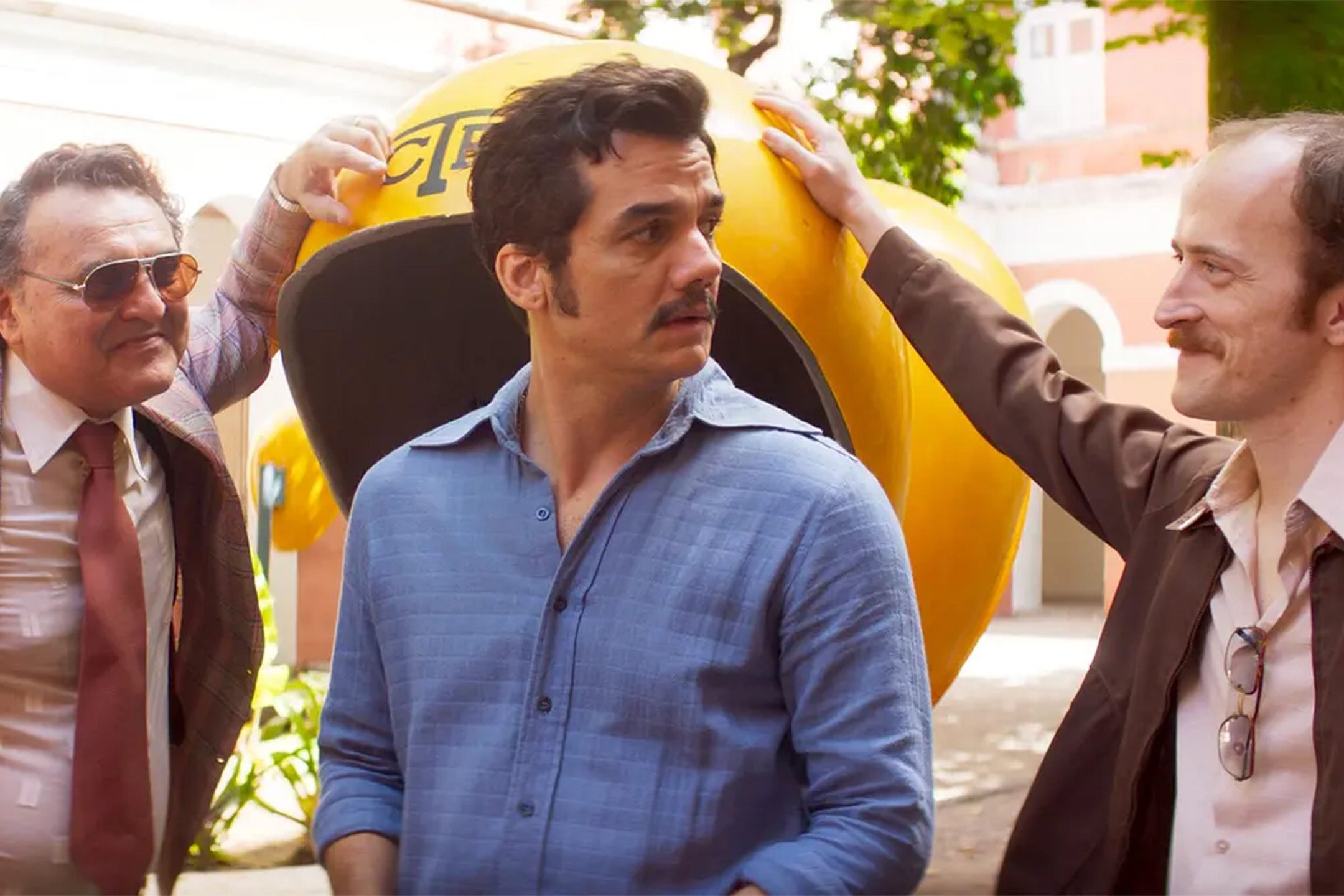
Set in the late 1970s, the film follows Armando Solimões (Wagner Moura), a former university professor, as he tries to escape Brazil with his young son Fernando (Enzo Nounes) after threats are made to his life. The film’s narrative unfolds through three plotlines: Armando’s escape from the dictatorship, the community building among the political dissidents, and a modern-day researcher investigating Armando’s story. Together, these narratives reveal the effects ideological persecution has on the lives of individuals and the identity of a country.
The lasting effects of the military dictatorship in Brazil
The Secret Agent is part of an emerging canon of Brazilian films exploring the 1964–85 military dictatorship, like the 2024 release I’m Still Here. The violence and censorship of the dictatorship have become a major topic of discussion in Brazilian society following the publication of a report from the National Truth Commission in 2014.
The report revealed that the fascist military regime was responsible for the disappearance and death of 434 people. The report did not include Indigenous people in the official count of those murdered by the regime. They did, however, record that 8,350 Indigenous people died due to the actions and omissions of state agents. These included the Krenak people and the Guarani-Kaiowá people, the two main groups who were evicted from their lands and brutalized by the dictatorship. The report also reveals that the regime extensively censored political criticism in the media.
Striking visual style
The Secret Agent’s cinematography is striking from the start. In the opening scene, Armando drives to a rural gas station with a large Esso sign. At the station, he finds a dead body covered by a piece of cardboard near the gas pumps. The body is decaying and swarming with flies, having been left to rot for days under the sun. The grotesqueness of this scene is contrasted with Mendonça Filho’s usual picturesque style, which immerses characters into the story’s environment through wide or long shots. The colouring and lighting in the film are also incredible. In a time where many films feel darkly lit, I found it refreshing to see a film so dedicated to crafting a unique visual style through saturation and light.
Juxtaposition also plays an important visual and thematic role in the film’s exploration of communal strength during times of oppression. The visual style used in the film is often contrasted with the images we see on screen — dead bodies, dissected sharks, and dismembered limbs — which create a deep sense of suspense and discomfort in the viewing experience. Contrast is used here to show how the climate of fascism responds violently to dissidents and can only be challenged through community solidarity and resistance.
Community solidarity
Armando is taken in by Dona Sebastiana (Tânia Maria), an anarcho-communist who runs a safe house for political dissidents hiding from the dictatorship. While at the house, Fernando meets other people whose lives are threatened because of their left-leaning politics, including a couple who came to Brazil as refugees from Angola during its struggle for independence.
The narrative was effective at illustrating the power of resistance. It also highlights the importance of preserving the stories of those lost standing up to tyranny. Showing the life-threatening work put in by Dona Sebastiana’s community in protecting their comrades makes clear that these histories must be preserved so that future generations have a blueprint to consult when facing similar perils. Even if these stories of resistance are left unresolved or end in tragedy, Mendonça Filho’s depiction of communal solidarity is well done.
The emotional core of the film is brought together by Moura’s amazing performance. He skillfully portrays Armando’s grief and fear as he struggles to evade the threats against his life, find a way for him and his son to escape, and manage the lingering grief of losing his wife.
I felt particularly moved by a scene in which Armando and his son discuss his deceased wife, Fátima (Alice Carvalho). Armando tries to comfort his son, saying that Fátima is still with them through their memories, but his microexpressions betray his own struggle with losing her. By the end of the film, I felt invested in Fernando’s story and wanted to see him get to safety and to learn more about his life.
A break in continuity
While Moura’s performance is stellar, the film’s true stand-out performance comes from Maria’s portrayal of Dona Sebastiana. Maria, who only became an actress at the age of 72, brings a lot of her own personality into her performances. In The Secret Agent, she is a kind but strict matriarch whose humour brings a lightness to a film rife with desperation and tension.
The film is at its weakest with the modern-day subplot. When the young researcher Flavia (Laura Lufési) is introduced midway, the deep immersion in the period suddenly feels broken. While it becomes clear by the end of the film why Flavia and her story are important to understanding the history of oppression in Brazil, the transition is jarring and awkward.
A story of community building in hard times
The Secret Agent is a film about a network of people who are committed to community and resisting fascist oppression, even if the work is dangerous and often futile. Stories like these hold urgent relevance in the current moment of global politics.
With the rise of far-right movements and governments around the globe, and the incremental increase in invasive surveillance technologies, the film demonstrates the importance of studying the history of fascist structures in order to avoid repeating the mistakes of the past.

No comments to display.