
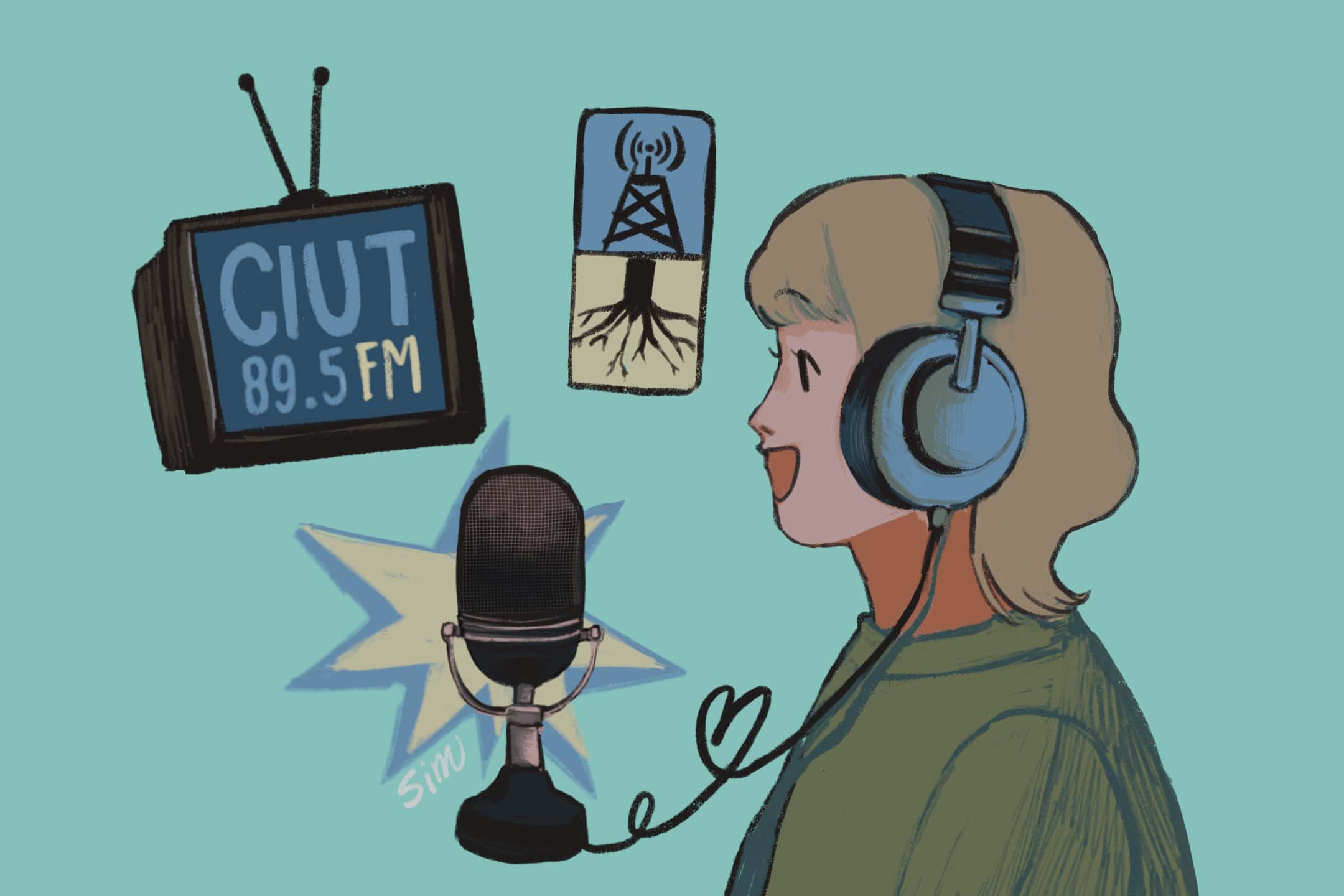
Although I have volunteered at a community radio station for the past year, it wasn’t until I discovered the works of community radio founders from the 1970s that I learned of the enduring issues within the radio industry. Radio broadcasting has long been overcrowded with moronic drivel, uninspired forms of ‘top 40’ songs, and hosts with botoxed jaws.
Growing up in California, my local radio announcer was none other than Ryan Seacrest. Evidently, a symptom of mainstream radio is that you are always confronted with the voice of some B-list celebrity like Seacrest, whose management gets them an increasingly bizarre succession of temp gigs. It was flat, dull, and uninspiring.
The radio of today is overrun by a corporate, for-profit model that only gives airtime to commercially successful, mainstream artists. For listeners, it seems like there is no alternative, since the corporation’s goal is to trap you in the superficial entertainment of charting music and celebrity updates. Meanwhile, the real power of the radio — the power to transmit voice, ideas, and inspiration — is lost. Despite this bleak shadow, community radio is still alive and well, and is broadcast right from the centre of your campus.
CIUT 89.5 FM, U of T’s campus radio, was founded in 1965 under the name Radio Varsity, and its broadcast was originally limited to the U of T campus. However, in 1986, the radio received its broadcast license and by 1987 became CIUT-FM with an increasingly wide reach across Southern Ontario.
Today, you can listen to CIUT locally in both Toronto and Southern Ontario, as well as live online. Throughout its history, CIUT has broadcast hundreds of student and community radio shows. Radio Recall, which airs live on Saturdays from 11:00 am to 12:00 pm, chronicles the station’s history, speaking with people who were part of its heyday and are continuing its legacy. CIUT’s studio was originally located on St. George Street, right across from Robarts Library, but in 2009, it moved to the top floor of Hart House.
The show that I worked on, Tracks from Abroad, taught me the importance of engaging with the on-campus community. Each week, I sat down with a U of T student or faculty member and discussed their unique perspectives on music from around the world.
One of my favourite interview moments was with Professor Ivan Kalmar of the Department of Anthropology. We were discussing the role of music in communist-occupied Czechoslovakia when he said, in an offhand, understated way, “It’s easier to go to a rock concert than a demonstration.”
This encapsulated my motivations with the show, ones that I had held only subconsciously until then. I wanted to showcase the ways in which music is political and used for resistance across the globe. Music is deeply intertwined with lived experiences. Tracks from Abroad highlights each week throughout the school year, working outside of the mainstream, culturally homogeneous Canadian radio system.
A 2021 survey by the Canadian Radio-television and Telecommunications Commission found that the demographic of 18–23 year olds is the least likely to listen to the radio on a regular basis or consider access to radio to be important.
This spurred a sense of urgency in me to communicate the importance of community radio, especially to those my age. While the convenience of corporate streaming services like Spotify and Apple Music may have appeal, the radio offers a chance for a real human connection. To me, there is something magical about tuning into someone’s words as they are being spoken, rather than listening to something pre-recorded or AI-operated, such as Spotify DJ. Hearing their “ums” and “ahs” crackling over the air — something that is frowned upon in more polished, edited media — is endlessly charming to me, and reminds me that I am hearing their real stream of consciousness.
The algorithms that streaming services rely on are incomparable with community radio’s unique selection of underground music, hand-picked by someone with a passion for the art form –– I have even played many songs that are not on streaming services at all. It lends to a more dynamic listening experience, where you don’t know if the next song that plays is going to be your new favourite or make you want to change the station.
The importance of community radio cannot be understated. CIUT is a not-for-profit organization that does not advertise over the airwaves at all. It is funded completely through community donations, rather than being backed by some large corporation. As a result, the hosts have exponentially more freedom to express their opinions.
Political talk shows like The Taylor Report cover topics that you won’t hear on mainstream shows, and local musicians are given platforms they wouldn’t be able to find elsewhere. One of my favourite interviews I conducted was with Toronto-based band Fond of Jane. Not only did I have a blast talking to Mya Donofrio and Michelle Qadir about their band, but after the interview, Qadir joined the team at Tracks from Abroad as our board tech. We are now embarking on another radio-related project together. Being involved with community radio has exposed me to so many amazing people in the Toronto music scene and has connected me to so many opportunities for collaboration.
There is also an incredible array of music played every day, from the drum and bass beats of North America’s longest-running electronic radio show, The Prophecy, to jazz and blues. At CIUT, there is truly something for everyone.
Not only are youth the voice of the future, but universities such as U of T have long prided themselves on being at the cutting edge of innovation and academic thought. The radio is the perfect medium for those at the university who want their voices heard, who feel that they have something to share. If I’ve learned anything at the radio, it’s that everyone has a story — one that deserves to be shared.

No comments to display.