
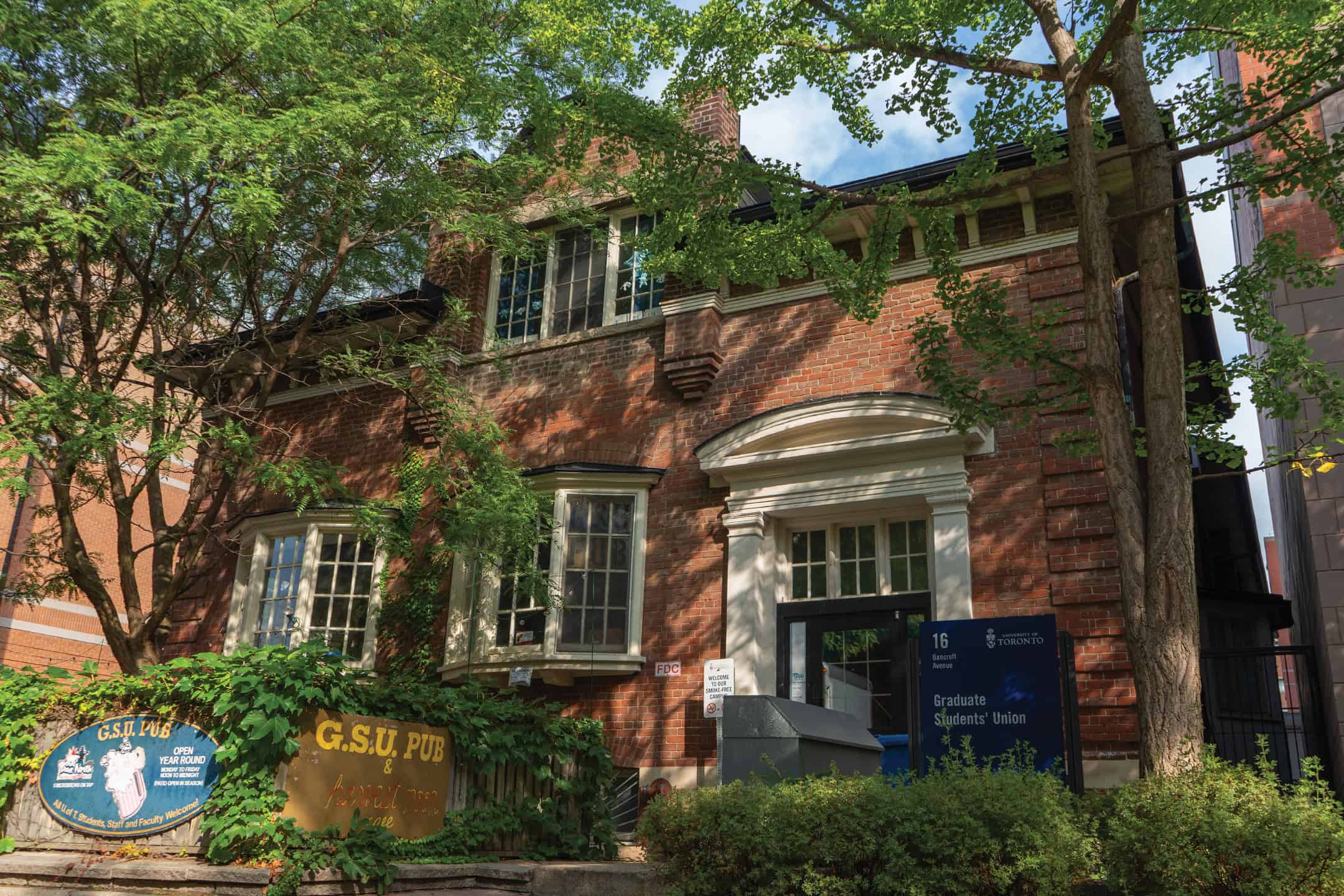
The University of Toronto Graduate Students’ Union (UTGSU) met in July and August to implement an emergency grant fund, plan for GradFest, begin collecting a survey to implement a new food security levy, and plan for long-term success.
UTGSU Board of Directors (BOD) members also discussed the resignation of interim Director of Division 1 Aditi Kolluru and the unpaid leave of absence of Vice President (VP) External Seema Allahdini.
Adoption of Policy O6.3: emergency grant fund
President Amir Moghadam reviewed the proposal for an emergency grant fund, the result of work done by Governance Committee chairs VP Internal Dominic Shillingford and Executive Director Corey Scott. Ultimately, the motion sought to immediately adopt the policy within the UTGSU Policy Handbook so that students could access resources as soon as possible. The motion carried.
The grant provides “up to $1,000 in financial support for graduate students facing unexpected emergencies beyond their control,” such as family emergencies, cases of gender based violence, sudden loss of income, and medical crises. To be eligible to receive grant funding, a student must be a UTGSU member in good standing, apply for the grant within six weeks of the emergency, demonstrate significant financial need, and be unable to receive aid from other emergency funds, such as the School of Graduate Studies Emergency Fund.
GradFest, fare capping, and U-Pass
VP Graduate Life, Eliz Shimshek, offered remarks on her coordination of GradFest, noting that over 200 students had signed up within the first day on Rubric. Shimsek reminded the BOD of the need for as much help as possible for volunteering, postering, and coordinating departmental orientations.
The executive team then led a discussion of long-term plans for UTGSU. President Moghadam emphasized the lack of sustained action across election cycles and his aim to work on a five-year plan, presented across the union at various levels.
VP Academics Nicholas Silver informed members of his ongoing work with 10 university student unions to form a GTA transit coalition. Among the objectives are fare capping and developing a U-Pass, with the prospective hire of a dedicated executive associate to streamline engagement for the campaign.
Division 1 directors
The board approved a by-election timeline for Division 1: Humanities directors and reduced the required nominators for the role from 15 to five, in response to Division 1’s struggles to run candidates.
In the by-election proposal, directors appointed public policy graduate student Harmanbeer Sandhu as Chief Returning Officer and approved a nomination period between September 15–25, a campaign period between September 29 to October 8, and a voting period between October 6–8.
Food security levy fee
In research conducted by the union of over 2,500 graduate students, 61 per cent cannot afford balanced, nutritious meals, 57 per cent are food insecure, 28 per cent skip meals to save money, and seven per cent have gone days without eating. UTGSU’s 2024–2025 collaboration on weekly lunch programs regularly sold out.
Moghadam requested that the BOD support the collection of signatures for a referendum on a food security levy fee of up to $5.00 a term. Such a levy would go towards funding emergency food relief, subsidized meal programs, cultural food programs, kitchen infrastructure, and partnerships with community organizations.
Executive Director Scott pointed out that the survey covered both doctoral and master’s, funded and unfunded, and domestic and international students, while including students who did not experience either housing or food insecurity.
When asked by Director Valentyna Kundas about support for students at either Scarborough or Mississauga campuses, Moghadam expressed that the focus had primarily been on St. George campus. The motion carried.

No comments to display.