
Content Warning: This article has mentions of ableism.
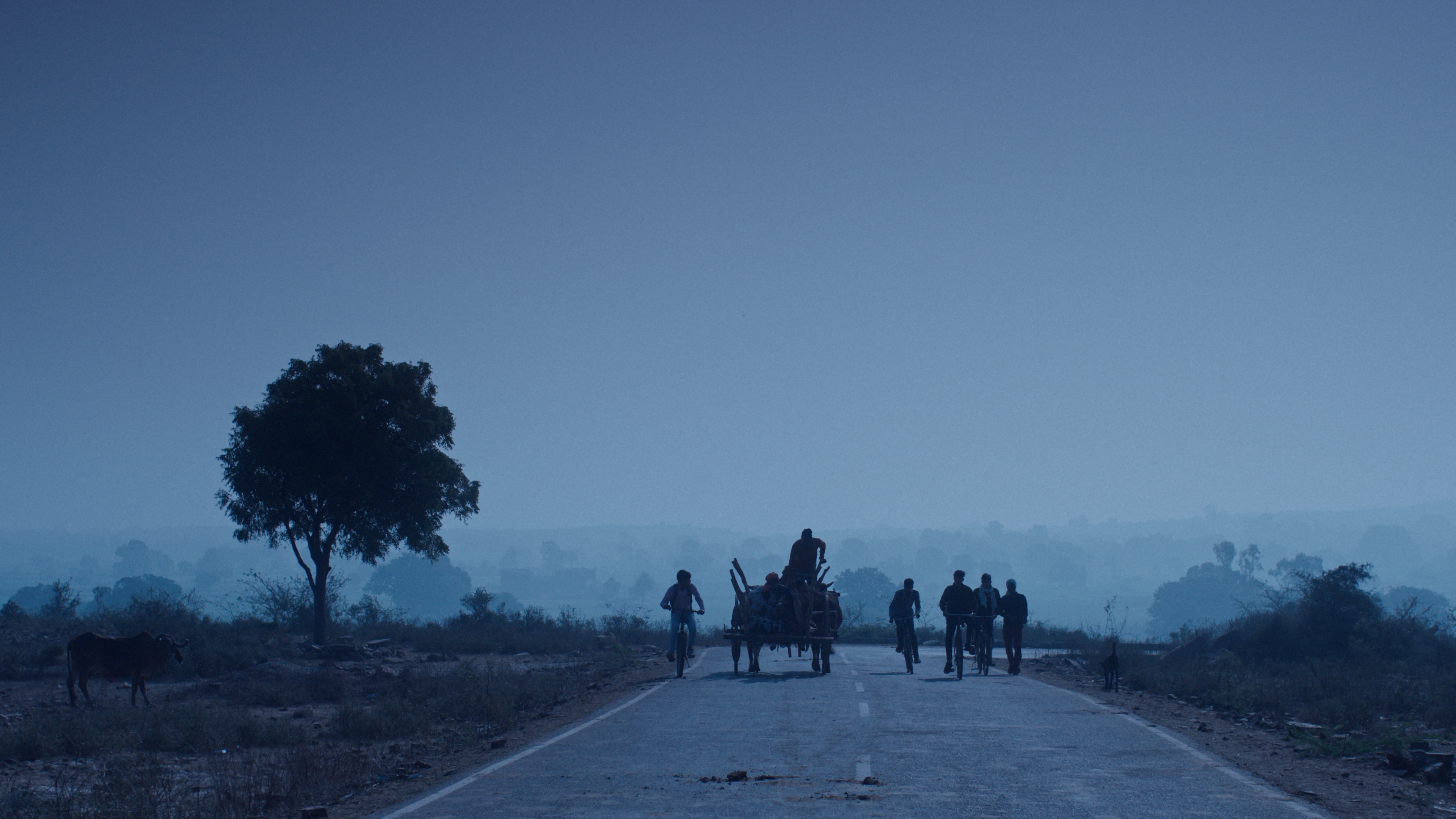
In Search of the Sky — a new film from director Jitank Singh Gurjar — follows an older couple in rural India as they care for Naran (Nikhil Yadav), their adult son who has a developmental disability. While Vidya, Naran’s mother (Meghna Agarwal), spends her time at home with Naran, his father, Jasrath (Raghvendra Bhadoriya), hauls bricks to support the family because he can no longer make enough money as a musician.
Vidya and Jasrath find themselves trapped by their financial and social situation: The family lives in poverty, their land ownership is being threatened by a self-serving businessman, Naran needs a caretaker for the rest of his life, and due to his old age, Jasrath cannot maintain the manual labour that keeps their family afloat.
Meanwhile, Naran and his family are met with impatience, resentment, and cruelty from members of their rural community. Several people even suggest that Vidya and Jasrath would be better off without their son.
The community’s hostility towards the family has religious undertones. Naran’s disability is seen as a sign of a sinful past life or as a reflection of his parents’ moral failing.
Vidya, however, insists that Naran is a gift from god. Still, she knows that something has to change for the family’s circumstances to improve. To initiate this change, Vidya suggests the family make the Hindu pilgrimage to the Kumbh Mela — which happens every 12 years — so Naran can participate in the Holy Dip — a ritual in which one dips themself in the river for purification.
Vidya’s suggestion seems to come more out of desperation than with a clear goal in mind. It is unclear whether she hopes the pilgrimage will somehow make Naran’s disability disappear or solve the family’s financial problems. Regardless, Vidya’s faith is unwavering, and she makes up her mind that they must go.
The main dialogue of the film is a debate about Naran’s place in the community. His parents are demoralized, and others around him are prejudiced and often cruel. Naran himself is not included in discussions others have about his life.
But the film also shows us scenes of Naran’s life independent from the main dialogue. These moments are often unspoken because Naran does not primarily communicate verbally, and they allow us to witness the meaningful connections Naran forms with his mother, and the children and animals in his community.
This unspoken communication is not limited to Naran. When the family arrives in Kumbh Mela, Jasrath first connects with the people he meets there, not by speaking with them, but by joining in their music.
By following Naran’s interactions with his family and friends, the film shows how the family’s struggles are not due to Naran’s disability, but the prejudice and lack of support they encounter.
Thanks to Yadav’s expressive performance, Naran is the emotional core of the movie; I experienced the film through Naran’s joy and pain. The film shows us both the beauty of his inner experience, and the betrayal and heartbreak he feels as a result of his family’s desperate situation.
The ending is understated and uncanny, with Naran at the Holy Dip. We are left with the impression that Naran has somehow transformed, yet his future remains uncertain.
