
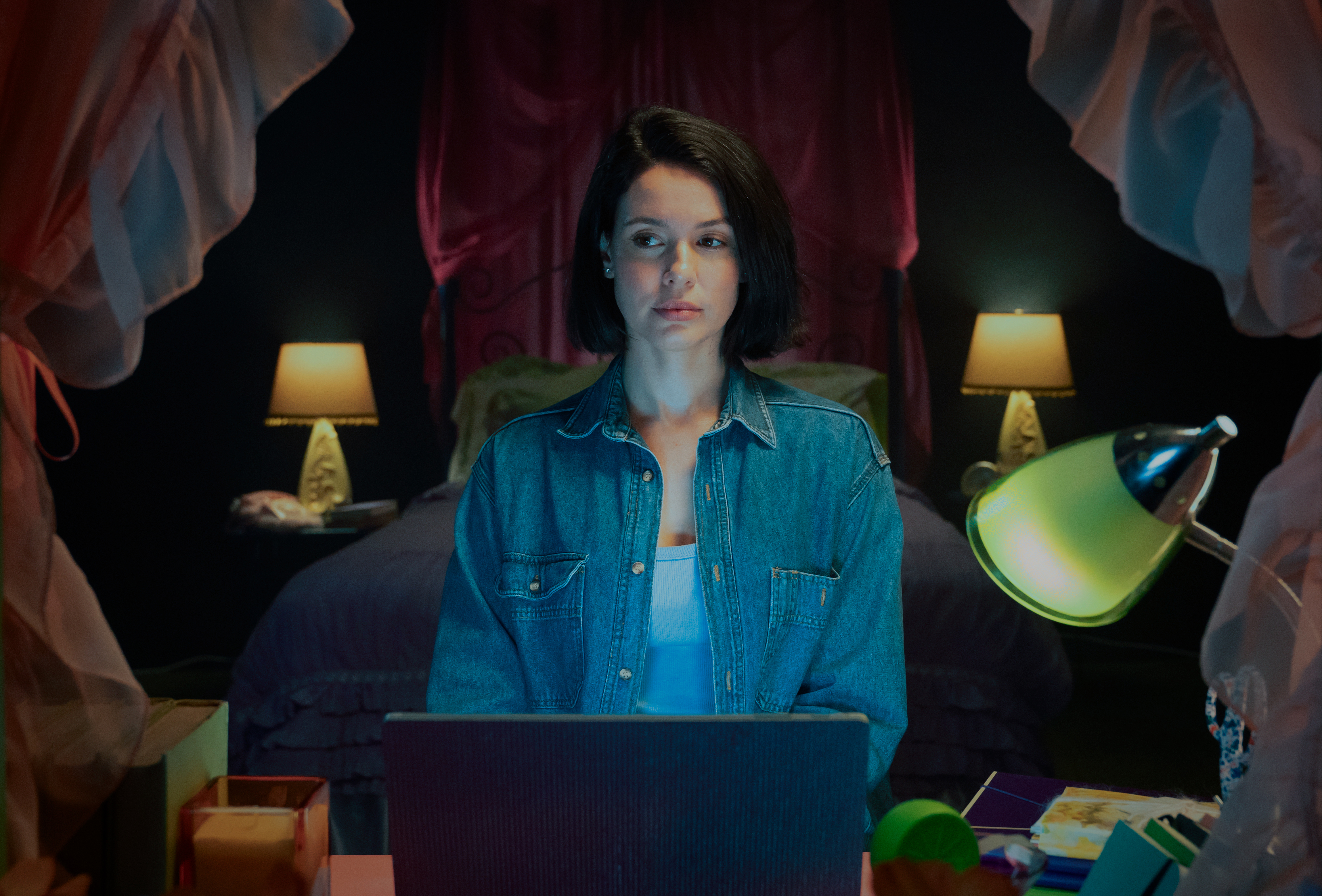
Soaked in style and honesty, Andrea Werhun and Nicole Bazuin tackle societal expectations of sex work in Modern Whore — a documentary film about Werhun’s experiences as an escort during her time at U of T and her subsequent relationship with sex work post-graduation. The 2025 documentary is preceded by a book (2017) and short film (2020) of the same name.
Werhun’s expertise has impacted the likes of Sean Baker’s Oscar-winning Anora, with Werhun acting as a sex work consultant for the film. Baker was also an executive producer of Modern Whore, which had its world premiere at the Toronto International Film Festival (TIFF) this year.
The film follows the charismatic Werhun, who tells her story with sincerity and wit. Werhun and Bazuin reclaim experiences of sexual assault and violence through a distinctively bright and humorous form — incorporating sketches, playful animations, and a striking title design.
I had the pleasure of seeing the film at TIFF and discussing the duo’s approach to storytelling, filmmaking, and sex work.
The Varsity: I’m curious about the aesthetic behind the film, if it served a specific purpose in telling your story?
Nicole Bazuin: The bright colours, the stylization, are meant to immerse you in the world of Andrea’s story. The idea is to create something that feels artful, but can also run the gamut of the stories Andrea tells. So we have the light and the dark.
Andrea Werhun: The brightness and colour stand in stark contrast to the ways that sex workers are typically depicted in film, which always feels almost universally dark, dingy, scary, and fearful. We wanted to create a sex worker narrative from a sex worker perspective that was bright and beautiful and sumptuous.
TV: Was this playfulness meant to cut through the darker and serious moments? You in boy drag, for example, is so funny.
AW: Shame Biscuit! Well, I’m glad that you like Shame, my little drag boy character. It’s my inner demon that represents the shame and stigma we experience as sex workers, this internalized voice of the power structures that be, that makes us feel like we’re totally unworthy of being loved and treated with respect.
I love playing him. He’s really important. Spin off when?
TV: You talk a lot about shame and whorephobia in this film, especially in hiding your profession from others or fighting internal biases. Does creating art about these feelings ease them?
AW: I definitely think that shame is the flipside to pride. And so, in order to access that other side of the spectrum, storytelling plays a really important role. I will say that art cannot be the only way that we deal with our trauma, but I do think that it’s a really important way to bring voice to the things that we’re supposed to be ashamed of. And I know for a fact that it also helps the viewer feel a lot less alone.
TV: You talk a lot about sex work as a performance. Whether it be stripping or OnlyFans, you’re performing for an audience. Do you feel like there are parallels between that and performing your story for a film audience?
AW: Yeah, for sure, and gender is a performance too. Being a woman is a performance. And obviously, being an actor is a performance, and being a sex worker is a performance. And all of these roles that we play engage in capitalism in order to financially survive — obviously, you have to perform a role to do that, right? No matter what that job is, whether it’s sex work or not. I think it was really important for us to play with that idea of sex work as performance in the film, in the performance of the performance.
TV: The interviews with your mom and your boyfriend were a highlight of the documentary for me. Outside of Lizzie Borden’s Working Girls, where we see the protagonist with her partner in a happy relationship, most other depictions of sex work in film tend to be solitary or result in a broken home. Can you speak more to that choice?
AW: That is exactly why it was important for us to demonstrate that: I am a singular sex worker who has strong, loving, long-term bonds with the people in my life, because the stereotype is that sex workers are these isolated caricatures of victimhood who have nobody.
That’s part of why we are seen by predators as easy prey. So it’s important to publicly proclaim our humanity through our living, loving relationships with other people. Not only with my partner and with my mom, but also with my colleagues — my friends who are also my collaborators on various artistic projects that have to do with sex work.
It was really important to demonstrate that, yeah, we’re people in a community and we love each other and we support each other. And if you think you’re going to get away with harming us, you’re wrong.
Like, there are people who are going to be really, really pissed off if you try to hurt us. So, having someone like my mom in the film — I don’t think that we’ve ever been allowed to even see sex workers on film in relation to their mothers in a positive way.
I think the viewer’s experience of seeing my relationship with my mom and the universality of the desire to be loved for being yourself goes beyond sex work.
TV: Obviously, this film is very personal, but sex work is not a monolith. Can you speak more on why it was crucial to platform and consult other sex workers?
AW: I think that’s where the feature film goes beyond the book and beyond the short films, it expands the universe of Modern Whore to include a variety and diversity of experiences to bring home that point that sex workers are not a monolith.
We do not all believe the same thing. We do not come to the work the same way. We don’t all feel the same way about our work. But we are all human beings, and we all deserve to be treated with kindness, respect, and to be granted the same equal rights as everybody else.
TV: I think this documentary is quite special in that you guys are both the subject and the filmmakers. I’m wondering if you have an opinion on filmmakers who have no firsthand experience with sex work, telling the stories of sex workers.
AW: Yeah, I got a couple opinions.
[laughs all around]
I think that civilians should stop making work about sex work. Period. I think hiring consultants is the bare minimum, but consultants don’t have any decision-making power, so their opinions can be taken or left.
I think civilian filmmakers really need to look themselves in the mirror and ask themselves why they feel that they need to tell stories that are outside of their lived experience, instead of giving opportunities to sex workers themselves to tell those stories.
It’s not to say that like every writer-director has to stay in their lane. I think it’s important to have imagination and to tell stories. But I think with sex work specifically, the problem is that 99.9 per cent of sex worker stories in popular culture, in TV and film, have been told by people who have never done the work themselves. And that is deeply problematic because it directly informs the way people perceive sex work.
TV: And it’s usually men, too. So they’re seeing it from their gaze, which completely subverts how sex workers present themselves versus how a man wants a sex worker to be presented.
AW: Precisely. And I think that what we witness then, especially in these stereotypes that are perpetuated about our constant victimhood and the inherent violence of sex work, without ever contextualizing where that violence comes from, which is from policy and from criminalization that makes it impossible for sex workers to rely on law enforcement without being arrested ourselves when we report crimes perpetrated against us.
We need to be able to put that into a very clear context instead of fetishizing the violence that’s perpetrated against us, that’s regurgitated as disturbing fantasy by men on screen.
Nicole is not a sex worker, she’s an ally. But, most of all, she’s my friend. Modern Whore is an expression of friendship and love. It is so deeply humanizing to be seen as an equal and a collaborator on something that is beautiful and sumptuous as well as political. I’m not just a consultant on this project; I’m a co-writer, producer, and actor, and I have a say in who gets hired onto this project and who makes me feel safe on-set. All of these factors make the film feel like a sex worker-driven depiction of sex work.
Nicole is the absolute best, and I hope that other allies hire other sex workers to be executive producers on their films. That way, that sex worker can get a backend on that film and financially benefit from a depiction of sex work in the film. We need sex workers to have decision-making roles in films that involve sex work.
This interview has been edited for length and clarity.

No comments to display.