
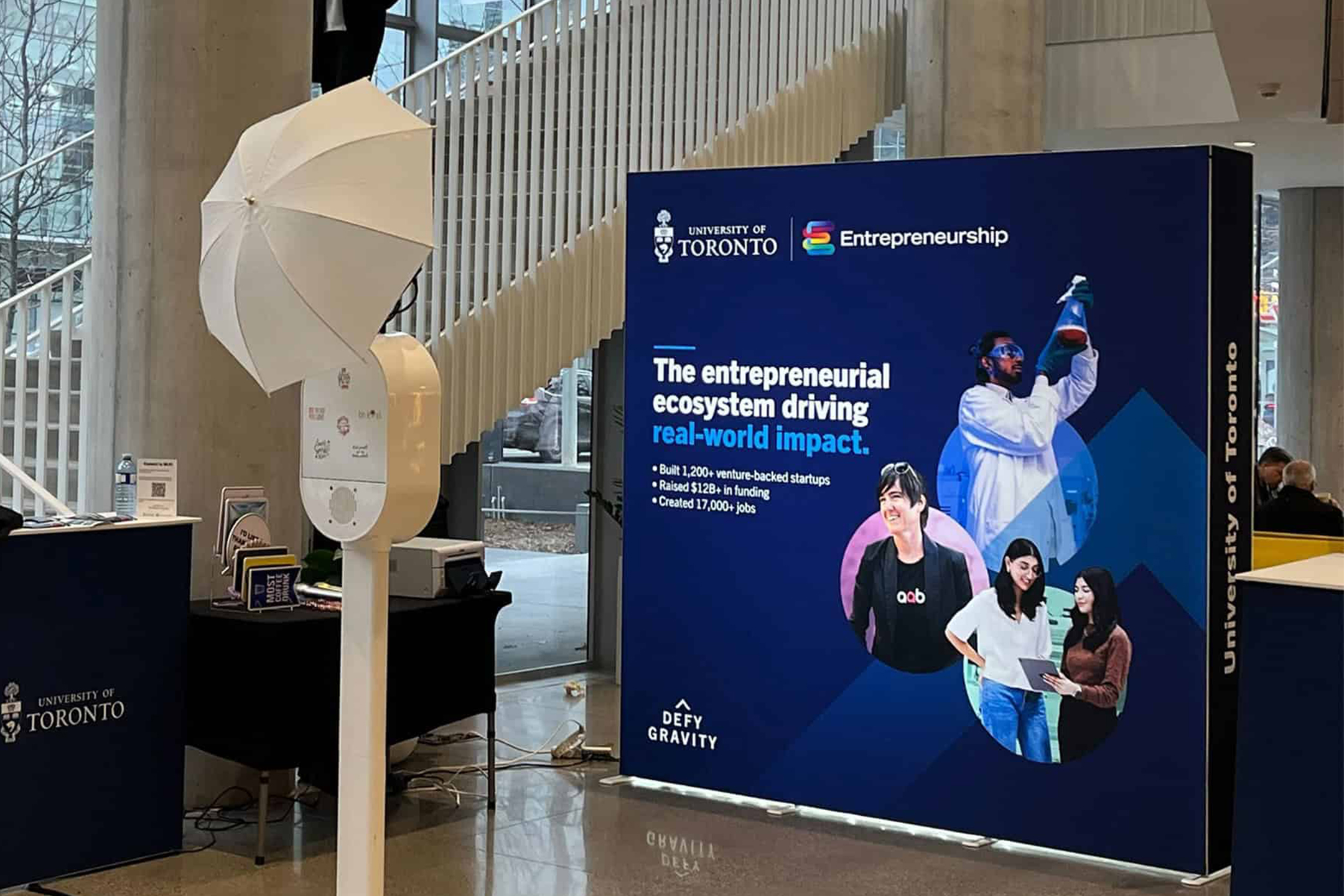
“It was a record setting year,” said Jon French, the director of University of Toronto Entrepreneurship (UTE) in the centre’s annual report, and the stats seem to back it up.
This year, U of T was named the #1 university in the world for sustainability for the second year in a row by the QS Sustainability Rankings and ranks among the top 20 globally for entrepreneurship. Over the past five years, startups born out of U of T accelerators and innovation hubs have raised more than $14 billion in funding and created over 20,000 jobs. Although impressive, these figures are not surprising given how UTE has been cultivating its network.
Building a startup powerhouse
UTE’s network now includes 12 entrepreneurship accelerators across its three campuses. Accelerators are programs that help early-stage companies grow with mentorship, resources, and more in exchange for equity. The network also supports more than 1,300 entrepreneurial teams.
Moreover, UTE has more than 23,000 square metres of space for innovation inside the state-of-the-art Schwartz Reisman Innovation Campus, which houses Canada’s largest concentration of student- and faculty-led startups.
The results of these investments are evident. More than 1,500 venture-backed startups have been created, and U of T ranks among the top five universities worldwide for university-managed incubators — these are programs that help participants refine their startup ideas to develop a real business.
Equity at the core of innovation
A central theme of this year’s report is the university’s growing focus on inclusive innovation. The Black Founders Network (BFN), a community supporting Black entrepreneurs, is a leading example of this.
BFN supported 308 startups over the past year while raising $42 million for Black-led ventures. Events like the annual Black Career Conference, where students learn about potential career paths in various industries, also help provide resources to Black founders and youth. A pitch competition allowed top startups to receive funding, while various Black job seekers met with organizations to find opportunities.
Similarly, the Health Innovation Hub (H2i), which connects early-stage companies with academic partners, hospitals, and investors to advance technologies that deliver real-world impact, is driving equity in healthcare innovation. Of its 342 active ventures, 60 per cent are led by women and 28 per cent by Black founders.
Initiatives like the Indigenous Geodesic Greenhouse Domes, which are 7.32-meter greenhouse domes near the UTSC campus, aim to further support Indigenous communities to promote sustainable agriculture, food security, and employment.
International success stories
UTE startups like CentML — which aims to optimize machine learning workloads, and Blue J Legal — which uses AI to improve processes in tax law, have been making waves not just at home but across the world. CentML was recently acquired by Nvidia, while Blue J Legal is now valued at over $420 million.
Much of the centre’s global reach can be attributed to strategic partnerships and initiatives that connect U of T’s innovation network to the world.
Through the Africa Health Collaborative, the university partners with nine higher-education institutions across 14 countries in Africa, supporting 81 ventures and helping to build new health innovation ecosystems. The U of T’s African Impact Challenge has funded more than 1,000 early-stage entrepreneurs on the continent, while partnerships with groups like C100 have opened doors to Silicon Valley investors and mentors.
Events and opportunities
Beyond accelerators and partnerships, UTE fostered a vibrant entrepreneurship culture through events and platforms that connect founders and investors over the past year.
Tech Week, one of the standout events of the year, brought together innovators from across disciplines to discuss emerging technologies, network with industry leaders, and showcase student-led ventures.
Pitch competitions such as Pitch with a Twist and FemSTEM offered underrepresented founders a chance to present their ideas to investors and industry experts, while the Startup Holiday Market highlighted the diversity and creativity within U of T’s entrepreneurial community by allowing attendees to find products not available in other stores.
UTE also extended its impact by connecting students and alumni with real-world opportunities. On average, its dedicated job board features an average of 1,250 live postings across 350 companies, reflecting the growing demand for talent within the startup ecosystem.
“We have an ambitious year ahead and look forward to welcoming the community into our spaces across the tri-campus and virtually,” French said in the report. “Supporting homegrown innovation has never been more important.”
With billions raised and thousands of jobs created while keeping equity at the focal point, UTE is hoping to shape a startup culture that reflects the society it serves.

No comments to display.