
Rushing from class on an abnormally hot September afternoon, I began to regret the wool sweater I’d so confidently worn at 8:00 am when I left the house. Sweat trickling down my forehead, September 22 was anything but the perfect fall day I had imagined it would be.
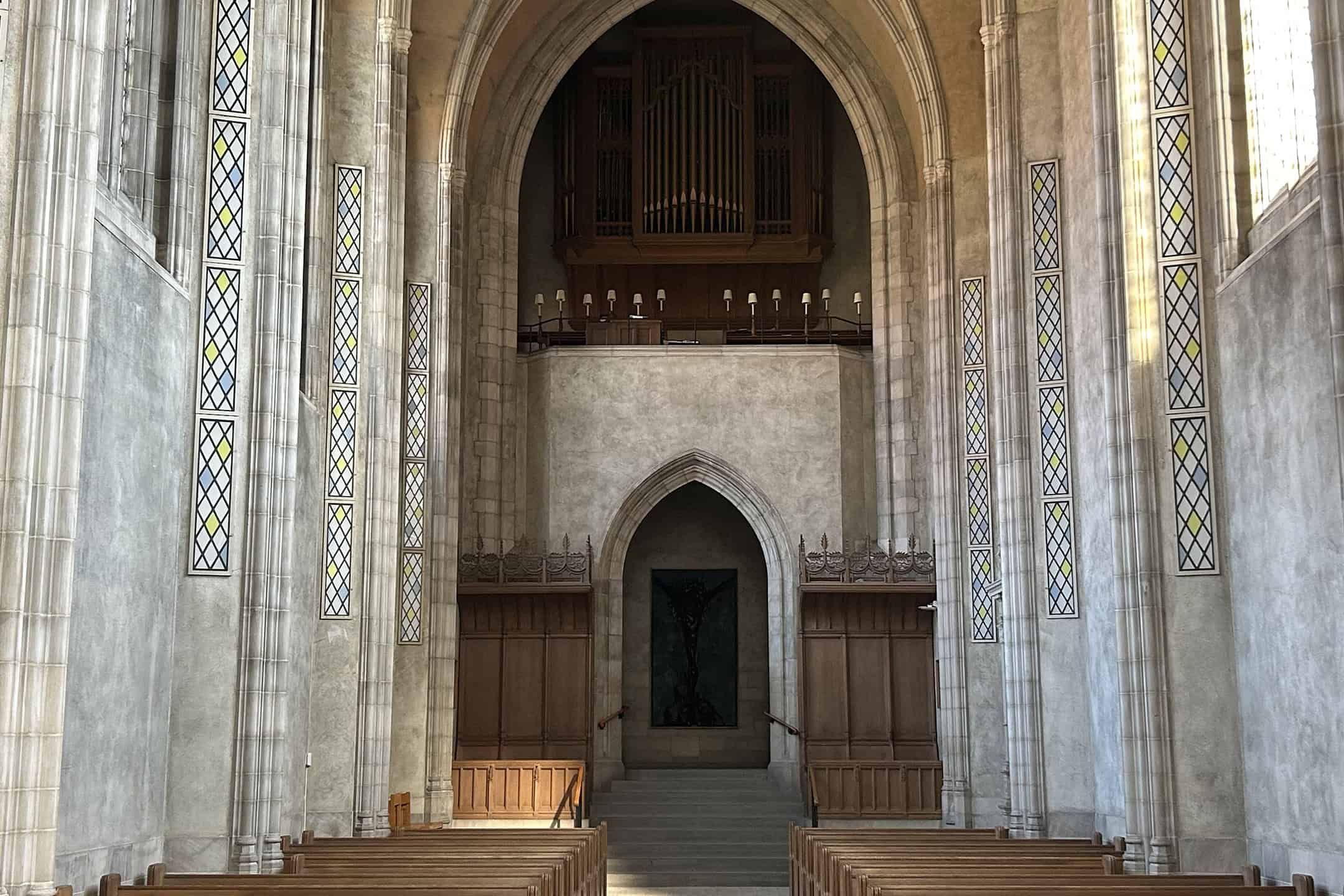
But as I opened the doors of the Trinity College Chapel, relief rushed through my body. And no, this is not a story of divine salvation, but one about reading. More specifically, Trinity College’s new literary program, “Trinity Reads.”
Trinity Reads, modelled after the CBC’s Canada Reads competition — an annual literary competition of Canadian books — provides students, staff, and community members with an opportunity to read outside the classroom and to attend literary events.
As I entered the chapel, I was greeted by the sound of calming lo-fi music, a free book, and a cool environment to sit and read; a much-appreciated break from the sweltering September heat. As readers had the option to engage in book swaps, literary discussions, or to simply sit with their book and read, Trinity Reads provided me a space to step away from my hectic day, even if it was just for an hour.
As I sat down in the pew, I began reading the book I had just received, Dispersals by Jessica J. Lee.
This year, the all-Canadian lineup was chosen for its emphasis on the environment and for its ability to push readers to “reimagine our relationship with the land.” Additionally, the theme was chosen to commemorate the upcoming establishment of the Lawson Centre for Sustainability at Trinity College, which will work to address and find solutions to the climate crisis.
Dispersals is a collection of personal essays that eloquently weaves together stories of migration, botany, and the environment, to tell a story that reaffirms our interconnectedness with each other and our surroundings.
I probably would never have picked up this book if it were not for Trinity Reads, because frankly, botany was never a subject I have been drawn to. But there is more to Dispersals than the petals on the cover, as Lee is unafraid to go beyond the surface and uncover dirty, messy, complex, and beautiful roots.
Beyond the stellar line-up of books –– which included a personal favourite, Moon of the Crusted Snow by Waubgeshig Rice, an apocalyptic novel set in a northern Anishinaabe community that intertwines stories of settler-colonialism, community, and apocalypse –– at Trinity Reads, I was reminded of my love for reading outside of academic papers and required class texts.
I left the chapel to resume what often feels like an overwhelming life, feeling a weird sense of solace. For an hour, I was finally able to unplug from the world, forget about my essay due next week, the 100 pages of class readings I had to complete, and my upcoming midterm. I delved into a novel that rerooted myself in the land and my surrounding environment.
U of T Professor Leanne Toshiko Simpson, one of Trinity Reads’ organizers, said in an email to The Varsity, “Students are under so much pressure to achieve, and there was something really special about all of us being in a community space just reading and connecting and stepping away from our phones.”
Yes, the chapel is beautiful, the free cookies, delicious, and the books, spectacular. But the primary reason I’ll be returning to Trinity Reads is for its ability to put the toxic hustle culture of U of T on pause. In a world that seems to continuously disconnect us from each other, ourselves, and the land, Trinity Reads offers a space to step away from stress and reconnect with intention.

No comments to display.